

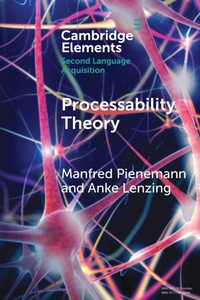
Processability Theory
Published on 10. April 2025
Book
Paperback/Softback
106 pages
978-1-009-37594-8 (ISBN)
Description
Processability Theory (PT) is a psycholinguistic theory of second language acquisition. The theory builds on the fundamental assumption that learners can acquire only those linguistic forms and functions which they can process. Therefore, PT is based on the architecture of the human language processor. PT is implemented in a theory of grammar that is compatible with the basic design of the language processor. This Element gives a concise introduction to the psycholinguistic core of PT - showing that PT offers an explanation of language development and variation based on processing constraints that are specified for typologically different languages and that apply to first and second language acquisition, albeit in different ways. Processing constraints also delineate transfer from the first language and the effect of formal intervention. This Element also covers the main branches of research in the PT framework and provides an introduction to the methodology used in PT-based research.
More details
Series
Language
English
Place of publication
Cambridge
United Kingdom
Product notice
Paperback (trade)
Illustrations
Worked examples or Exercises
Dimensions
Height: 229 mm
Width: 152 mm
Thickness: 7 mm
Weight
170 gr
ISBN-13
978-1-009-37594-8 (9781009375948)
Copyright in bibliographic data and cover images is held by Nielsen Book Services Limited or by the publishers or by their respective licensors: all rights reserved.
Schweitzer Classification
Other editions
Additional editions
Manfred Pienemann | Anke Lenzing
Processability Theory
Book
04/2025
Cambridge University Press
€83.20
Shipment within 15-20 days
Persons
Content
Preface; 1. In a Nutshell - What is Processability Theory About?; 2. Key Concepts; 3. Main Branches of Research; 4. Implications for SLA Theory; 5. Implications for Pedagogy; 6. The Constructive Strategy of PT in Theory Building; 7. Key Readings; References.