

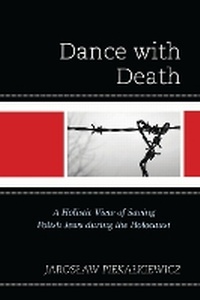
Dance with Death
A Holistic View of Saving Polish Jews during the Holocaust
Published on 15. November 2019
Book
Paperback/Softback
320 pages
978-0-7618-7166-8 (ISBN)
Description
More than seventy-five years have passed since the Holocaust and the terrors visited by German Nazis on occupied Europe. Yet this history continues to be the subject of research, debate, and controversy. One particularly delicate issue is the question of whether non-Jews did all they could to help Jews during the war.
In this book, Jaroslaw Piekalkiewicz examines this issue in detail as it relates to Poland-the country that experienced the harshest German occupation and was slated for permanent incorporation into the German Reich. He examines all the different factors influencing the capacity and willingness of Poles to save Jews and documents the efforts made to save them despite these impediments.
Unlike other books on the subject, Piekalkiewicz chooses to start with a chapter on the thousand-year-long history of Jews in Poland. This allows readers to understand why one-third of the world's Jews lived in Poland before WWII and to learn about their rich and diverse culture. Equally clear are the dark clouds that gathered before the war in the form of fascism and antisemitism expanding in Poland and elsewhere in Europe.
Piekalkiewicz is a political scientist who participated in the Polish Resistance as a teenager along with other members of his family. This combination of academic rigor and personal experience gives readers a more realistic understanding than usually available of resistance under German occupation and amid the Holocaust. He provides a detailed understanding of German occupation of Poland and the operations of the Polish Underground and goes on to describe efforts by Poles from many walks of life to save Jews. The text is interspersed with his vivid personal testimonies of surviving and fighting in occupied Poland. At the same time, the author does not shrink from revealing the dark side of the German occupation: fear, envy, greed, demoralization, and collaboration with the Germans to betray Jews, the Poles who hid them, resistance members, and even personal enemies. This book provides readers with the basic elements to understand Polish-Jewish relations during WWII as well as what is probably the last testimony that will ever be published of a former resistance fighter.
In this book, Jaroslaw Piekalkiewicz examines this issue in detail as it relates to Poland-the country that experienced the harshest German occupation and was slated for permanent incorporation into the German Reich. He examines all the different factors influencing the capacity and willingness of Poles to save Jews and documents the efforts made to save them despite these impediments.
Unlike other books on the subject, Piekalkiewicz chooses to start with a chapter on the thousand-year-long history of Jews in Poland. This allows readers to understand why one-third of the world's Jews lived in Poland before WWII and to learn about their rich and diverse culture. Equally clear are the dark clouds that gathered before the war in the form of fascism and antisemitism expanding in Poland and elsewhere in Europe.
Piekalkiewicz is a political scientist who participated in the Polish Resistance as a teenager along with other members of his family. This combination of academic rigor and personal experience gives readers a more realistic understanding than usually available of resistance under German occupation and amid the Holocaust. He provides a detailed understanding of German occupation of Poland and the operations of the Polish Underground and goes on to describe efforts by Poles from many walks of life to save Jews. The text is interspersed with his vivid personal testimonies of surviving and fighting in occupied Poland. At the same time, the author does not shrink from revealing the dark side of the German occupation: fear, envy, greed, demoralization, and collaboration with the Germans to betray Jews, the Poles who hid them, resistance members, and even personal enemies. This book provides readers with the basic elements to understand Polish-Jewish relations during WWII as well as what is probably the last testimony that will ever be published of a former resistance fighter.
Reviews / Votes
Dance with Death is an ambitious work that attempts to address the totality of the Final Solution within Nazi-occupied Poland during WW II. . . Piekalkiewicz (emer., Univ. of Kansas) was a young member of a Home Army unit at the time and took an active role in opposing the Nazis. He offers valuable insights into its successful and failed operations and critiques its actions against the Nazis, drawing analogies with asymmetrical postwar conflicts. He also tackles the controversies and complexities of relations between Polish Gentiles and Polish Jews prior to and during the war, addressing anti-Semitism and efforts to rescue Polish Jews. The narrative is interspersed with excerpts from Piekalkiewicz's unpublished recollections that add a personal touch and tremendous understanding to the account. . . a worthwhile read. Summing Up: Recommended. With reservations. All levels. * Choice Reviews * This book is an important and unique historical document. Over 75 years have passed since the Holocaust and the terrors visited by Nazi Germany on many European countries. And yet this history continues to be the subject of research, debate and controversy. One particularly delicate issue is whether non-Jews did all they could to help Jews during WWII. In his book, Prof. Jarek Piekalkiewicz analyzes this issue in detail as it relates to Poland-the country which experienced the harshest German occupation and was slated for eventual incorporation into the German Reich. He brings together-in a way never done before-all the different factors that influenced the capacity of Poles to save Jews and then documents the efforts made to save them despite many impediments. -- Frederic J. Fleron Jr., University at BuffaloMore details
Language
English
Place of publication
Lanham, MD
United States
Publishing group
University Press of America
Target group
Professional and scholarly
Illustrations
5 tables
Dimensions
Height: 223 mm
Width: 151 mm
Thickness: 24 mm
Weight
485 gr
ISBN-13
978-0-7618-7166-8 (9780761871668)
Copyright in bibliographic data and cover images is held by Nielsen Book Services Limited or by the publishers or by their respective licensors: all rights reserved.
Schweitzer Classification
Other editions
Additional editions
E-Book
11/2019
1st Edition
Hamilton Books
€43.99
Available for download
E-Book
11/2019
1st Edition
Hamilton Books
€43.99
Available for download
Person
Jaroslaw (Andrzej) Piekalkiewicz is professor emeritus of Political Science and Russian and East European Studioes at the University of Kansas. At age 18, he fought the Germans for sixty-three days in the Warsaw Uprising of 1944. For his bravery, he was promoted to the rank of Platoon Sargeant and awarded Krzyz Walecznych (Cross of the Brave). Obviously, in the chaos of fighting, he did not get the actual metal cross. Neither was he decorated during the communist rule of Poland. He chose asylum in the United States.
Now, after so many years, his nomination was found in the archives of the Polish Ministry of Defense. The Polish Minister of Defense, delegated the Counsel General of the Polish Consulate in Houston to perform the decoration. It will take place in the Piekalkiewicz residence, in Lawrence, Kansas, on July 24th, Jaroslaw's 95th birthday.
Now, after so many years, his nomination was found in the archives of the Polish Ministry of Defense. The Polish Minister of Defense, delegated the Counsel General of the Polish Consulate in Houston to perform the decoration. It will take place in the Piekalkiewicz residence, in Lawrence, Kansas, on July 24th, Jaroslaw's 95th birthday.
Content
List of Tables
Acknowledgments
List of Abbreviations and Terms
Editor's Introduction
Introduction
Chapter 1: Christians and Jews in Poland: Cohabitation and Conflict
Chapter 2: The Invasion and Occupation of Poland
Chapter 3: The Extermination of Polish Jews
Chapter 4: The Polish Underground
Chapter 5: Help from Individuals and Legal and Resistance Organizations
Chapter 6: Zegota: The Council to Aid Jews
Chapter 7: Aid from Abroad
Chapter 8: Criminals, Collaborators, and Antisemites
Conclusions
Bibliography
About the Author
Acknowledgments
List of Abbreviations and Terms
Editor's Introduction
Introduction
Chapter 1: Christians and Jews in Poland: Cohabitation and Conflict
Chapter 2: The Invasion and Occupation of Poland
Chapter 3: The Extermination of Polish Jews
Chapter 4: The Polish Underground
Chapter 5: Help from Individuals and Legal and Resistance Organizations
Chapter 6: Zegota: The Council to Aid Jews
Chapter 7: Aid from Abroad
Chapter 8: Criminals, Collaborators, and Antisemites
Conclusions
Bibliography
About the Author