

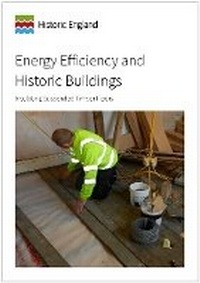
Energy Efficiency and Historic Buildings
Insulating Suspended Timber Floors
Published on 29. April 2016
Book
Paperback/Softback
22 pages
978-1-84802-445-8 (ISBN)
Description
This guidance note provides advice on the methods, materials and risks involved with insulating suspended timber ground floors. The applications described are also appropriate for timber upper floors where there is an unheated space below, such as above a passageway. Advice is also provided on how suspended floors can be draught-proofed where the installation of insulation may be difficult or potentially damaging to the historic fabric of the building.
Suspended timber ground floors can be a source of considerable heat loss from older buildings, particularly where there are gaps between floorboards that create draughts. Insulating and draught-proofing floors can make an important contribution to improving comfort and reducing fuel bills and carbon emissions.
Timber floors are often a very important and significant part of older buildings. Lifting old floorboards can require the work of a skilled carpenter if damage to the boards is to be avoided. In some cases the potential for damage may be too great, in which case the boards would need to be left in place.
This guidance forms one of a series of thirteen guidance notes covering the thermal upgrading of building elements such as roofs, walls and floors.
Suspended timber ground floors can be a source of considerable heat loss from older buildings, particularly where there are gaps between floorboards that create draughts. Insulating and draught-proofing floors can make an important contribution to improving comfort and reducing fuel bills and carbon emissions.
Timber floors are often a very important and significant part of older buildings. Lifting old floorboards can require the work of a skilled carpenter if damage to the boards is to be avoided. In some cases the potential for damage may be too great, in which case the boards would need to be left in place.
This guidance forms one of a series of thirteen guidance notes covering the thermal upgrading of building elements such as roofs, walls and floors.
More details
Series
Language
English
Place of publication
Swindon
United Kingdom
Target group
Professional and scholarly
Illustrations
9 Illustrations
Dimensions
Height: 297 mm
Width: 210 mm
ISBN-13
978-1-84802-445-8 (9781848024458)
Copyright in bibliographic data and cover images is held by Nielsen Book Services Limited or by the publishers or by their respective licensors: all rights reserved.
Schweitzer Classification
Person
David Pickles is a Senior Architect with Historic England.
Content
Introduction
Suspended timber floor construction
Issues to consider before installing insulation
Installing insulation and draughtproofing
Where to get advice
Suspended timber floor construction
Issues to consider before installing insulation
Installing insulation and draughtproofing
Where to get advice