

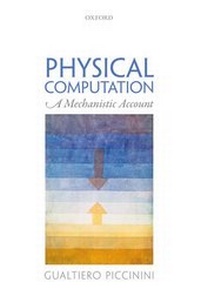
Physical Computation
A Mechanistic Account
Published on 12. July 2018
Book
Paperback/Softback
336 pages
978-0-19-880116-0 (ISBN)
Description
Gualtiero Piccinini articulates and defends a mechanistic account of concrete, or physical, computation. A physical system is a computing system just in case it is a mechanism one of whose functions is to manipulate vehicles based solely on differences between different portions of the vehicles according to a rule defined over the vehicles. The Nature of Computation discusses previous accounts of computation and argues that the mechanistic account is better. Many kinds of computation are explicated, such as digital vs. analog, serial vs. parallel, neural network computation, program-controlled computation, and more. Piccinini argues that computation does not entail representation or information processing although information processing entails computation. Pancomputationalism, according to which every physical system is computational, is rejected. A modest version of the physical Church-Turing thesis, according to which any function that is physically computable is computable by Turing machines, is defended.
Reviews / Votes
the mechanistic account of physical computation is the best that we currently have . . . Physical Computation is eminently readable and well presented, with a clear structure and helpful introduction . . . It provides a thorough . . . introduction to the philosophical issues associated with computation in the physical sense and would serve as a good basis for a postgraduate or upper-level undergraduate course on the subject. Piccinini delivers a comprehensive summary of previous work on physical computation, alongside the definitive presentation of his mechanistic account, and I have no doubt that this book will become a valuable resource for future work on the topic. * Joe Dewhurst, Philosophical Psychology *More details
Language
English
Place of publication
Oxford
United Kingdom
Target group
College/higher education
Professional and scholarly
Dimensions
Height: 235 mm
Width: 156 mm
Thickness: 18 mm
Weight
464 gr
ISBN-13
978-0-19-880116-0 (9780198801160)
Copyright in bibliographic data and cover images is held by Nielsen Book Services Limited or by the publishers or by their respective licensors: all rights reserved.
Schweitzer Classification
Other editions
Additional editions

Book
07/2015
Oxford University Press
€106.50
Shipment within 15-20 days
Person
Gualtiero Piccinini is Professor of Philosophy at the University of Missouri, St. Louis. Shortly after his appointment to the position in 2005, he founded Brains, which later became a group blog in the philosophy of mind and related sciences. He received early tenure and promotion in 2010 and early promotion to full professor in 2014. Between 2001 and 2014 he was department chair. In 2014, he received the Herbert A. Simon Award from the International Association for Computing and Philosophy for his research in the philosophy of computation.
Content
Acknowledgements
Introduction
1: Towards an Account of Physical Computation
2: Mapping Accounts
3: Semantic Accounts
4: Pancomputationalism
5: From Functional Analysis to Mechanistic Explanation
6: The Ontology of Functional Mechanisms
7: The Mechanistic Account
8: Primitive Components of Computing Mechanisms
9: Complex Components of Computing Mechanisms
10: Digital Calculators
11: Digital Computers
12: Analog Computers
13: Parallel Computers and Neural Networks
14: Information Processing
15: The Bold Physical Church-Turing Thesis
16: The Modest Physical Church-Turing Thesis
Epilogue: The Nature of Computation
Appendix: Computability
Bibliography
Index
Introduction
1: Towards an Account of Physical Computation
2: Mapping Accounts
3: Semantic Accounts
4: Pancomputationalism
5: From Functional Analysis to Mechanistic Explanation
6: The Ontology of Functional Mechanisms
7: The Mechanistic Account
8: Primitive Components of Computing Mechanisms
9: Complex Components of Computing Mechanisms
10: Digital Calculators
11: Digital Computers
12: Analog Computers
13: Parallel Computers and Neural Networks
14: Information Processing
15: The Bold Physical Church-Turing Thesis
16: The Modest Physical Church-Turing Thesis
Epilogue: The Nature of Computation
Appendix: Computability
Bibliography
Index