


Understanding Terrorism
Building on the Sociological Imagination
1st Edition
Published on 30. June 2008
Book
Paperback/Softback
220 pages
978-1-59451-374-9 (ISBN)
Description
Two fundamental problems within the social sciences are the failure to integrate the existing segments of knowledge and a very limited ability to point out directions for solving social problems, given that lack of integrated knowledge.This volume illustrates the integrated work of seven sociologists to reverse this situation not only for the problem of terrorism but also for any substantive or applied problem. C. Wright Mills in The Sociological Imagination castigated the failure to integrate social science knowledge, and this volume carries forward his efforts to analyze human complexity.To understand and confront terrorism we require not only the integration of social science knowledge bearing on that problem, as illustrated by these authors. We also require the integration of that knowledge with the understanding of those on the front lines in order to connect the dots of specialized basic and applied knowledge, which this volume makes possible.
More details
Language
English
Place of publication
New York
United States
Publishing group
Taylor & Francis Inc
Target group
College/higher education
Dimensions
Height: 229 mm
Width: 152 mm
Thickness: 12 mm
Weight
329 gr
ISBN-13
978-1-59451-374-9 (9781594513749)
Copyright in bibliographic data and cover images is held by Nielsen Book Services Limited or by the publishers or by their respective licensors: all rights reserved.
Schweitzer Classification
Other editions
Additional editions
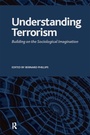
E-Book
12/2015
Routledge
€104.99
Available for download
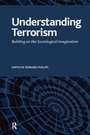
E-Book
12/2015
Routledge
€104.99
Available for download
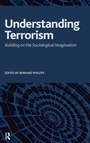
Book
04/2007
1st Edition
Routledge
€312.60
Shipment within 3-4 weeks
Person
Bernard Phillips
Content
Part I Introduction; Chapter 1 The Web and Part/Whole Approach to Terrorism, Bernard Phillips; Part II Understanding Terrorism; Chapter 2 Terrorist Organizations and Agency: A Comparative-Historical Approach, J. I. (Hans) Bakker; Chapter 3 Terrorism as an "Ism": Toward an Interactive versus a Stratified Metaphysics, Bernard Phillips; Chapter 4 Assessing the Fallout of the Terrorist Moment: Anomie and the Fractured American Weltanschauung, Adam Rafalovich; Chapter 5 Runaway Nationalism: Alienation, Shame, and Anger, Thomas J. Scheff; Chapter 6 The Social Psychology of Terrorism, Jonathan H. Turner; Chapter 7 The Post-September 11 Rhetorical Constructions of Terrorism: Applying the Web and Part/Whole Approach to Make Sense of the "Senseless", Todd Powell-Williams; Part III Connecting the Dots; Chapter 8 On the Relationship of the Web Approach to Some Theoretical Perspectives, Segre Sandro; Chapter 9 Conclusions and Recommendations, Bernard Phillips;