


Religion and the Hermeneutics of Contemplation
Book
Hardback
978-0-521-80367-0 (ISBN)
Description
Leading philosopher of religion D. Z. Phillips argues that intellectuals need not see their task as being for or against religion, but as one of understanding it. What stands in the way of this task are certain methodological assumptions about what enquiry into religion must be. Beginning with Bernard Williams on Greek gods, Phillips goes on to examine these assumptions in the work of Hume, Feuerbach, Marx, Frazer, Tylor, Marett, Freud, Durkheim, Levy-Bruhl, Berger and Winch. The result exposes confusion, but also gives logical space to religious belief without advocating personal acceptance of that belief, and shows how the academic study of religion may return to the contemplative task of doing conceptual justice to the world. Religion and the Hermeneutics of Contemplation extends in important ways D. Z. Phillips' seminal 1976 book Religion Without Explanation. It will be of interest to scholars and students of philosophy, anthropology, sociology and theology.
Reviews / Votes
'... there is no doubt that he has produced an extremely important corrective to long-standing and persisting misunderstandings in the study of religion. As such, it is a book that deserves to be widely read.' TheologyMore details
Language
English
Place of publication
Cambridge
United Kingdom
Target group
Professional and scholarly
College/higher education
Illustrations
Worked examples or Exercises
ISBN-13
978-0-521-80367-0 (9780521803670)
Copyright in bibliographic data is held by Nielsen Book Services Limited or its licensors: all rights reserved.
Schweitzer Classification
Other editions
New editions
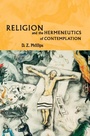
D. Z. Phillips
Religion and the Hermeneutics of Contemplation
Book
07/2001
Cambridge University Press
€108.50
Shipment within 15-20 days
Content
1. Hermeneutics and the philosophical future of religious studies; 2. Bernard Williams on the gods and us; 3. Hume's legacy; 4. Feuerbach: religion's secret; 5. Marx and Engels: religion, alienation and compensation; 6. Tylor and Frazer: are religious beliefs mistaken hypotheses?; 7. Marett: primitive reactions; 8. Freud: the battle for 'earliest' things; 9. Durkheim: religion as a social construct; 10. Levy-Bruhl: primitive logic; 11. Berger: the avoidance of discourse; 12. Which: trying to understand; 13. Understanding: a philosophical vocation.