

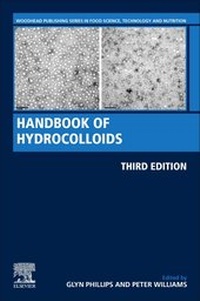
Handbook of Hydrocolloids
3rd Edition
Published on 11. November 2020
Book
Paperback/Softback
1190 pages
978-0-12-820104-6 (ISBN)
Description
Handbook of Hydrocolloids, Third Edition is a must-have substantive reference on hydrocolloids, helping food industry scientists ever since its first edition was published and well received. This thoroughly updated and expanded edition reviews the structure, function, properties, and applications of a broad range of hydrocolloids used in food and related industries. The third edition updates existing chapters on developments and theories on the structure and functional characteristics of individual hydrocolloids. The book provides additional chapters on new techniques for the chemical and physicochemical characterization of hydrocolloids, and applications technologies for encapsulation and controlled release of active compounds.
Edited by two leading international authorities in the field, this third edition continues to be relevant to food industry researchers, food manufacturers, graduate and postgraduate students, particularly in food, pharmaceutical, and cosmetic sciences.
Edited by two leading international authorities in the field, this third edition continues to be relevant to food industry researchers, food manufacturers, graduate and postgraduate students, particularly in food, pharmaceutical, and cosmetic sciences.
Reviews / Votes
"This manual is a must have reference on hydrocollids that are able to help researchers of the food industry. This edition, carefully updated, examines strudtures, functions, properties, and applications of a wide range of hydrocolloids used in industry food and related ones. The chapters are up to date based on developments and theories on structure, characteristics, and functionalities of hydrocollids." --Ingredienti AlimentariMore details
Edition
3rd edition
Language
English
Place of publication
United States
Publishing group
Elsevier Science Publishing Co Inc
Target group
Professional and scholarly
Dimensions
Height: 229 mm
Width: 152 mm
Weight
1890 gr
ISBN-13
978-0-12-820104-6 (9780128201046)
Copyright in bibliographic data and cover images is held by Nielsen Book Services Limited or by the publishers or by their respective licensors: all rights reserved.
Schweitzer Classification
Other editions
Additional editions
Glyn O. Phillips | Peter A. Williams
Handbook of Hydrocolloids
E-Book
11/2020
3rd Edition
Woodhead Publishing
€400.00
Available for download
Previous edition
Glyn O. Phillips | Peter A. Williams
Handbook of Hydrocolloids
Book
05/2009
2nd Edition
Woodhead Publishing Ltd
€372.50
Shipment within 10-15 days
Persons
Professor Glyn O. Phillips was Professor of Chemistry at the University of Salford and appointed as Executive Principal of the North East Wales Institute (now Wrexham Glyndwr University) in 1976. He is a Fellow of the Learned Society of Wales and was awarded an honorary degree of Doctor of Science by the University of Benin in 1990 and an honorary degree of Doctor of Laws by the University of Wales in 1999. He was awarded the A.G. Evans Medal by the University of Cardiff in 1991, the first Science and Technology Medal by the National Eisteddfod of Wales in 2004 and the Food Hydrocolloids Trust Medal in 2007. He has a broad range of scientific interests and has published more than 600 research papers in areas including radiation and free radical chemistry, radiation sterilisation, photochemistry and carbohydrate and polysaccharide chemistry. He was technical adviser to the International Atomic Energy Agency and editor of the journals, Food Hydrocolloids, Advances in Tissue Banking and International Journal of Cell and Tissue banking. He initiated the Gums and Stabilisers for the Food industry series of Conferences in 1981 and established the Phillips Hydrocolloids Research Centre at Wrexham Glyndwr University in 2003. Peter A. Williams is Professor of Polymer and Colloid Chemistry and Director of the Centre for Water Soluble Polymers at Wrexham Glyndwr University. He was awarded the degree of Doctor of Philosophy by the University of Salford in 1982 and Doctor of Science in 2009. He is a Fellow of the Royal Society of Chemistry and a Chartered Chemist. He has over 35 years research experience in the chemical modification, physicochemical characterisation, rheological properties and interfacial behaviour of hydrocolloids. He has published over 230 research papers and edited 42 books. He is co-founder and Editor-in-Chief of the international journal Food Hydrocolloids which was launched in 1986. He has been involved in the organisation of more than 40 international conferences on behalf of the Food Hydrocolloids Trust, the Cellucon Trust the Royal Society of Chemistry and the Society of Chemical Industry. He is a past Chairman of the Society of Chemical Industry Surface and Colloids Group and past Treasurer of the Royal Society of Chemistry Colloid and Interface Science Group. He was awarded the SCI Distinguished Service award in 2007 and the Food Hydrocollloids Trust Medal in 2013.
Content
Hydrocolloid characteristics and functionality
1. Introduction to food hydrocolloids
2. Techniques for the chemical and physicochemical characterization of hydrocolloids
3. The health aspects of hydrocolloids
4. Oral tribology of polysaccarides
5. Mixed hydrocolloid systems
6. Hydrocolloids for the encapsulation and delivery of active compounds
7. Hydrocolloids for edible films, coatings and food packaging
Plant polysaccharides
8. Starch and starch derivatives
9. Galactomannans
10. Pectins
11. Xyloglucan
12. Cereal ?-glucans
13. Arabinoxylans
14. Soluble soybean polysaccharide
15. Cellulosics
16. Microcrystalline cellulose
17. Inulin
18. Konjac mannan
19. Dendronan
20. Other emerging hydrocolloids: flaxseed gum, basil seed gum; mustard gum
Exudate gums
21. Gum Arabic
22. Gum ghatti
23. Other exudates: tragancanth, karaya, mesquite gum and larchwood arabinogalactan
Seaweed polysaccharides
24. Agar
25. Carrageenans
26. Alginates
Bacterial polysaccharides
27. Xanthan gum
28. Gellan gum
29. Curdlan
30. Bacterial cellulose
31. Other microbial polysaccharides: pullulan, scleroglucan, elsinan, levan, alternant, dextran
Fungal polysaccharides
32. Beta glucan from lentinus edodes, cordyceps and gandoderma
Animal-derived hydrocolloids
33. Chitin and chitosan
34. Collagen and Gelatin
1. Introduction to food hydrocolloids
2. Techniques for the chemical and physicochemical characterization of hydrocolloids
3. The health aspects of hydrocolloids
4. Oral tribology of polysaccarides
5. Mixed hydrocolloid systems
6. Hydrocolloids for the encapsulation and delivery of active compounds
7. Hydrocolloids for edible films, coatings and food packaging
Plant polysaccharides
8. Starch and starch derivatives
9. Galactomannans
10. Pectins
11. Xyloglucan
12. Cereal ?-glucans
13. Arabinoxylans
14. Soluble soybean polysaccharide
15. Cellulosics
16. Microcrystalline cellulose
17. Inulin
18. Konjac mannan
19. Dendronan
20. Other emerging hydrocolloids: flaxseed gum, basil seed gum; mustard gum
Exudate gums
21. Gum Arabic
22. Gum ghatti
23. Other exudates: tragancanth, karaya, mesquite gum and larchwood arabinogalactan
Seaweed polysaccharides
24. Agar
25. Carrageenans
26. Alginates
Bacterial polysaccharides
27. Xanthan gum
28. Gellan gum
29. Curdlan
30. Bacterial cellulose
31. Other microbial polysaccharides: pullulan, scleroglucan, elsinan, levan, alternant, dextran
Fungal polysaccharides
32. Beta glucan from lentinus edodes, cordyceps and gandoderma
Animal-derived hydrocolloids
33. Chitin and chitosan
34. Collagen and Gelatin