

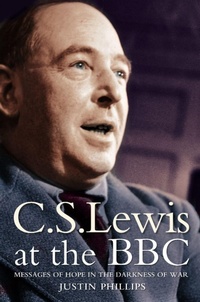
C. S. Lewis at the BBC
Messages of Hope in the Darkness of War
Published on 15. September 2003
Book
Paperback/Softback
336 pages
978-0-00-710436-9 (ISBN)
Description
A behind-the-scenes look at religious radio broadcasting during World War II in which such revered figures as C.S. Lewis and Dorothy Sayers came into the public eye.
This fascinating book explores the tensions behind the greatest era in BBC radio broadcasting - the Home Service. Despite evacuation, air-raids and the closure of the fledgling TV service, the BBC rose magnificently to the challenge of informing, entertaining and inspiring a nation at war.
The war years were to transform religious broadcasting beyond recognition. Under the persistent and innovative James Welch, the BBC began to invent new formats and take large risks in trying to communicate Christian truth to a generation whose faith was on the rack of war. Out of this came the broadcast talks of CS Lewis and the first ever dramatic portrayal of Christ in Dorothy L Sayers' Man Born to be King.
The response to C S Lewis' first broadcast was so overwhelming that a second programme had to be arranged to answer listeners' questions. Lewis' hugely popular BBC talks were published as Mere Christianity and have been a classic ever since, selling over 11 million copies worldwide.
As a layman, Lewis' critics initially claimed that he was not qualified to talk on Christian matters. For Lewis this was all part of the challenge of reaching a new audience. But his initial enthusiasm for broadcasting waned as it began to interfere with his work at Oxford, and he turned down many of the BBC's invitations to appear on the radio, including a chance to be on The Brains Trust, the Any Questions of its day.
This is a chapter in Lewis' life which has received very little attention from biographers and commentators, who have focussed on his achievements as a writer and academic. Yet C S Lewis' work on the radio made him a household name.
This fascinating book explores the tensions behind the greatest era in BBC radio broadcasting - the Home Service. Despite evacuation, air-raids and the closure of the fledgling TV service, the BBC rose magnificently to the challenge of informing, entertaining and inspiring a nation at war.
The war years were to transform religious broadcasting beyond recognition. Under the persistent and innovative James Welch, the BBC began to invent new formats and take large risks in trying to communicate Christian truth to a generation whose faith was on the rack of war. Out of this came the broadcast talks of CS Lewis and the first ever dramatic portrayal of Christ in Dorothy L Sayers' Man Born to be King.
The response to C S Lewis' first broadcast was so overwhelming that a second programme had to be arranged to answer listeners' questions. Lewis' hugely popular BBC talks were published as Mere Christianity and have been a classic ever since, selling over 11 million copies worldwide.
As a layman, Lewis' critics initially claimed that he was not qualified to talk on Christian matters. For Lewis this was all part of the challenge of reaching a new audience. But his initial enthusiasm for broadcasting waned as it began to interfere with his work at Oxford, and he turned down many of the BBC's invitations to appear on the radio, including a chance to be on The Brains Trust, the Any Questions of its day.
This is a chapter in Lewis' life which has received very little attention from biographers and commentators, who have focussed on his achievements as a writer and academic. Yet C S Lewis' work on the radio made him a household name.
More details
Language
English
Place of publication
London
United Kingdom
Publishing group
HarperCollins Publishers
Product notice
Unsewn / adhesive bound
Paperback (UK-B)
Illustrations
(8 pp b/w plate section), Index
Dimensions
Height: 203 mm
Width: 127 mm
Thickness: 20 mm
Weight
417 gr
ISBN-13
978-0-00-710436-9 (9780007104369)
Copyright in bibliographic data and cover images is held by Nielsen Book Services Limited or by the publishers or by their respective licensors: all rights reserved.
Schweitzer Classification
Person
Justin Phillips was the Head of BBC Heritage and worked at the BBC for many years. He was the author of Confidence (Hodder & Stoughton) and The Word on the Box (Paternoster).