

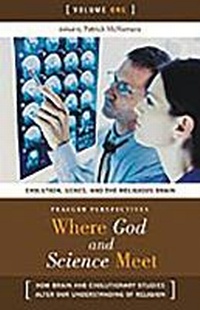
Where God and Science Meet
How Brain and Evolutionary Studies Alter Our Understanding of Religion [3 volumes]
Published on 30. September 2006
Book
928 pages
978-0-275-98788-6 (ISBN)
Description
Spiritual practices, or awakenings, have an impact on brain, mind and personality. These changes are being scientifically predicted and proven. For example, studies show Buddhist priests and Franciscan nuns at the peak of religious feelings show a functional change in the lobes of their brain. Similar processes have been found in people with epilepsy, which Hippocrates called the sacred disease. New research is showing that not only does a person's brain activity change in particular areas while that person is experiencing religious epiphany, but such events can be created for some people, even self-professed atheists, by stimulating various parts of the brain. In this far-reaching and novel set, experts from across the nation and around the world present evolutionary, neuroscientific, and psychological approaches to explaining and exploring religion, including the newest findings and evidence that have spurred the fledgling field of neurotheology.
It is not the goal of neurotheology to prove or disprove the existence of God, but to understand the biology of spiritual experiences. Such experiences seem to exist outside time and space - caused by the brain for some reason losing its perception of a boundary between physical body and outside world - and could help explain other intangible events, such as altered states of consciousness, possessions, alien visitations, near-death experiences and out-of-body events. Understanding them - as well as how and why these abilities evolved in the brain - could also help us understand how religion contributes to survival of the human race. Eminent contributors to this set help us answer questions including: How does religion better our brain function? What is the difference between a religious person and a terrorist who kills in the name of religion? Is there one site or function in the brain necessary for religious experience?
It is not the goal of neurotheology to prove or disprove the existence of God, but to understand the biology of spiritual experiences. Such experiences seem to exist outside time and space - caused by the brain for some reason losing its perception of a boundary between physical body and outside world - and could help explain other intangible events, such as altered states of consciousness, possessions, alien visitations, near-death experiences and out-of-body events. Understanding them - as well as how and why these abilities evolved in the brain - could also help us understand how religion contributes to survival of the human race. Eminent contributors to this set help us answer questions including: How does religion better our brain function? What is the difference between a religious person and a terrorist who kills in the name of religion? Is there one site or function in the brain necessary for religious experience?
Reviews / Votes
Scientists and religionists who read these volumes and attempt dialogue may begin to overcome the segregation evident in the field and reflected here. Recommended. Upper-division undergraduates through faculty/researchers. * Choice * [P]resents the scholar and informed layperson with a fascinating glimpse into the recent evolutionary, neuroscientific, and psychological findings on religion, paying particular attention to the fledgling field of neurotheology....These volumes are written with the undergraduate clearly in mind; however, this exhaustively documented collection has enough breadth and scope to satisfy even the speacialist. In either case, it will prove a handsome addition to the shelves of any university library. * Religious Studies Review * Authors are of varying religious persuasions or none and this provides some interesting ways for the perceptive reader to discern how belief systems influence interpretation of scientific or clinical findings....Most PSCF readers would benefit from these essays, especially those pertaining to their own expertise. * Perspectives on Science and Christian Faith * The meeting is definitely taking place in the house of science, and the emphasis is on biological processes associated with religiousness, though religious processes associated with biologicalness are occasionally addressed for example the health benefits and risks of religiosity. Mostly psychologists, but also other scientists and a few scholars of religion, look at evolution, genes, and the religious brain in volume one. The second volume discusses the neurology of religious experience; and the third the psychology of religious experience. The volumes are paged and indexed separately. * Reference & Research Book News *More details
Series
Language
English
Place of publication
United States
Publishing group
Bloomsbury Publishing Plc
Target group
College/higher education
Professional and scholarly
Interest Age: From 7 to 17 years
Weight
1786 gr
ISBN-13
978-0-275-98788-6 (9780275987886)
Copyright in bibliographic data and cover images is held by Nielsen Book Services Limited or by the publishers or by their respective licensors: all rights reserved.
Schweitzer Classification
Other editions
Additional editions
Patrick McNamara Ph.D.
Where God and Science Meet
How Brain and Evolutionary Studies Alter Our Understanding of Religion [3 Volumes]
E-Book
09/2006
1st Edition
Praeger Publishers Inc
€135.99
Available for download
Person
Patrick McNamara is Director of the Evolutionary Neurobehavior Laboratory in the Department of Neurology at Boston University School of Medicine, and the VA New England Healthcare System. He is also Assistant Professor of Neurology at the same sites. He is currently developing an evolutionary approach to problems of brain and behavior, and studying the evolution of the frontal lobes, the two mammalian sleep states (REM and NREM) and the evolution of religion in cultures. He is trained in behavioral neuorscience, neurolinguistics and brain-cognitive correlation techniques. He pioneered investigation of the role of the frontal lobes in mediation of religious experience.
Content
VOLUME I: Evolution, Genes, and the Religious Brain
Series Forward by J. Harold Ellens
Preface by Patrick McNamara
The Evolutionary Psychology of Religion by Steven Pinker
Sacred Emotions and Affective Neuroscience: Gratitude, Costly Signaling, and the Brain by Robert A. Emmons and Patrick McNamara
Genetic and Environmental Influences on the Traditional Moral Values Triad--Authoritarianism, Conservatism, and Religiousness--as Assessed by Quantitative Behavior Genetic Methods by Laura B. Koenig and Thomas J. Bouchard Jr.
Religious Behaviors, Badges, and Bans: Signaling Theory and the Evolution by Richard Sosis
Nature's Medicine: Religiosity as an Adaptation for Health and Cooperation by Joseph Bulbulia
The Cognitive Psychology of Belief in the Supernatural by Jesse M. Bering
The Ritual Healing Theory: Therapeutic Suggestion and the Origin of Religion by James McClenon
Religion Is Not an Adaptation by Lee A. Kirkpatrick
The Cognitive and Evolutionary Roots of Religion by Scott Atran
Amazing Grace: Religion and the Evolution of the Human Mind by Ilkka Pyysiaeinen
The Significance of the Evolution of Religious Belief and Behavior for Religious Studies and Theology by Wesley J. Wildman
Index
VOLUME2: The Neurology of Religious Experience
Series Foreword by J. Harold Ellens
Preface by Patrick McNamara
The Chemistry of Religiosity: Evidence from Patients with Parkinson's Disease by Patrick McNamara, Raymon Durso, Ariel Brown, and Erica Harris
Religious and Spiritual Practices: A Neurochemical Perspective by Andrew B. Newberg
Neuroimaging Studies of Religious Experience: A Critical Review by Nina P. Azari
Religion and the Life Course: Is Adolescence an "Experience Expectant" Period for Religious Transmission? by Candace S. Alcorta
Neurotheology: A Science of What? by Matthew Ratcliffe
Religion as a By-Product of Evolved Psychology: The Case of Attachment and Implications for Brain and Religion Research by Pehr Granqvist
Religious Conversion, Spiritual Transformation, and the Neurocognition of Meaning Making by Raymond F. Paloutzian, Erica L. Swenson, and Patrick McNamara
Religion and the Brain: Evidence from Temporal Lobe Epilepsy by Steven C. Schachter
The Frontal Lobes and the Evolution of Cooperation and Religion by Patrick McNamara
Mind Design and the Capacity for Ritual Performance by Carl Seaquist
The Brain, Religion, and Baseball: Comments on the Potential for a Neurology of Religion and Religious Experience by Warren S. Brown
Index
VOLUME 3: The Psychology of Religious Experience
Series Foreword by J. Harold Ellens
Preface by Patrick McNamara
The Neuropharmacology of Religious Experience: Hallucinogens and the Experience of the Divine by David E. Nichols and Benjamin R. Chemel
The Relationship between Religion and Health by Andrew B. Newberg and Bruce Y. Lee
Religion, Meaning, and the Brain by Crystal L. Park and Patrick McNamara
The Darker Side of Religion: Risk Factors for Poorer Health and Well-Being by Gina Magyar-Russell and Kenneth Pargament
The Common Core Thesis in the Study of Mysticism by Ralph W. Hood, Jr.
Cross-Cultural Assessments of Shamanism as a Biogenetic Foundation for Religion by Michael Winkelman
Schizophrenia, Neurology, and Religion: What can Psychosis Teach Us about the Evolutionary Role of Religion? by Steven A. Rogers and Raymond F. Paloutzian
Between Yang and Yin and Heaven and Hell: Untangling the Complex Relationship between Religion and Intolerance by Ian Hansen and Ara Norenzayan
The Origins of Dreaming by Kelly Bulkeley
Chemical Input, Religious Output--Entheogens: A Pharmatheology Sampler by Thomas B. Roberts
An Illusion of the Future: Temptations and Possibilities by Keith G. Meador
Index
Series Forward by J. Harold Ellens
Preface by Patrick McNamara
The Evolutionary Psychology of Religion by Steven Pinker
Sacred Emotions and Affective Neuroscience: Gratitude, Costly Signaling, and the Brain by Robert A. Emmons and Patrick McNamara
Genetic and Environmental Influences on the Traditional Moral Values Triad--Authoritarianism, Conservatism, and Religiousness--as Assessed by Quantitative Behavior Genetic Methods by Laura B. Koenig and Thomas J. Bouchard Jr.
Religious Behaviors, Badges, and Bans: Signaling Theory and the Evolution by Richard Sosis
Nature's Medicine: Religiosity as an Adaptation for Health and Cooperation by Joseph Bulbulia
The Cognitive Psychology of Belief in the Supernatural by Jesse M. Bering
The Ritual Healing Theory: Therapeutic Suggestion and the Origin of Religion by James McClenon
Religion Is Not an Adaptation by Lee A. Kirkpatrick
The Cognitive and Evolutionary Roots of Religion by Scott Atran
Amazing Grace: Religion and the Evolution of the Human Mind by Ilkka Pyysiaeinen
The Significance of the Evolution of Religious Belief and Behavior for Religious Studies and Theology by Wesley J. Wildman
Index
VOLUME2: The Neurology of Religious Experience
Series Foreword by J. Harold Ellens
Preface by Patrick McNamara
The Chemistry of Religiosity: Evidence from Patients with Parkinson's Disease by Patrick McNamara, Raymon Durso, Ariel Brown, and Erica Harris
Religious and Spiritual Practices: A Neurochemical Perspective by Andrew B. Newberg
Neuroimaging Studies of Religious Experience: A Critical Review by Nina P. Azari
Religion and the Life Course: Is Adolescence an "Experience Expectant" Period for Religious Transmission? by Candace S. Alcorta
Neurotheology: A Science of What? by Matthew Ratcliffe
Religion as a By-Product of Evolved Psychology: The Case of Attachment and Implications for Brain and Religion Research by Pehr Granqvist
Religious Conversion, Spiritual Transformation, and the Neurocognition of Meaning Making by Raymond F. Paloutzian, Erica L. Swenson, and Patrick McNamara
Religion and the Brain: Evidence from Temporal Lobe Epilepsy by Steven C. Schachter
The Frontal Lobes and the Evolution of Cooperation and Religion by Patrick McNamara
Mind Design and the Capacity for Ritual Performance by Carl Seaquist
The Brain, Religion, and Baseball: Comments on the Potential for a Neurology of Religion and Religious Experience by Warren S. Brown
Index
VOLUME 3: The Psychology of Religious Experience
Series Foreword by J. Harold Ellens
Preface by Patrick McNamara
The Neuropharmacology of Religious Experience: Hallucinogens and the Experience of the Divine by David E. Nichols and Benjamin R. Chemel
The Relationship between Religion and Health by Andrew B. Newberg and Bruce Y. Lee
Religion, Meaning, and the Brain by Crystal L. Park and Patrick McNamara
The Darker Side of Religion: Risk Factors for Poorer Health and Well-Being by Gina Magyar-Russell and Kenneth Pargament
The Common Core Thesis in the Study of Mysticism by Ralph W. Hood, Jr.
Cross-Cultural Assessments of Shamanism as a Biogenetic Foundation for Religion by Michael Winkelman
Schizophrenia, Neurology, and Religion: What can Psychosis Teach Us about the Evolutionary Role of Religion? by Steven A. Rogers and Raymond F. Paloutzian
Between Yang and Yin and Heaven and Hell: Untangling the Complex Relationship between Religion and Intolerance by Ian Hansen and Ara Norenzayan
The Origins of Dreaming by Kelly Bulkeley
Chemical Input, Religious Output--Entheogens: A Pharmatheology Sampler by Thomas B. Roberts
An Illusion of the Future: Temptations and Possibilities by Keith G. Meador
Index