

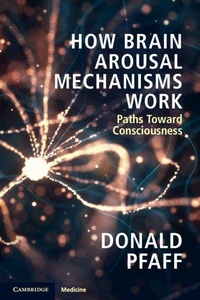
How Brain Arousal Mechanisms Work
Paths Toward Consciousness
Published on 6. December 2018
Book
Paperback/Softback
168 pages
978-1-108-43333-4 (ISBN)
Description
What are the physical paths towards consciousness? How do humans transition out of deep anesthesia, deep sleep, or traumatic brain injury? This book presents a new argument that expands past theories centered on the cerebral cortex, and instead emphasizes the longitudinally-integrated brainstem systems that are essential to the mechanism of consciousness. The workings of these vertical pathways that 'wake up the brain' are examined in neurobiological and molecular detail. Mirroring the evolution of this system from fish to humans, chapters in the book move from hindbrain to forebrain and from animal brain to human brain, developing the unified approach involved in the brain arousal mechanism. Considering consciousness through an array of neuronal structures, this book provides a new physical explanation of the phenomenon. Written for neurologists, neuroscientists, psychologists and psychiatrists, the book's succinct and readable tone means it is also suitable for readers interested in the workings of the brain.
More details
Language
English
Place of publication
Cambridge
United Kingdom
Target group
Professional and scholarly
Product notice
Paperback (trade)
Illustrations
Worked examples or Exercises
Dimensions
Height: 234 mm
Width: 156 mm
Thickness: 10 mm
Weight
275 gr
ISBN-13
978-1-108-43333-4 (9781108433334)
Copyright in bibliographic data and cover images is held by Nielsen Book Services Limited or by the publishers or by their respective licensors: all rights reserved.
Schweitzer Classification
Other editions
Additional editions
E-Book
12/2018
Cambridge University Press
€33.99
Available for download
E-Book
12/2018
Cambridge University Press
€27.99
Available for download
Person
Donald Pfaff is Professor of Neurobiology and Behavior at the Rockefeller University, New York. With over fifty years of experience in the field, he has authored or edited more than thirty books and is active on six journal editorial boards in topics of neuroscience. His study of generalized arousal led to the first operational definition of the term, enabling scientists to measure arousal quantitatively in laboratory animals and humans.
Content
Introduction; 1. Concept; 2. Giant cells in the medullary reticular formation; 3. Pons; 4. Midbrain; 5. Hypothalamus: low road; 6. Thalamus: high road; 7. High arousal; 8. Phase transitions from low Ga states; 9. Roots of consciousness and its disorders; 10. A vertically integrated system.