


Fuzzy Modeling with Spatial Information for Geographic Problems
Published on 14. October 2010
Book
Paperback/Softback
XII, 338 pages
978-3-642-06264-3 (ISBN)
Description
The capabilities of modern technology are rapidly increasing, spurred on to a large extent by the tremendous advances in communications and computing. Automated vehicles and global wireless connections are some examples of these advances. In order to take advantage of such enhanced capabilities, our need to model and manipulate our knowledge of the geophysical world, using compatible representations, is also rapidly increasing. In response to this one fundamental issue of great concern in modern geographical research is how to most effectively capture the physical world around us in systems like geographical information systems (GIS). Making this task even more challenging is the fact that uncertainty plays a pervasive role in the representation, analysis and use of geospatial information. The types of uncertainty that appear in geospatial information systems are not the just simple randomness of observation, as in weather data, but are manifested in many other forms including imprecision, incompleteness and granularization. Describing the uncertainty of the boundaries of deserts and mountains clearly require different tools than those provided by probability theory. The multiplicity of modalities of uncertainty appearing in GIS requires a variety of formalisms to model these uncertainties. In light of this it is natural that fuzzy set theory has become a topic of intensive interest in many areas of geographical research and applications This volume, Fuzzy Modeling with Spatial Information for Geographic Problems, provides many stimulating examples of advances in geographical research based on approaches using fuzzy sets and related technologies.
Reviews / Votes
From the reviews:
"Fuzzy Modelling . is a collection of papers of diverse but interrelated topics on the use of fuzzy logic . . The reader is given enough information and references . . this book will provide an excellent background on fuzzy logic and how it can be applied to a variety of spatial problems. It is also a valuable information source for professors, graduate students or industry professionals, and it should be on their bookshelves or at least in the library." (Alvin Simms, Geomatica, Vol. 60 (4), 2006)
More details
Edition
Softcover reprint of hardcover 1st ed. 2005
Language
English
Place of publication
Berlin
Germany
Publishing group
Springer Berlin
Target group
Professional and scholarly
Research
Illustrations
XII, 338 p.
Dimensions
Height: 235 mm
Width: 155 mm
Thickness: 20 mm
Weight
534 gr
ISBN-13
978-3-642-06264-3 (9783642062643)
DOI
10.1007/b138243
Schweitzer Classification
Other editions
Additional editions
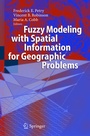
Frederick E. Petry | Vincent B. Robinson | Maria A. Cobb
Fuzzy Modeling with Spatial Information for Geographic Problems
Book
02/2005
Springer
€213.99
Shipment within 7-9 days
Content
Reasoning About Regions, Relations, and Fields.- Fuzzy Reasoning about Geographic Regions.- Combined Extraction of Directional and Topological Relationship Information from 2D Concave Objects.- Field Based Methods for the Modeling of Fuzzy Spatial Data.- Modeling Localities with Fuzzy Sets and GIS.- Fuzzy Classification.- Mining Weather Data Using Fuzzy Cluster Analysis.- Modelling the Fuzzy Spatial Extent of Geographical Entities.- Multi-Dimensional Interpolations with Fuzzy Sets.- Talking Space - A Social & Fuzzy Logical GIS Perspective On Modelling Spatial Dynamics.- A Valuation of the Reliability of a GIS Based on the Fuzzy Logic in a Concrete Case Study.- Fuzzy Representations of Landscape Features.- Fuzziness and Ambiguity in Multi-Scale Analysis of Landscape Morphometry.- Fuzzy Representation of Special Terrain Features Using a Similarity-based Approach.- Decision Making with GIS and Fuzzy Sets.- Spatial Decision-Making Using Fuzzy Decision Tables: Theory, Application and Limitations.- Spatial Decision Making Using Fuzzy GIS.- Spatially Explicit Individual-Based Ecological Modeling with Mobile Fuzzy Agents.