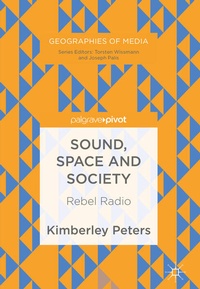
Sound, Space and Society
Description
This book breaks new ground, discussing in depth the relationship between radio, space and society; considering how space matters in the production, consumption and regulation of audio transmission, through the geophysical spaces of sea, land and air. It is relevant for readers interested in geographies of media, sensory spatial experience, everyday geopolitics and the turn towards elemental and more-than-human geographies.
Reviews / Votes
"Rebel Radio is a crucial intervention in the academic study of radio. Kim Peters significantly advances our understanding of radio as a distinctly 'spatial' and spatialising medium - operating within and in relation to place and space... This book carefully weaves concepts, theory and primary data into a genuinely original account of radio piracy's heyday, while exploring the legacies of radio piracy through to the present day." (Alasdair Pinkerton, Senior Lecturer in Geopolitics, Royal Holloway University of London, UK, author of Radio, 2018)"In exploring the Rebel Radio of the iconic off-shore pirate radio station Radio Caroline, Kim Peters makes a compelling case for why geographers need to take radio seriously. Building on her previous theorizations of the political geographies of the sea, Peters outlines why the geographical study of radio must think through the materiality of the different elements -air, aether, land and sea - that shape the production, consumption, and regulation of radio broadcasts. This beautiful and engaging book explores how the anchoring of Radio Caroline at sea, outside British territorial waters, not only exploited a succession of loopholes in the geopolitical regulation of broadcasting, but shaped the audible quality of its broadcasts and the affective atmospheres in which its audience became enrolled and called to action in defence of 'rebel radio'." (Gavin Brown, Associate Professor of Cultural and Political Geography, University of Leicester, UK)
More details
Other editions
Additional editions