

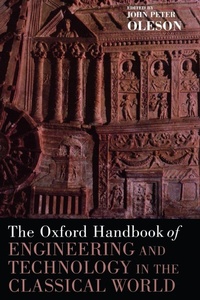
The Oxford Handbook of Engineering and Technology in the Classical World
1st Edition
Published on 7. February 2008
Book
Hardback
896 pages
978-0-19-518731-1 (ISBN)
Description
Nearly every aspect of daily life in the Mediterranean world and Europe during the florescence of the Greek and Roman cultures is relevant to the topics of engineering and technology. This volume highlights both the accomplishments of the ancient societies and the remaining research problems, and stimulates further progress in the history of ancient technology. The subject matter of the book is the technological framework of the Greek and Roman cultures from ca. 800 B.C. through ca. A.D. 500 in the circum-Mediterranean world and Northern Europe. Each chapter discusses a technology or family of technologies from an analytical rather than descriptive point of view, providing a critical summation of our present knowledge of the Greek and Roman accomplishments in the technology concerned and the evolution of their technical capabilities over the chronological period. Each presentation reviews the issues and recent contributions, and defines the capacities and accomplishments of the technology in the context of the society that used it, the available "technological shelf," and the resources consumed. These studies introduce and synthesize the results of excavation or specialized studies. The chapters are organized in sections progressing from sources (written and representational) to primary (e.g., mining, metallurgy, agriculture) and secondary (e.g., woodworking, glass production, food preparation, textile production and leather-working) production, to technologies of social organization and interaction (e.g., roads, bridges, ships, harbors, warfare and fortification), and finally to studies of general social issues (e.g., writing, timekeeping, measurement, scientific instruments, attitudes toward technology and innovation) and the relevance of ethnographic methods to the study of classical technology. The unrivalled breadth and depth of this volume make it the definitive reference work for students and academics across the spectrum of classical studies.
Reviews / Votes
compulsory (as well as entertaining) reading for any academic, student or lay-man * Francesco Trifilo, Rosetta * The various survey and analytical essays in this volume provide specific answers to questions relating to ancient technology and engineering in classical antiquity and serve as an excellent starting point for further investigation by providing current bibliographies of major scholarship on the subjects covered. The embracing purpose of this series, I believe, is to make the Oxford Handbooks the acknowledged first place to go to gain entry into an unfamiliar aspect of the ancient world. If such is the aspiration for this new series, Oleson's volume meets and exceeds the goal and, in doing so, sets the gold standard for other handbook volumes now in preparation for publication by the Oxford University Press and other publishing houses. * Robert L. Hohlfelder, American Journal of Archaeology * The finished product represents a new milestone for Oxford and for the field. Each of the eight parts to the book is a stand-alone tour de force that deserves enormous praise for its organization, its comprehensiveness, and its promise for impacting future studies. * Technology and Culture * One may make it clear, right from the start, that this is a superb production, ably edited by John Oleson, full and comprehensive, and, being devoted to technology, filling a long-felt gap. * Classical Review * It can be said at once that this is an excellent book that will serve classicists reliably as a basic work of reference. The level of scholarship is very high, the writing generally clear, the breadth of coverage impressive. * Journal of Roman Archaeology *More details
Series
Language
English
Place of publication
New York
United States
Target group
College/higher education
Illustrations
60 halftones
Dimensions
Height: 260 mm
Width: 183 mm
Thickness: 51 mm
Weight
1823 gr
ISBN-13
978-0-19-518731-1 (9780195187311)
Copyright in bibliographic data and cover images is held by Nielsen Book Services Limited or by the publishers or by their respective licensors: all rights reserved.
Schweitzer Classification
Other editions
Additional editions
John Peter Oleson
The Oxford Handbook of Engineering and Technology in the Classical World
Book
01/2010
Oxford University Press Inc
€86.20
Shipment within 15-20 days
John Peter Oleson
The Oxford Handbook of Engineering and Technology in the Classical World
E-Book
01/2008
OUP USA
€42.49
Available for download
Person
John Peter Oleson is Distinguished Professor of Greek and Roman Studies, University of Victoria, Canada.
Content
Contributors
Abbreviations and Spelling Norms
Introduction
Part I: Sources
1: (Serafina Cuomo): Ancient Written Sources for Engineering and Technology
2: (Roger Ulrich): Representations of Technical Processes
3: (Kevin Greene): Historiography and Theoretical Approaches
Part II: Primary, Extractive Technologies
4: (Paul T. Craddock): Mining and Metallurgy
5: (J. Clayton Fant): Quarrying and Stoneworking
6: (OErjan Wikander): Sources of Energy and Exploitation of Power
7: (Evi Margaritis and Martin K. Jones): Greek and Roman Agriculture
8: (Geoffrey Kron): Animal Husbandry, Hunting, Fishing, and Fish Production
Part III: Engineering and Complex Machines
9: (Fredrick A. Cooper): Greek Engineering and Construction
10: (Lynne Lancaster): Roman Engineering and Construction
11: (Andrew I. Wilson): Hydraulic Engineering and Water Supply
12: (Klaus Grewe): Tunnels and Canals
13: (Andrew I. Wilson): Machines in Greek and Roman Technology
Part IV: Secondary Processes and Manufacturing
14: (Robert I. Curtis): Food Processing and Preparation
15: (Andrew I. Wilson): Large-Scale Manufacturing, Standardization, and Trade
16: (Carol Mattusch): Metalworking and Tools
17: (Roger B. Ulrich): Woodworking
18: (John P. Wild): Textile Production
19: (Carol van Driel-Murray): Tanning and Leather
20: (Mark Jackson and Kevin Greene): Ceramic Production
21: (E. Marianne Stern): Glass Production
Part V: Technologies of Movement and Transport
22: (Lorenzo Quilici): Land Transport, Part 1: Roads and Bridges
23: (Georges Raepsaet): Land Transport, Part 2: Riding, Harnesses, and Vehicles
24: (Sean McGrail): Sea Transport, Part 1: Ships and Navigation
25: (David J. Blackman): Sea Transport, Part 2: Harbors
Part VI: Technologies of Death
26: (Philip de Souza): Greek Warfare and Fortification
27: (Gwyn Davies): Roman Warfare and Fortification
Part VII: Technologies of the Mind
28: (Willy Clarysse and Katelijn Vandorpe): Information Technologies: Writing, Book Production, and the Role of Literacy
29: (Robert Hannah): Timekeeping
30: Technologies of Calculation
Part 1: Weights and Measures(Charlotte Wikander):
Part 2: Coinage(Andrew Meadows):
Part 3: Practical Mathematics(Karin Tybjerg):
31: (OErjan Wikander): Gadgets and Scientific Instruments
32: (Kevin Greene): Inventors, Invention, and Attitudes toward Innovation
Part VIII: Ancient Technologies in the Modern World
33: (Michael B. Schiffer): Expanding Ethnoarchaeology: Historical Evidence and Model-Building in the Study of Technological Change
Index
Abbreviations and Spelling Norms
Introduction
Part I: Sources
1: (Serafina Cuomo): Ancient Written Sources for Engineering and Technology
2: (Roger Ulrich): Representations of Technical Processes
3: (Kevin Greene): Historiography and Theoretical Approaches
Part II: Primary, Extractive Technologies
4: (Paul T. Craddock): Mining and Metallurgy
5: (J. Clayton Fant): Quarrying and Stoneworking
6: (OErjan Wikander): Sources of Energy and Exploitation of Power
7: (Evi Margaritis and Martin K. Jones): Greek and Roman Agriculture
8: (Geoffrey Kron): Animal Husbandry, Hunting, Fishing, and Fish Production
Part III: Engineering and Complex Machines
9: (Fredrick A. Cooper): Greek Engineering and Construction
10: (Lynne Lancaster): Roman Engineering and Construction
11: (Andrew I. Wilson): Hydraulic Engineering and Water Supply
12: (Klaus Grewe): Tunnels and Canals
13: (Andrew I. Wilson): Machines in Greek and Roman Technology
Part IV: Secondary Processes and Manufacturing
14: (Robert I. Curtis): Food Processing and Preparation
15: (Andrew I. Wilson): Large-Scale Manufacturing, Standardization, and Trade
16: (Carol Mattusch): Metalworking and Tools
17: (Roger B. Ulrich): Woodworking
18: (John P. Wild): Textile Production
19: (Carol van Driel-Murray): Tanning and Leather
20: (Mark Jackson and Kevin Greene): Ceramic Production
21: (E. Marianne Stern): Glass Production
Part V: Technologies of Movement and Transport
22: (Lorenzo Quilici): Land Transport, Part 1: Roads and Bridges
23: (Georges Raepsaet): Land Transport, Part 2: Riding, Harnesses, and Vehicles
24: (Sean McGrail): Sea Transport, Part 1: Ships and Navigation
25: (David J. Blackman): Sea Transport, Part 2: Harbors
Part VI: Technologies of Death
26: (Philip de Souza): Greek Warfare and Fortification
27: (Gwyn Davies): Roman Warfare and Fortification
Part VII: Technologies of the Mind
28: (Willy Clarysse and Katelijn Vandorpe): Information Technologies: Writing, Book Production, and the Role of Literacy
29: (Robert Hannah): Timekeeping
30: Technologies of Calculation
Part 1: Weights and Measures(Charlotte Wikander):
Part 2: Coinage(Andrew Meadows):
Part 3: Practical Mathematics(Karin Tybjerg):
31: (OErjan Wikander): Gadgets and Scientific Instruments
32: (Kevin Greene): Inventors, Invention, and Attitudes toward Innovation
Part VIII: Ancient Technologies in the Modern World
33: (Michael B. Schiffer): Expanding Ethnoarchaeology: Historical Evidence and Model-Building in the Study of Technological Change
Index