

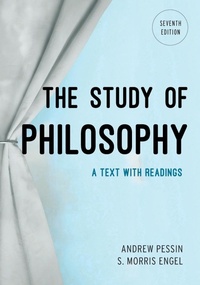
The Study of Philosophy
A Text with Readings
7th Edition
Published on 19. March 2015
Book
Paperback/Softback
458 pages
978-1-4422-4282-1 (ISBN)
Description
This seventh edition of The Study of Philosophy presents a comprehensive treatment of the major fields and figures of philosophy alongside primary readings by seminal thinkers to fuel debate and further study.
New features of this edition include
a substantive account of philosophical theology a reorganized treatment of early modern rationalism and empiricism discussion of the major highlights of twentieth- and twenty-first-century philosophy a survey of major contemporary moral problems
From Plato to Plantinga, from Aristotle to Ayer, and from Socrates to Singer, this text brings the power of both ancient and modern philosophy to students of the twenty-first century!
New features of this edition include
a substantive account of philosophical theology a reorganized treatment of early modern rationalism and empiricism discussion of the major highlights of twentieth- and twenty-first-century philosophy a survey of major contemporary moral problems
From Plato to Plantinga, from Aristotle to Ayer, and from Socrates to Singer, this text brings the power of both ancient and modern philosophy to students of the twenty-first century!
Reviews / Votes
Maintaining superb readability, the seventh edition adds key ingredients: more contemporary philosophy, impressive selections of primary sources, and excellent choices of additions within the chapters. There is much to commend in this newest edition. -- Dominic Prianti, Gannon University The seventh edition of The Study of Philosophy is a great new version. In addition to offering a new chapter on contemporary moral problems, the authors have revised their work on logic, metaphysics, and the philosophy of religion. Lively and engaging, The Study of Philosophy should remain an important resource for every undergraduate. -- William P. Haggerty, Gannon University The new edition of The Study of Philosophy retains the impressive coverage of topics of earlier editions-along with the excellent chapters on logic (including a superb treatment of the informal fallacies), and the student-friendly narrative-and adds many new, well-chosen topical readings, and a whole chapter on contemporary moral problems. The best introductory philosophy textbook on the market just got better! -- Michael Latzer, Gannon UniversityMore details
Edition
7th edition
Language
English
Place of publication
United States
Publishing group
Bloomsbury Publishing Plc
Target group
College/higher education
US School Grade: From College Freshman to College Graduate Student, Interest Age: From 18 to 22 years
Illustrations
32 b/w photos; 2 tables; 82 textboxes
Dimensions
Height: 254 mm
Width: 178 mm
Thickness: 25 mm
Weight
858 gr
ISBN-13
978-1-4422-4282-1 (9781442242821)
Copyright in bibliographic data and cover images is held by Nielsen Book Services Limited or by the publishers or by their respective licensors: all rights reserved.
Schweitzer Classification
Other editions
Additional editions
E-Book
03/2015
7th Edition
Rowman & Littlefield Publishers
€98.99
Available for download
E-Book
03/2015
7th Edition
Rowman & Littlefield Publishers
€98.99
Available for download
Persons
Andrew Pessin is professor of philosophy at Connecticut College. He is the author of Uncommon Sense, (R&L 2013), which was named a CHOICE Outstanding title for the year.
S. Morris Engel is professor emeritus at York University. Previously, he taught at the University of Southern California for twenty-five years.
S. Morris Engel is professor emeritus at York University. Previously, he taught at the University of Southern California for twenty-five years.
Content
PART I PHILOSOPHY AND ITS BEGINNINGS
Chapter 1: The Nature and Scope of Philosophy
How Philosophy and Science Differ
How Philosophy and Religion Differ
Philosophy's Three Main Subject Areas
Philosophy's Main Method
Summary
Key Terms
Review Questions
Reading: "The Philosopher within You"-Andrew Pessin
Chapter 2: It Began Here: The Pre-Socratics
The Problem of Being
ThalesAnaximanderAnaximenesThe Problem of Becoming
ParmenidesZenoHeraclitusThe Theory of Atomism: A Synthesis
Summary
Key Terms
Review Questions
Reading: "Ionian Science before Socrates"-F. M. Cornford
Reading: On the Nature of Things-Lucretius
Chapter 3: Socrates and Plato
The Sophists
Socrates the Man
Life in Athens and Conquest by Sparta
Socrates' Chronicler: Plato
The Dialogues: Socrates' Trial and Death
EuthyphroApologyCritoPhaedoPlato's Forms
What Exactly Are Forms?Forms are Neither Perceivable, Changeable, Nor Even HereHow Many Forms Are There?One More Important ImplicationWhy Should We Believe in the Existence of Forms?Philosophers and Cave-Persons
Summary
Key Terms
Review Questions
Reading: Apology-Plato
PART II PHILOSOPHY'S METHOD
Chapter 4: Aristotle and the Science of Logic
Aristotle
The Sophists Again
The Science of Logic
Logic as the Study of Argument
Distinguishing Arguments From Non-Arguments
Eliminating Verbiage
Supplying Missing Components
Distinguishing Deductive and Inductive Arguments
Evaluating Arguments: Truth, Validity, and Soundness
Some Classic Examples of Valid Deductive ArgumentsEvaluating Arguments: StrategySummary
Key Terms
Review Questions
Reading: "What the Tortoise Said to Achilles"-Lewis Carroll
Reading: "Newcomb's Problem and Two Principles of Choice"-Robert Nozick
Chapter 5: Common Fallacies
The Fallacies of Ambiguity
AmphibolyAccentEquivocationThe Fallacies of Presumption
Overlooking the FactsEvading the FactsDistorting the FactsFallacies of Relevance
Genetic FallacyAbusive ad HominemCircumstantial ad HominemTu QuoquePoisoning the WellSummary
Key Terms
Review Questions
Reading: "A Mad Tea-Party"-Lewis Carroll
PART III PHILOSOPHY'S MAIN QUESTIONS
Chapter 6: Ethics: What Are We Like, and What Should We Do?
Aristotle's Ethics
Goodness and HappinessMoral VirtuesIntellectual VirtuesKant's Ethics
A Good WillThe Categorical ImperativeThe Role of ReasonThe Utilitarian Theory
Jeremy BenthamJohn Stuart MillSome Criticisms of Utilitarianism
Summary
Key Terms
Review Questions
Reading: Nicomachean Ethics-Aristotle
Reading: "Santa and Scrooge"-Andrew Pessin
Reading: "Of what sort of Proof the Principle of Utility is Susceptible"-John Stuart Mill
Reading: "The Experience Machine"-Robert Nozick
Chapter 7: Religion: The Nature and Existence of God
A Brief History of Philosophical Theology, 427 B.C.E.-1600 C.E.
Proofs for the Existence of God
St. Anselm's Ontological ArgumentSt. Thomas Aquinas's Cosmological ArgumentsWilliam Paley's Biological Teleological Argument Immanuel Kant's Moral ArgumentBlaise Pascal's Prudential ArgumentGod's Nature
God's PowerGod's KnowledgeGod's Goodness, and the Problem of EvilSummary
Key Terms
Review Questions
Reading: "That God truly exists"-Anselm
Reading: From Natural Theology; or, Evidences of the Existence and Attributes of the Deity-William Paley
Reading: From City of God-Augustine
Reading: From "Abridgement of the Argument Reduced to Syllogistic Form"-G. W. Leibniz
Chapter 8: Epistemology and Metaphysics: The Rationalists
Brief Overview of Early Modern Philosophy
Rene Descartes
Descartes' DualismDescartes' Theory of MindDescartes' Theory of MatterBaruch Spinoza
Spinoza's Pantheism and MonismSpinoza's Necessitarianism, Determinism, and EthicsGottfried Wilhelm von Leibniz
Leibniz's Monads and Pre-Established HarmonyThe Truth Argument for Pre-Established HarmonyRationalism, Intelligibility, and Causation
Rationalist Debates on the Nature of CausationSummary
Key Terms
Review Questions
Reading: From Meditations on First Philosophy-Rene Descartes
Reading: "The Most Dangerous Error of the Philosophy of the Ancients"-Nicolas Malebranche
Reading: From Dialogues on Metaphysics and Religion-Nicolas Malebranche
Reading: "New System of Nature" and "Clarification of the Difficulties Which Mr. Bayle Has Found in the New System of the Union of Soul and Body"-G.W. Leibniz
Chapter 9: Epistemology and Metaphysics: The Empiricists and Kant
John Locke
Locke's Attack on NativismThe Structure and Contents of the Mind, and SubstanceThe Distinction Between Primary and Secondary Qualities George Berkeley
Three Lines of Argument Against Materialism and For IdealismIdealism, Materialism, and Common SenseSome Problems For IdealismDavid Hume
Relations of Ideas and Matters of FactHume's Critique of CausationHume's Critique of Inductive Reasoning Immanuel Kant
Three Ways to Frame the DiscussionA First Pass through Kant's AnswerFour Kinds of JudgmentsSynthetic A Priori JudgmentsHow is Mathematics Possible?How is Science Possible?Why Metaphysics is ImpossibleSummary
Key Terms
Review Questions
Reading: From "First Dialogue"-George Berkeley
Reading: "Sceptical Doubts concerning the Operations of the Understanding"-David Hume
PART IV CONTEMPORARY DIRECTIONS
Chapter 10: 20th-21st Century Developments
Existentialism
Soren Kierkegaard and Religious ExistentialismFriedrich Nietzsche and Nihilistic ExistentialismJean-Paul Sartre and Humanistic ExistentialismSome Developments in Ethics
A. J. Ayer and Logical PositivismSome Developments in Philosophy of Religion
Alvin Plantinga on Science and Theism Some Developments in Epistemology
The Traditional Definition of KnowledgeThe Gettier ProblemSome Developments in Metaphysics
The Attack on Descartes' DualismConsciousness and DualismSummary
Key Terms
Review Questions
Reading: "A Panegyric upon Abraham"-Soeren Kierkegaard
Reading: From Nausea-Jean-Paul Sartre
Reading: "Critique of Ethics and Theology"-A. J. Ayer
Reading: "Is Atheism Irrational?"-Alvin Plantinga
Reading: "What Mary Didn't Know"-Frank Jackson
Chapter 11: Contemporary Moral Problems, and Peter Singer
Peter Singer
"All Animals are Equal""Is the Sanctity of Life Ethic Terminally Ill?"The Life You Can Save: How to Do Your Part to End World PovertySummary
Key Terms
Review Questions
Reading: "Of Duties to Animals ..."-Immanuel Kant
Reading: "Abortion and Infanticide" and "Taking Life: Humans"-Peter Singer
Reading: "Life after God? The Ethics of Peter Singer"-Peter May
Glossary
Index
Chapter 1: The Nature and Scope of Philosophy
How Philosophy and Science Differ
How Philosophy and Religion Differ
Philosophy's Three Main Subject Areas
Philosophy's Main Method
Summary
Key Terms
Review Questions
Reading: "The Philosopher within You"-Andrew Pessin
Chapter 2: It Began Here: The Pre-Socratics
The Problem of Being
ThalesAnaximanderAnaximenesThe Problem of Becoming
ParmenidesZenoHeraclitusThe Theory of Atomism: A Synthesis
Summary
Key Terms
Review Questions
Reading: "Ionian Science before Socrates"-F. M. Cornford
Reading: On the Nature of Things-Lucretius
Chapter 3: Socrates and Plato
The Sophists
Socrates the Man
Life in Athens and Conquest by Sparta
Socrates' Chronicler: Plato
The Dialogues: Socrates' Trial and Death
EuthyphroApologyCritoPhaedoPlato's Forms
What Exactly Are Forms?Forms are Neither Perceivable, Changeable, Nor Even HereHow Many Forms Are There?One More Important ImplicationWhy Should We Believe in the Existence of Forms?Philosophers and Cave-Persons
Summary
Key Terms
Review Questions
Reading: Apology-Plato
PART II PHILOSOPHY'S METHOD
Chapter 4: Aristotle and the Science of Logic
Aristotle
The Sophists Again
The Science of Logic
Logic as the Study of Argument
Distinguishing Arguments From Non-Arguments
Eliminating Verbiage
Supplying Missing Components
Distinguishing Deductive and Inductive Arguments
Evaluating Arguments: Truth, Validity, and Soundness
Some Classic Examples of Valid Deductive ArgumentsEvaluating Arguments: StrategySummary
Key Terms
Review Questions
Reading: "What the Tortoise Said to Achilles"-Lewis Carroll
Reading: "Newcomb's Problem and Two Principles of Choice"-Robert Nozick
Chapter 5: Common Fallacies
The Fallacies of Ambiguity
AmphibolyAccentEquivocationThe Fallacies of Presumption
Overlooking the FactsEvading the FactsDistorting the FactsFallacies of Relevance
Genetic FallacyAbusive ad HominemCircumstantial ad HominemTu QuoquePoisoning the WellSummary
Key Terms
Review Questions
Reading: "A Mad Tea-Party"-Lewis Carroll
PART III PHILOSOPHY'S MAIN QUESTIONS
Chapter 6: Ethics: What Are We Like, and What Should We Do?
Aristotle's Ethics
Goodness and HappinessMoral VirtuesIntellectual VirtuesKant's Ethics
A Good WillThe Categorical ImperativeThe Role of ReasonThe Utilitarian Theory
Jeremy BenthamJohn Stuart MillSome Criticisms of Utilitarianism
Summary
Key Terms
Review Questions
Reading: Nicomachean Ethics-Aristotle
Reading: "Santa and Scrooge"-Andrew Pessin
Reading: "Of what sort of Proof the Principle of Utility is Susceptible"-John Stuart Mill
Reading: "The Experience Machine"-Robert Nozick
Chapter 7: Religion: The Nature and Existence of God
A Brief History of Philosophical Theology, 427 B.C.E.-1600 C.E.
Proofs for the Existence of God
St. Anselm's Ontological ArgumentSt. Thomas Aquinas's Cosmological ArgumentsWilliam Paley's Biological Teleological Argument Immanuel Kant's Moral ArgumentBlaise Pascal's Prudential ArgumentGod's Nature
God's PowerGod's KnowledgeGod's Goodness, and the Problem of EvilSummary
Key Terms
Review Questions
Reading: "That God truly exists"-Anselm
Reading: From Natural Theology; or, Evidences of the Existence and Attributes of the Deity-William Paley
Reading: From City of God-Augustine
Reading: From "Abridgement of the Argument Reduced to Syllogistic Form"-G. W. Leibniz
Chapter 8: Epistemology and Metaphysics: The Rationalists
Brief Overview of Early Modern Philosophy
Rene Descartes
Descartes' DualismDescartes' Theory of MindDescartes' Theory of MatterBaruch Spinoza
Spinoza's Pantheism and MonismSpinoza's Necessitarianism, Determinism, and EthicsGottfried Wilhelm von Leibniz
Leibniz's Monads and Pre-Established HarmonyThe Truth Argument for Pre-Established HarmonyRationalism, Intelligibility, and Causation
Rationalist Debates on the Nature of CausationSummary
Key Terms
Review Questions
Reading: From Meditations on First Philosophy-Rene Descartes
Reading: "The Most Dangerous Error of the Philosophy of the Ancients"-Nicolas Malebranche
Reading: From Dialogues on Metaphysics and Religion-Nicolas Malebranche
Reading: "New System of Nature" and "Clarification of the Difficulties Which Mr. Bayle Has Found in the New System of the Union of Soul and Body"-G.W. Leibniz
Chapter 9: Epistemology and Metaphysics: The Empiricists and Kant
John Locke
Locke's Attack on NativismThe Structure and Contents of the Mind, and SubstanceThe Distinction Between Primary and Secondary Qualities George Berkeley
Three Lines of Argument Against Materialism and For IdealismIdealism, Materialism, and Common SenseSome Problems For IdealismDavid Hume
Relations of Ideas and Matters of FactHume's Critique of CausationHume's Critique of Inductive Reasoning Immanuel Kant
Three Ways to Frame the DiscussionA First Pass through Kant's AnswerFour Kinds of JudgmentsSynthetic A Priori JudgmentsHow is Mathematics Possible?How is Science Possible?Why Metaphysics is ImpossibleSummary
Key Terms
Review Questions
Reading: From "First Dialogue"-George Berkeley
Reading: "Sceptical Doubts concerning the Operations of the Understanding"-David Hume
PART IV CONTEMPORARY DIRECTIONS
Chapter 10: 20th-21st Century Developments
Existentialism
Soren Kierkegaard and Religious ExistentialismFriedrich Nietzsche and Nihilistic ExistentialismJean-Paul Sartre and Humanistic ExistentialismSome Developments in Ethics
A. J. Ayer and Logical PositivismSome Developments in Philosophy of Religion
Alvin Plantinga on Science and Theism Some Developments in Epistemology
The Traditional Definition of KnowledgeThe Gettier ProblemSome Developments in Metaphysics
The Attack on Descartes' DualismConsciousness and DualismSummary
Key Terms
Review Questions
Reading: "A Panegyric upon Abraham"-Soeren Kierkegaard
Reading: From Nausea-Jean-Paul Sartre
Reading: "Critique of Ethics and Theology"-A. J. Ayer
Reading: "Is Atheism Irrational?"-Alvin Plantinga
Reading: "What Mary Didn't Know"-Frank Jackson
Chapter 11: Contemporary Moral Problems, and Peter Singer
Peter Singer
"All Animals are Equal""Is the Sanctity of Life Ethic Terminally Ill?"The Life You Can Save: How to Do Your Part to End World PovertySummary
Key Terms
Review Questions
Reading: "Of Duties to Animals ..."-Immanuel Kant
Reading: "Abortion and Infanticide" and "Taking Life: Humans"-Peter Singer
Reading: "Life after God? The Ethics of Peter Singer"-Peter May
Glossary
Index