

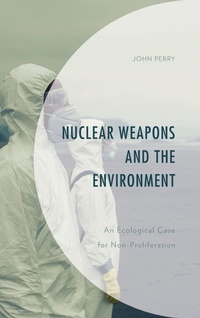
Nuclear Weapons and the Environment
An Ecological Case for Non-proliferation
Published on 12. March 2021
Book
Hardback
190 pages
978-1-7936-0283-1 (ISBN)
Description
In Nuclear Weapons and the Environment, John Perry highlights the environmental damage caused by nuclear device testing. The failure of the Nuclear Proliferation Treaty and the continued proliferation of nuclear weapons is a grave risk to not only human life but to the environment. Pointing to the unstable political situation between a variety of state and non-state actors, the remediation of nuclear test sites, and the risks involved in the production of nuclear weapons, Perry makes a clear case for the dire importance of non-proliferation.
Reviews / Votes
During the Cold War, the 1962 Cuban Missile Crisis threatened to wipe out humanity and took the United States and the USSR to the brink of total annihilation as JFK and Nikita Khrushchev looked into the abyss of where a security policy based on Mutually Assured Destruction (MAD) had taken them. A policy of Gradual Reduction in Tensions (GRIT), bilateral treaties, and a security deterrence strategy de-escalated tensions between both superpowers. More recently Pakistan and India have escalated their ongoing conflict over Kashmir as Indian and Chinese troops have clashed at various locations along the Sino-Indian border. And North Korea continues to test missiles for its nuclear warheads as the 2015 Iran nuclear deal flounders due to the lack of US leadership. The risk of a nuclear Armageddon is never far away. John Perry has produced an important and stimulating exploration of how the proliferation of nuclear weapons, as well as nuclear accidents in Chernobyl, Ukraine, and in Okuma, Japan, pose a grave threat to the environment and to life on planet earth. This excellent book will have a wide audience. -- Sean Byrne, University of ManitobaMore details
Series
Language
English
Place of publication
United States
Publishing group
Bloomsbury Publishing Plc
Target group
Professional and scholarly
Dimensions
Height: 235 mm
Width: 157 mm
Thickness: 15 mm
Weight
434 gr
ISBN-13
978-1-7936-0283-1 (9781793602831)
Copyright in bibliographic data and cover images is held by Nielsen Book Services Limited or by the publishers or by their respective licensors: all rights reserved.
Schweitzer Classification
Other editions
Additional editions
E-Book
03/2021
1st Edition
Lexington Books
€90.99
Available for download
E-Book
03/2021
1st Edition
Lexington Books
€90.99
Available for download
Person
John Perry is senior scholar at St. Paul's College at the University of Manitoba.
Content
Table of Contents
Chapter One: Introduction to Book on Non-Proliferation
Chapter Two: Historical Background
Chapter Three: The Nuclear Non-Proliferation Treaty
Chapter Four: The Risk of a Regional Nuclear War between India and Pakistan
Chapter Five: The Environmental and Human Cost of Producing Nuclear Weapons
Chapter Six: Chernobyl: The World's Worst Nuclear Accident
Chapter Seven: The Greatest Industrial Accident in History: Fukushima Daiichi
Chapter Eight: The Greatest Deproliferation of Nuclear Weapons in the Postwar Period
Chapter Nine: Nuclear Proliferation through Theft, Terrorism or Neglect
Chapter Ten: Nuclear Weapons Testing: Inflicting the Conditions of Nuclear War on Fragile Environments
Chapter Eleven: Pakistan: The Biggest and Most Important Exporter of Nuclear Technology in the History of the Nuclear Age
Chapter Twelve: The Ultimate Weapon as the Ultimate Guarantee of Regime Survival: North Korea and the Bomb
Chapter One: Introduction to Book on Non-Proliferation
Chapter Two: Historical Background
Chapter Three: The Nuclear Non-Proliferation Treaty
Chapter Four: The Risk of a Regional Nuclear War between India and Pakistan
Chapter Five: The Environmental and Human Cost of Producing Nuclear Weapons
Chapter Six: Chernobyl: The World's Worst Nuclear Accident
Chapter Seven: The Greatest Industrial Accident in History: Fukushima Daiichi
Chapter Eight: The Greatest Deproliferation of Nuclear Weapons in the Postwar Period
Chapter Nine: Nuclear Proliferation through Theft, Terrorism or Neglect
Chapter Ten: Nuclear Weapons Testing: Inflicting the Conditions of Nuclear War on Fragile Environments
Chapter Eleven: Pakistan: The Biggest and Most Important Exporter of Nuclear Technology in the History of the Nuclear Age
Chapter Twelve: The Ultimate Weapon as the Ultimate Guarantee of Regime Survival: North Korea and the Bomb