

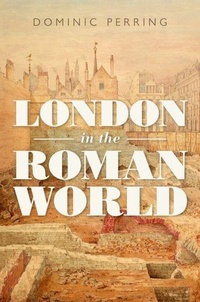
London in the Roman World
Published on 27. January 2022
Book
Hardback
592 pages
978-0-19-878900-0 (ISBN)
Description
incAn original, authoritative survey of the archaeology and history of Roman London.
London in the Roman World draws on the results of latest archaeological discoveries to describe London's Roman origins. It presents a wealth of new information from one of the world's richest and most intensively studied archaeological sites, and a host of original ideas concerning its economic and political history. This original study follows a narrative approach, setting archaeological data firmly within its historical context. London was perhaps converted from a fort built at the time of the Roman conquest, where the emperor Claudius arrived to celebrate his victory in AD 43, to become the commanding city from which Rome supported its military occupation of Britain. London grew to support Rome's campaigning forces, and the book makes a close study of the political and economic consequences of London's role as a supply base. Rapid growth generated a new urban landscape, and this study provides a comprehensive guide to the industry and architecture of the city. The story, traced from new archaeological research, shows how the city was twice destroyed in war, and suffered more lastingly from plagues of the second and third centuries. These events had a critical bearing on the reforms of late antiquity, from which London emerged as a defended administrative enclave only to be deserted when Rome failed to maintain political control. This ground-breaking study brings new information and arguments to our study of the way in which Rome ruled, and how the empire failed.
London in the Roman World draws on the results of latest archaeological discoveries to describe London's Roman origins. It presents a wealth of new information from one of the world's richest and most intensively studied archaeological sites, and a host of original ideas concerning its economic and political history. This original study follows a narrative approach, setting archaeological data firmly within its historical context. London was perhaps converted from a fort built at the time of the Roman conquest, where the emperor Claudius arrived to celebrate his victory in AD 43, to become the commanding city from which Rome supported its military occupation of Britain. London grew to support Rome's campaigning forces, and the book makes a close study of the political and economic consequences of London's role as a supply base. Rapid growth generated a new urban landscape, and this study provides a comprehensive guide to the industry and architecture of the city. The story, traced from new archaeological research, shows how the city was twice destroyed in war, and suffered more lastingly from plagues of the second and third centuries. These events had a critical bearing on the reforms of late antiquity, from which London emerged as a defended administrative enclave only to be deserted when Rome failed to maintain political control. This ground-breaking study brings new information and arguments to our study of the way in which Rome ruled, and how the empire failed.
Reviews / Votes
London in the Roman World collects and details the most recent archaeological and academic research on the Roman city. * D. M. Hall, CHOICE * This is a forcefully argued account of Roman London marked by an impressive mastery of a complex and fragmented archaeology. * Christopher Kelly , London Review of Books * Books of the Year 2022 * , Current Archaeology * highly informative, accessibly written * Sadie Watson, Minerva * Accessible... engagingly written... This book is an excellent and thoughtful exploration of London at a macro level, exploring the forces that governed its wider fate, and placing it firmly in context as part of a wider empire. Agree or disagree, this book will be central to discussions of the city for decades to come. * Owen Humphreys, Current Archaeology * This is a splendid book... and Dominic's wide knowledge of other parts of the Roman world gives it a depth that makes it a landmark in the study of Roman London. * Andrew Selkirk, Current Archaeology * A superbly readable, up-to-date, comprehensive and beautifully illustrated account of the history of Roman London. * Armand D'Angour, Engelsberg Ideas * This book presents the most comprehensive coverage of Roman London - Londinium - to date by the foremost authority in this sphere of Romano-British archaeology... Dominic Perring should be commended for producing a work that navigates such a difficult journey so well through a thorny subject area with the relative precision permitted by a wealth of material sources. It is the manner in which these are interpreted and their concordance - and in some cases discordance - with historical narratives that single this work out at as an essential handbook for Roman London and Roman Britain more generally. * Mark Merrony * Though packed with detail, Dominic Perring's book is well written and easy to read. For the scholar or the general reader seeking an up-to-date, forensic examination of Roman London, this comprehensive book is an essential tool. * Derek Birks, Aspects of History * This fascinating book does much more than tell the story which is briefly summarised above. It is packed with analysis of individual buildings and discussion of social history. It does not pre-suppose extensive background knowledge. Anyone who enjoys history, whether or not they are a classicist, will read this work with great interest. * Rupert Jackson, Classics for All * A closely argued, authoritative and convincing account...I suspect this book will set the standard for overviews of Roman London for many years - the point of reference for budding academics and interested punters. * Anthony Webb, Popular History Books * A truly remarkable achievement. * Martin Henig, Journal of the British Archaeological Association * It only remains to record that this book's production is excellent in every way..., the publication is a joy to read and to consult. Author and publisher deserve our profound thanks. * Henig Martin, JBAA * This is an excellent book for teachers, schools and students to be engaging with and will make a fine addition to any school library. * Timothy Adelani, Journal of Classics Teaching *More details
Language
English
Place of publication
Oxford
United Kingdom
Target group
Professional and scholarly
Illustrations
90 black and white images
Dimensions
Height: 163 mm
Width: 242 mm
Thickness: 34 mm
Weight
1142 gr
ISBN-13
978-0-19-878900-0 (9780198789000)
Copyright in bibliographic data and cover images is held by Nielsen Book Services Limited or by the publishers or by their respective licensors: all rights reserved.
Schweitzer Classification
Other editions
Additional editions
Dominic Perring
London in the Roman World
E-Book
01/2022
1st Edition
OUP eBook
€24.99
Available for download
Dominic Perring
London in the Roman World
E-Book
01/2022
1st Edition
OUP eBook
€24.99
Available for download
Person
Dominic Perring is the Director of the UCL Centre for Applied Archaeology and a former lecturer in archaeology at the University of Leicester, University of York, and American University of Beirut. He has spent over fifty years leading archaeological research into Roman cities, including major programmes of research in London, Beirut, and Milan. He has written more than 100 academic papers and contributed to various television broadcasts on these and related topics.
Content
PART 1: APPROACHES TO ROMAN LONDON
1: Introduction
2: Recovering Roman London
3: Understanding Roman London
4: Before London
PART 2: MAKING LONDON
5: The Roman invasion (c. AD 43)
6: A supply base (c. AD 43-52)
7: Shaping the city (c. AD 52-60)
8: The Boudican revolt (c. AD 60-61)
9: Post-war reconstruction (c. AD 61-70)
PART 3: MONUMENTS OF ROME
10: Bread and circuses (c. AD 70-80
11: Britain's capital? (c. AD 80-90)
12: Episodes of renewal (c. AD 90-110)
13: The great forum (c. AD 110-125)
PART 4: THE WORKING CITY
14: The urban hinterland
15: The region and its resources
16: Economy and supply
17: London at work
18: People and society
PART 5: DESTRUCTION AND RECOVERY
19: The Hadrianic fire (c. AD 125-135)
20: The Walbrook skulls
21: Antonine sophistication (c. AD 135-165)
PART 6: LONDON DIMINISHED
22: Antonine contraction (c. AD 165-180
23: Severan revival (c. AD 180-225)
24: Britannia Superior (c. AD 225-250)
25: The third-century 'crisis' (c. AD 250-270)
PART 7: THE LATE ANTIQUE CITY
26: Restoration (c. AD 270-285)
27: City of emperors (c. AD 285-350)
28: Augusta (c. AD 350-380)
29: Endings (c. AD 380-400)
PART 8: BEYOND ROME
30: Fifth-century landscapes
31: Afterword
APPENDIX: EXCAVATIONS REFERRED TO IN THE TEXT
1: Introduction
2: Recovering Roman London
3: Understanding Roman London
4: Before London
PART 2: MAKING LONDON
5: The Roman invasion (c. AD 43)
6: A supply base (c. AD 43-52)
7: Shaping the city (c. AD 52-60)
8: The Boudican revolt (c. AD 60-61)
9: Post-war reconstruction (c. AD 61-70)
PART 3: MONUMENTS OF ROME
10: Bread and circuses (c. AD 70-80
11: Britain's capital? (c. AD 80-90)
12: Episodes of renewal (c. AD 90-110)
13: The great forum (c. AD 110-125)
PART 4: THE WORKING CITY
14: The urban hinterland
15: The region and its resources
16: Economy and supply
17: London at work
18: People and society
PART 5: DESTRUCTION AND RECOVERY
19: The Hadrianic fire (c. AD 125-135)
20: The Walbrook skulls
21: Antonine sophistication (c. AD 135-165)
PART 6: LONDON DIMINISHED
22: Antonine contraction (c. AD 165-180
23: Severan revival (c. AD 180-225)
24: Britannia Superior (c. AD 225-250)
25: The third-century 'crisis' (c. AD 250-270)
PART 7: THE LATE ANTIQUE CITY
26: Restoration (c. AD 270-285)
27: City of emperors (c. AD 285-350)
28: Augusta (c. AD 350-380)
29: Endings (c. AD 380-400)
PART 8: BEYOND ROME
30: Fifth-century landscapes
31: Afterword
APPENDIX: EXCAVATIONS REFERRED TO IN THE TEXT