

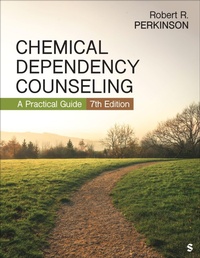
Chemical Dependency Counseling
A Practical Guide
7th Edition
Will be published approx. on 14. December 2026
Book
Paperback/Softback
978-1-0719-7516-9 (ISBN)
Description
Chemical Dependency Counseling: A Practical Guide offers a comprehensive, step-by-step introduction to addiction treatment grounded in twelve-step principles and evidence-based practice.
Reviews / Votes
In Chemical Dependency Counseling, Dr. Perkinson has given the addictions counseling profession an exceptional foundational text. Students and experienced professionals will find resources that are clinically sound and practice relevant. CDC continues to be welcomed in my classroom and "heavily borrowed" by my colleagues. -- Don P. Osborn The addiction field has long needed a comprehensive set of exercises counselors can use to guide patients through good treatment. The books developed by Dr. Perkinson take the patient from the beginning of treatment to the end. They are written in such a manner that Dr. Perkinson is your mentor and is conversing with you, sharing with you his vast area of expertise and knowledge about recovery. These patient exercises meet the highest standards demanded by accrediting bodies. -- Dr. Bob Carr I have been working with compulsive gamblers and their family members for 12 years and find this work extremely rewarding and challenging. I have been utilizing Dr. Perkinson's books for 10 years and have found them to be some of the most useful tools in helping addicts and gamblers identify the many ways that addiction has impacted their lives. Our clients benefit from the straightforward approach and the clear instructions of how to begin incorporating a 12-step recovery program into their lives. I highly recommend Dr. Perkinson's books. -- Lisa Vig I have been in the chemical dependency field for over 30 years. I have worked as a counselor, clinical supervisor, and executive director in a number of treatment centers. These are the best exercises for alcoholics, drug addicts, and problem gamblers that I have ever seen. I have used them for years, and patients find them easy to understand. The material covers everything an addict needs to know to enter a stable recovery. I highly recommend this book and patient handbooks. Staff and patients love them, and they make the counselor's job easy. The book makes the job easy as all you will need to help your patient is in one place. -- Bob Bogue Dr. Perkinson does an excellent job of bringing together and individualizing 12-step treatment for addicts and gamblers, including identifying character defects and relapse prevention. Comments from patients include, "It has opened my eyes to my gambling and behaviors associated with it" and "I feel it is easy to work and very self-explanatory." -- Ron Scherr An excellent reference for introducing new chemical/substance dependency practitioners to the structure of treatment programs. The expanded version of the original text is loaded with useful tools for treatment professionals and others in related disciplines. -- Gerald Schneck Truly the nuts and bolts of alcohol and drug treatment. The information provided is superbly researched and put in a language that is eminently readable by anyone, including an entry-level counselor. -- Nancy Waite O'BrienMore details
Edition
7th Revised edition
Language
English
Place of publication
Thousand Oaks
United States
Publishing group
Sage Publications Inc Ebooks
Target group
College/higher education
Edition type
Revised edition
Dimensions
Height: 279 mm
Width: 215 mm
ISBN-13
978-1-0719-7516-9 (9781071975169)
Copyright in bibliographic data and cover images is held by Nielsen Book Services Limited or by the publishers or by their respective licensors: all rights reserved.
Schweitzer Classification
Other editions
Previous edition
Book
02/2022
6th Edition
SAGE Publications Inc
€234.72
Shipment within 15-20 days
Person
Robert R. Perkinson is the clinical director of Keystone Treatment Center in Canton, South Dakota. He is a licensed psychologist; licensed marriage & family therapist; internationally certified alcohol and drug counselor; South Dakota certified chemical dependency counselor, Level III; and a nationally certified gambling counselor and supervisor. His specialty areas focus on treating alcoholics, addicts, and pathological gamblers. He is the author of Chemical Dependency Counseling: A Practical Guide (2nd ed.) (2003a), which is the leading treatment manual in the world for chemical dependency counselors. With Dr. Arthur E. Jongsma Jr. (2001) he is the coauthor of The Addiction Treatment Planner, which is the best-selling treatment planner and computer software program for mental health and addiction professionals. He has also written The Alcoholism and Drug Abuse Patient Workbook (2003c) and the Gambling Addiction Patient Workbook (2003b). These workbooks have all of the exercises patients need to enter a stable recovery. His book entitled Treating Alcoholism: How to Help Your Clients Enter Recovery (2004) trains professionals how to treat patients with alcohol problems. He is the author of the book God Talks to You (2000) and the meditation tape A Communication from God (2008) by cdbaby, which help addicts make their first conscious contact with a Higher Power of their own understanding. He is a composer and has completed his second CD, Peace Will Come, music that helps addicts learn the essentials of a spiritual journey. With Dr. Jean LaCour (2004), he wrote the Faith-Based Addiction Curriculum to teach professionals of faith how to treat addiction. Dr. Perkinson is an international motivational speaker and regular contributor to numerous professional journals. He is the webmaster of several web pages, including www.robertperkinson.com, www.alcoholismtreatment.org, and www.godtalkstoyou.com, where he gets over 2.6 million hits a year and answers questions on addiction for free. His biographies can be found in Who's Who in America, Who's Who in Medicine and Healthcare, Who's Who in Science and Engineering, and Who's Who in the World.
Content
Preface
Acknowledgments
Chapter 1: First Contact
Treatment Works
The Motivational Interview
How to Assess Motivation
Chapter 2: First Hours of Treatment
The First Hours
How to Greet Clients
Beginning the Therapeutic Alliance
Dealing With Early Denial
How to Check for Organic Brain Dysfunction
The Initial Assessment
How to Conduct a Crisis Intervention
American Society of Addiction Medicine Patient Placement Criteria
Diagnostic and Statistical Manual
How to Determine the Level of Care Needed
Criteria for Outpatient Treatment (Adults)
Criteria for Outpatient Treatment (Adolescents)
Criteria for Inpatient Treatment (Adolescents)
The Client's Reaction to Intoxication
What to Do with an Intoxicated Client
How Clients React in Detoxification
The AMA Threat
How to Develop and Use the AMA Team
How to Use the In-House Intervention
How to Respond to Clients Who Leave AMA
Chapter 3: Biopsychosocial Interview
The Biopsychosocial Interview
How to Conduct the Interview
A Sample Biopsychosocial Interview
The Problem List
Chapter 4: Treatment Plan
How to Build a Treatment Plan
The Diagnostic Summary
Goals and Objectives
How to Develop Goals
How to Develop Objectives
How to Develop Interventions
How to Evaluate the Effectiveness of Treatment
How to Select Goals, Objectives, and Interventions
Treatment Plan Review
Documentation
How to Write Progress Notes
Formal Treatment Plan Review
Chapter 5: Individual Treatment
The Therapeutic Alliance
How to Develop a Therapeutic Alliance
How to Be Reinforcing
How to Use Empathy
Transference and Countertransference
Examples of Empathic Statements
How to Be Confrontive
Behavior Therapy
When a Client Breaks a Rule
Why We Concentrate on Behavior Therapy
Cognitive Therapy
Interpersonal Therapy
How to Choose the Therapeutic Modality
Chapter 6: Group Therapy
Benefits of the Group Process
Preparation for the Group
The Agenda Group
The Honesty Group
How to End Each Group
The Euphoric Recall Group
The Reading Group
The Relapse Prevention Group
Spirituality Group
Childhood Group
Men's Group/Women's Group
Community Group
Personal Inventory Group
Skills Training Group
Problem-Solving Skills Group
Chapter 7: Drugs of Abuse
Drugs of Abuse
Alcohol
Alcohol-Induced Organic Mental Disorders
Opioids
Hallucinogens
Cannabis
Inhalants
Nicotine
Club Drugs
Polysubstance
Treatment Outcome
Chapter 8: Recovery Skills
The Chemical Use History
Honesty
Love, Trust, and Commitment
Feelings
Relationship Skills
Addictive Relationships
Communication Skills
Self-Discipline
Impulse Control
Relapse Prevention
Stress Management
Chapter 9: Steps
The Committee
Step One
Step Two
Step Three
Step Four
Step Five
Step Six
Step Seven
Step Eight
Step Nine
Step Ten
Step Eleven
Step Twelve
Chapter 10: Lectures
The Disease Concept
Defense Mechanisms
The Great Lie
Normal Development
Physical Addiction and Recovery
Alcoholics Anonymous
Meetings
Feelings
Chapter 11: Special Problems
The Psychiatric/Psychological Assessment
How to Develop the Treatment Plan
The Depressed Client
The Angry Client
Personality
Antisocial Personality
The Borderline Client
The Narcissistic Client
The Anxious Client
Post-Traumatic Stress Disorder
Panic Attacks
The Psychotic Client
Acquired Immune Deficiency Syndrome
The Client with Low Intellectual Functioning
The Client Who Cannot Read
The Elderly Client
The Client with Early Childhood Trauma
Love in the Treatment Center
The Pathological Gambler
Chapter 12: Adolescent Treatment
The Normal Adolescent
Puberty
Ages 13 to 16
Ages 16 to 19
The Adolescent Chemical Dependency Counselor
The Point System
The Primary Elements in Adolescent Treatment
The Rules
Communication Skills
Honesty
Exercise
Fun in Sobriety
The Reinforcers
Spirituality
Group Therapy
Peer Pressure
Continuing Education
Continuing Care
The Parents Support Group
The Behavioral Contract
Phases of Adolescent Treatment
Chapter 13: The Family Program
The First Family Contact
How to Handle the Early "Against Medical Advice" Risk
Common Family Problems
How to Treat Family Members
The Family Program Schedule
How to Work with the Family in Group
The Conjoint Session
Chapter 14: The Clinical Staff
The Physician/Addictionologist
The Psychologist/Psychiatrist
The Social Worker/Mental Health Counselor
The Nurse
The Clinical Director
The Clinical Supervisor
The Chemical Dependency Counselor
The Rehabilitation Technician or Aide
The Recreational Therapist
Clinical Staffing
Team Building
Commitment to Coworkers
Boundaries
Staff-Client Problems
What to Do When a Client Does Not Like a Counselor
What to Do When a Client Complains About a Rule
The Work Environment
Chapter 15: Discharge Summary and Continuing Care
Outpatient Discharge Criteria
Inpatient Discharge Criteria
How to Develop a Discharge Summary
The Discharge Summary
Saying Good-Bye
Chapter 16: The Good Counselor
Good Counselors Are Caring
Good Counselors Love Their Work
Good Counselors Do Not Become Overly Involved
Good Counselors Do Not Lie
Good Counselors Are Gentle
Good Counselors Like Themselves
Good Counselors Are Supersensitive
Good Counselors Have a Sixth Sense
Good Counselors Do Not Become Overly Emotional
Good Counselors Are Active Listeners
Good Counselors Do Not Talk Too Much
Good Counselors Maintain Boundaries
Good Counselors Are Client-Centered
Good Counselors Have Effective Relationship Skills
Good Counselors Have a Sound Code of Ethics
Appendix 1: Short Michigan Alcoholism Screening Test (SMAST)
Appendix 2: AUDIT Questionnaire
Appendix 3: The CRAFFT INTERVIEW (version 2.1)
Appendix 4: Biopsychosocial Assessment
Appendix 5: Rethinking Drinking
Appendix 6: Alcohol Withdrawal Scale
Appendix 7: Clinical Opiate Withdrawal Scale (COWS)
Appendix 8: DSM-5-TR Psychoactive Substance Use Disorder
Appendix 9: Daily Craving Record
Appendix 10: Sample Biopsychosocial Interview
Appendix 11: Hamilton Depression Rating Scale
Appendix 12: Step One
Appendix 13: Personal Recovery Plan
Appendix 14: Feelings
Appendix 15: Chemical Use History
Appendix 16: Relapse Prevention
Appendix 17: Codependency
Appendix 18: Anger Management
Appendix 19: Stress Management
Appendix 20: Relationship Skills
Appendix 21: Honesty
Appendix 22: Love, Trust, and Commitment
Appendix 23: Barriers in Thinking
Appendix 24: Self-Discipline
Appendix 25: Communication Skills
Appendix 26: Drug Categories for Substances of Abuse
Appendix 27: Heroin
Appendix 28: National Cancer Institute Guide to Quitting Smoking
Appendix 29: Drug Abuse Screening Test
Appendix 30: Impulse Control
Appendix 31: Addictive Relationships
Appendix 32: Alcohol Abstinence Self-Efficacy Scale
Appendix 33: Step Two
Appendix 34: Step Three
Appendix 35: Step Four
Appendix 36: Step Five
Appendix 37: Psychotherapeutic Medications
Appendix 38: Narcissism
Appendix 39: Hamilton Anxiety Rating Scale
Appendix 40: Post-traumatic Stress Disorder (PTSD) Checklist Civilian Version
Appendix 41: Post-traumatic Stress Disorder (PTSD) Checklist Military Version
Appendix 42: Gambling History
Appendix 43: Pressure Relief Group Meeting and Budget Form
Appendix 44: Honesty for Gamblers
Appendix 45: Step One for Gamblers
Appendix 46: Step Two for Gamblers
Appendix 47: Step Three for Gamblers
Appendix 48: Step Four for Gamblers
Appendix 49: Step Five for Gamblers
Appendix 50: Relapse Prevention for Gamblers
Appendix 51: Adolescent Unit Level System
Appendix 52: Adolescent Unit Point System
Appendix 53: Peer Pressure
Appendix 54: The Behavioral Contract
Appendix 55: Family Questionnaire
Appendix 56: Sample Discharge Summary
Appendix 57: NAADAC Code of Ethics 2025
Appendix 58: Fagerstroem Test for Cigarette Dependence
Appendix 59: Diagnostic/Integrated Summary
Appendix 60: Mental Health Screening
Appendix 61: Adult Nurses Intake
Appendix 62: Adolescent Nurses Intake
Appendix 63: Adult Inpatient Program Schedule
Appendix 64: Adolescent Inpatient Program Schedule
Appendix 65: Gambling Inpatient Program Schedule
Appendix 66: Adult Outpatient Program Schedule
Appendix 67: Adolescent Outpatient Program Schedule
Appendix 68: Gambling Outpatient Program Schedule
Appendix 69: Day Treatment Schedule Program
Appendix 70: Strengths, Needs, Abilities, and Preferences
Appendix 71: Finding Your Ace Score
About the Author
References
Acknowledgments
Chapter 1: First Contact
Treatment Works
The Motivational Interview
How to Assess Motivation
Chapter 2: First Hours of Treatment
The First Hours
How to Greet Clients
Beginning the Therapeutic Alliance
Dealing With Early Denial
How to Check for Organic Brain Dysfunction
The Initial Assessment
How to Conduct a Crisis Intervention
American Society of Addiction Medicine Patient Placement Criteria
Diagnostic and Statistical Manual
How to Determine the Level of Care Needed
Criteria for Outpatient Treatment (Adults)
Criteria for Outpatient Treatment (Adolescents)
Criteria for Inpatient Treatment (Adolescents)
The Client's Reaction to Intoxication
What to Do with an Intoxicated Client
How Clients React in Detoxification
The AMA Threat
How to Develop and Use the AMA Team
How to Use the In-House Intervention
How to Respond to Clients Who Leave AMA
Chapter 3: Biopsychosocial Interview
The Biopsychosocial Interview
How to Conduct the Interview
A Sample Biopsychosocial Interview
The Problem List
Chapter 4: Treatment Plan
How to Build a Treatment Plan
The Diagnostic Summary
Goals and Objectives
How to Develop Goals
How to Develop Objectives
How to Develop Interventions
How to Evaluate the Effectiveness of Treatment
How to Select Goals, Objectives, and Interventions
Treatment Plan Review
Documentation
How to Write Progress Notes
Formal Treatment Plan Review
Chapter 5: Individual Treatment
The Therapeutic Alliance
How to Develop a Therapeutic Alliance
How to Be Reinforcing
How to Use Empathy
Transference and Countertransference
Examples of Empathic Statements
How to Be Confrontive
Behavior Therapy
When a Client Breaks a Rule
Why We Concentrate on Behavior Therapy
Cognitive Therapy
Interpersonal Therapy
How to Choose the Therapeutic Modality
Chapter 6: Group Therapy
Benefits of the Group Process
Preparation for the Group
The Agenda Group
The Honesty Group
How to End Each Group
The Euphoric Recall Group
The Reading Group
The Relapse Prevention Group
Spirituality Group
Childhood Group
Men's Group/Women's Group
Community Group
Personal Inventory Group
Skills Training Group
Problem-Solving Skills Group
Chapter 7: Drugs of Abuse
Drugs of Abuse
Alcohol
Alcohol-Induced Organic Mental Disorders
Opioids
Hallucinogens
Cannabis
Inhalants
Nicotine
Club Drugs
Polysubstance
Treatment Outcome
Chapter 8: Recovery Skills
The Chemical Use History
Honesty
Love, Trust, and Commitment
Feelings
Relationship Skills
Addictive Relationships
Communication Skills
Self-Discipline
Impulse Control
Relapse Prevention
Stress Management
Chapter 9: Steps
The Committee
Step One
Step Two
Step Three
Step Four
Step Five
Step Six
Step Seven
Step Eight
Step Nine
Step Ten
Step Eleven
Step Twelve
Chapter 10: Lectures
The Disease Concept
Defense Mechanisms
The Great Lie
Normal Development
Physical Addiction and Recovery
Alcoholics Anonymous
Meetings
Feelings
Chapter 11: Special Problems
The Psychiatric/Psychological Assessment
How to Develop the Treatment Plan
The Depressed Client
The Angry Client
Personality
Antisocial Personality
The Borderline Client
The Narcissistic Client
The Anxious Client
Post-Traumatic Stress Disorder
Panic Attacks
The Psychotic Client
Acquired Immune Deficiency Syndrome
The Client with Low Intellectual Functioning
The Client Who Cannot Read
The Elderly Client
The Client with Early Childhood Trauma
Love in the Treatment Center
The Pathological Gambler
Chapter 12: Adolescent Treatment
The Normal Adolescent
Puberty
Ages 13 to 16
Ages 16 to 19
The Adolescent Chemical Dependency Counselor
The Point System
The Primary Elements in Adolescent Treatment
The Rules
Communication Skills
Honesty
Exercise
Fun in Sobriety
The Reinforcers
Spirituality
Group Therapy
Peer Pressure
Continuing Education
Continuing Care
The Parents Support Group
The Behavioral Contract
Phases of Adolescent Treatment
Chapter 13: The Family Program
The First Family Contact
How to Handle the Early "Against Medical Advice" Risk
Common Family Problems
How to Treat Family Members
The Family Program Schedule
How to Work with the Family in Group
The Conjoint Session
Chapter 14: The Clinical Staff
The Physician/Addictionologist
The Psychologist/Psychiatrist
The Social Worker/Mental Health Counselor
The Nurse
The Clinical Director
The Clinical Supervisor
The Chemical Dependency Counselor
The Rehabilitation Technician or Aide
The Recreational Therapist
Clinical Staffing
Team Building
Commitment to Coworkers
Boundaries
Staff-Client Problems
What to Do When a Client Does Not Like a Counselor
What to Do When a Client Complains About a Rule
The Work Environment
Chapter 15: Discharge Summary and Continuing Care
Outpatient Discharge Criteria
Inpatient Discharge Criteria
How to Develop a Discharge Summary
The Discharge Summary
Saying Good-Bye
Chapter 16: The Good Counselor
Good Counselors Are Caring
Good Counselors Love Their Work
Good Counselors Do Not Become Overly Involved
Good Counselors Do Not Lie
Good Counselors Are Gentle
Good Counselors Like Themselves
Good Counselors Are Supersensitive
Good Counselors Have a Sixth Sense
Good Counselors Do Not Become Overly Emotional
Good Counselors Are Active Listeners
Good Counselors Do Not Talk Too Much
Good Counselors Maintain Boundaries
Good Counselors Are Client-Centered
Good Counselors Have Effective Relationship Skills
Good Counselors Have a Sound Code of Ethics
Appendix 1: Short Michigan Alcoholism Screening Test (SMAST)
Appendix 2: AUDIT Questionnaire
Appendix 3: The CRAFFT INTERVIEW (version 2.1)
Appendix 4: Biopsychosocial Assessment
Appendix 5: Rethinking Drinking
Appendix 6: Alcohol Withdrawal Scale
Appendix 7: Clinical Opiate Withdrawal Scale (COWS)
Appendix 8: DSM-5-TR Psychoactive Substance Use Disorder
Appendix 9: Daily Craving Record
Appendix 10: Sample Biopsychosocial Interview
Appendix 11: Hamilton Depression Rating Scale
Appendix 12: Step One
Appendix 13: Personal Recovery Plan
Appendix 14: Feelings
Appendix 15: Chemical Use History
Appendix 16: Relapse Prevention
Appendix 17: Codependency
Appendix 18: Anger Management
Appendix 19: Stress Management
Appendix 20: Relationship Skills
Appendix 21: Honesty
Appendix 22: Love, Trust, and Commitment
Appendix 23: Barriers in Thinking
Appendix 24: Self-Discipline
Appendix 25: Communication Skills
Appendix 26: Drug Categories for Substances of Abuse
Appendix 27: Heroin
Appendix 28: National Cancer Institute Guide to Quitting Smoking
Appendix 29: Drug Abuse Screening Test
Appendix 30: Impulse Control
Appendix 31: Addictive Relationships
Appendix 32: Alcohol Abstinence Self-Efficacy Scale
Appendix 33: Step Two
Appendix 34: Step Three
Appendix 35: Step Four
Appendix 36: Step Five
Appendix 37: Psychotherapeutic Medications
Appendix 38: Narcissism
Appendix 39: Hamilton Anxiety Rating Scale
Appendix 40: Post-traumatic Stress Disorder (PTSD) Checklist Civilian Version
Appendix 41: Post-traumatic Stress Disorder (PTSD) Checklist Military Version
Appendix 42: Gambling History
Appendix 43: Pressure Relief Group Meeting and Budget Form
Appendix 44: Honesty for Gamblers
Appendix 45: Step One for Gamblers
Appendix 46: Step Two for Gamblers
Appendix 47: Step Three for Gamblers
Appendix 48: Step Four for Gamblers
Appendix 49: Step Five for Gamblers
Appendix 50: Relapse Prevention for Gamblers
Appendix 51: Adolescent Unit Level System
Appendix 52: Adolescent Unit Point System
Appendix 53: Peer Pressure
Appendix 54: The Behavioral Contract
Appendix 55: Family Questionnaire
Appendix 56: Sample Discharge Summary
Appendix 57: NAADAC Code of Ethics 2025
Appendix 58: Fagerstroem Test for Cigarette Dependence
Appendix 59: Diagnostic/Integrated Summary
Appendix 60: Mental Health Screening
Appendix 61: Adult Nurses Intake
Appendix 62: Adolescent Nurses Intake
Appendix 63: Adult Inpatient Program Schedule
Appendix 64: Adolescent Inpatient Program Schedule
Appendix 65: Gambling Inpatient Program Schedule
Appendix 66: Adult Outpatient Program Schedule
Appendix 67: Adolescent Outpatient Program Schedule
Appendix 68: Gambling Outpatient Program Schedule
Appendix 69: Day Treatment Schedule Program
Appendix 70: Strengths, Needs, Abilities, and Preferences
Appendix 71: Finding Your Ace Score
About the Author
References