

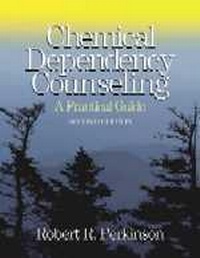
Chemical Dependency Counseling
A Practical Guide
2nd Edition
Published on 31. January 2002
Book
Paperback/Softback
592 pages
978-0-7619-2388-6 (ISBN)
Description
Praise for the First Edition:
`Robert R Perkinson has provided a book of substantial stature in terms of his personal experience as a counsellor of addicts... overall, Chemical Dependency Counseling contains much that is to be admired' - Alcohol and Alcoholism
Thoroughly updated this Second Edition offers basic guides for mental health professionals who work in substance abuse treatment programmes. The book will also be useful for courses in addiction/substance abuse counselling.
Presents the state-of-the-art tools necessary to deliver outstanding treatment and meet the highest standards demanded by accrediting bodies. Using a hands-on style to treating chemical dependency, this practical guide leads the addiction professional through all aspects of traditional treatment. Chapters cover the gamut of treatment issues, including developing the therapeutic alliance, screening, detoxification, biopsychosocial assessment, dual-diagnosis, patient orientation, treatment planning, individual therapy, group therapy, case management, crisis intervention, referral, record keeping, discharge planning, and referral. Author Robert R Perkinson provides case studies and step-by-step instructions with clear explanations and procedures that counselors need to use in all phases of patient care.
`Robert R Perkinson has provided a book of substantial stature in terms of his personal experience as a counsellor of addicts... overall, Chemical Dependency Counseling contains much that is to be admired' - Alcohol and Alcoholism
Thoroughly updated this Second Edition offers basic guides for mental health professionals who work in substance abuse treatment programmes. The book will also be useful for courses in addiction/substance abuse counselling.
Presents the state-of-the-art tools necessary to deliver outstanding treatment and meet the highest standards demanded by accrediting bodies. Using a hands-on style to treating chemical dependency, this practical guide leads the addiction professional through all aspects of traditional treatment. Chapters cover the gamut of treatment issues, including developing the therapeutic alliance, screening, detoxification, biopsychosocial assessment, dual-diagnosis, patient orientation, treatment planning, individual therapy, group therapy, case management, crisis intervention, referral, record keeping, discharge planning, and referral. Author Robert R Perkinson provides case studies and step-by-step instructions with clear explanations and procedures that counselors need to use in all phases of patient care.
Reviews / Votes
"The 55 appendices make this book indispensable. . . . Another strength was the introduction of concepts and terms which are defined, explained, and contain examples. Inclusion of the spiritual dimensions of the approach were very helpful. . . . This is an excellent integration of research and practice." -- Joseph E. Havranek, Ed.D, CRC * The Rehabilitation Professional *More details
Edition
2nd Revised edition
Language
English
Place of publication
Thousand Oaks
United States
Target group
College/higher education
Edition type
Revised edition
Dimensions
Height: 279 mm
Width: 216 mm
Weight
1288 gr
ISBN-13
978-0-7619-2388-6 (9780761923886)
Copyright in bibliographic data and cover images is held by Nielsen Book Services Limited or by the publishers or by their respective licensors: all rights reserved.
Schweitzer Classification
Other editions
New editions
Book
12/2007
3rd Edition
SAGE Publications Inc
€88.09
Article not available
Previous edition
Book
05/1997
1st Edition
SAGE Publications Inc
€60.85
Article exhausted; check for reprint
Person
Robert R. Perkinson is the clinical director of Keystone Treatment Center in Canton, South Dakota. He is a licensed psychologist; licensed marriage & family therapist; internationally certified alcohol and drug counselor; South Dakota certified chemical dependency counselor, Level III; and a nationally certified gambling counselor and supervisor. His specialty areas focus on treating alcoholics, addicts, and pathological gamblers. He is the author of Chemical Dependency Counseling: A Practical Guide (2nd ed.) (2003a), which is the leading treatment manual in the world for chemical dependency counselors. With Dr. Arthur E. Jongsma Jr. (2001) he is the coauthor of The Addiction Treatment Planner, which is the best-selling treatment planner and computer software program for mental health and addiction professionals. He has also written The Alcoholism and Drug Abuse Patient Workbook (2003c) and the Gambling Addiction Patient Workbook (2003b). These workbooks have all of the exercises patients need to enter a stable recovery. His book entitled Treating Alcoholism: How to Help Your Clients Enter Recovery (2004) trains professionals how to treat patients with alcohol problems. He is the author of the book God Talks to You (2000) and the meditation tape A Communication from God (2008) by cdbaby, which help addicts make their first conscious contact with a Higher Power of their own understanding. He is a composer and has completed his second CD, Peace Will Come, music that helps addicts learn the essentials of a spiritual journey. With Dr. Jean LaCour (2004), he wrote the Faith-Based Addiction Curriculum to teach professionals of faith how to treat addiction. Dr. Perkinson is an international motivational speaker and regular contributor to numerous professional journals. He is the webmaster of several web pages, including www.robertperkinson.com, www.alcoholismtreatment.org, and www.godtalkstoyou.com, where he gets over 2.6 million hits a year and answers questions on addiction for free. His biographies can be found in Who's Who in America, Who's Who in Medicine and Healthcare, Who's Who in Science and Engineering, and Who's Who in the World.
Content
1. The First Hours
2. The Biopsychosocial Interview
3. The Treatment Plan
4. Individual Treatment
5. Group Therapy
6. The Contracts
7. The Steps
8. The Lectures
9. Special Problems
10. Adolescent Treatment
11. The Family Program
12. The Clinical Staff
13. Discharge Summary and Aftercare
14. The Drugs
15. The Good Counselor
2. The Biopsychosocial Interview
3. The Treatment Plan
4. Individual Treatment
5. Group Therapy
6. The Contracts
7. The Steps
8. The Lectures
9. Special Problems
10. Adolescent Treatment
11. The Family Program
12. The Clinical Staff
13. Discharge Summary and Aftercare
14. The Drugs
15. The Good Counselor