

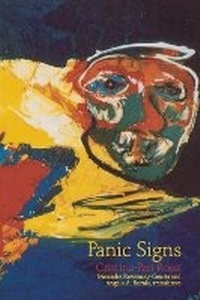
Panic Signs
Will be published approx. on 30. May 2002
Book
Paperback/Softback
126 pages
978-0-88920-393-8 (ISBN)
Description
Cristina Peri Rossi is one of the most acclaimed and personal voices in Hispanic letters. This volume of short stories, Panic Signs, first published in 1970 in Montevideo, Uruguay, presages the atrocities that would come with dictatorship in 1972.
The premonitory dimension is one of the striking characteristics in all the stories - a sense of impending catastrophe, sometimes hallucinatory and often graphic, leads us to undetermined places where the horrors of censorship, torture, and human bondage take place. At the same time, the stories expose the shackles that incapacitate us and deny us the acceptance of ourselves.
This elegy for freedom mourns the loss of liberty and justice while seducing us into questioning what we hold true. The metaphorical procession of images, and the craftsmanship of a narrative that continually engage us, motivate us to explore our own uncertainties and values, and offer an unquestionable opportunity to reassess today's global conditions. Peri Rossi succeeds in creating a whirlwind of despair and self-discovery, impelling us to assess our own panic signs and so avoid being entrapped by those who hold power over us.
The translation of this powerful text will help English-speaking readers attain a more profound understanding of the complexities of Latin America's cultural and socio-political issues.
The premonitory dimension is one of the striking characteristics in all the stories - a sense of impending catastrophe, sometimes hallucinatory and often graphic, leads us to undetermined places where the horrors of censorship, torture, and human bondage take place. At the same time, the stories expose the shackles that incapacitate us and deny us the acceptance of ourselves.
This elegy for freedom mourns the loss of liberty and justice while seducing us into questioning what we hold true. The metaphorical procession of images, and the craftsmanship of a narrative that continually engage us, motivate us to explore our own uncertainties and values, and offer an unquestionable opportunity to reassess today's global conditions. Peri Rossi succeeds in creating a whirlwind of despair and self-discovery, impelling us to assess our own panic signs and so avoid being entrapped by those who hold power over us.
The translation of this powerful text will help English-speaking readers attain a more profound understanding of the complexities of Latin America's cultural and socio-political issues.
Reviews / Votes
With Panic Signs, English readers have access to an important Latin American author, Cristina Peri Rossi, whose work engages with issues of identity (gender, national, cultural, sexual) and authority (political, societal, familial), as it critiques all repressive structures that would limit individual freedom. Panic Signs gives readers a sense of the tense political climate in Uruguay just prior to the military takeover, with people living under the threat of house invasions, random detention and questioning by the police, and torture. Peri Rossi is a brilliant reader of the signs around her, signs that are beautifully and disturbingly evoked in Indicios Painicos, and that are now available in English through Mercedes Rowinsky-Geurts and Angelo A. Borrais's translation.... Authoritarian regimes would impose one single reading, their reading, their ``truth.'' But literature, particularly literature like Peri Rossi's, resists such impositions, and having a number of her books available in English translation enriches those readers not able to read the original Spanish. Translation is a labour of love and translators put forth the results of their work never knowing if their reading ``has been correct, considering all the possible readings.'' Passages, sentences, and words can be translated in different ways, but Rowinsky-Geurts and Borrais understand the possibilities are endless and offer, in Panic Signs, a strong reading of the original. -- Laura J. Beard, Texas Tech University Lyricism and biting satire, humour and drama, infuse the forty-six texts -- short stories, poems, aphorisms -- that comprise Peri Rossi's Panic Signs. As she writes in her lucid ``Poetic System of the Book,'' ``signs are clues to interpret life and reality,'' and to read signs is ``to possess a vision of the world.'' Rossi's vision reveals life under various kinds of oppression, in particular that of repressive governments like the one which would rule Uruguay after 1970, the year the original Spanish version of the book was published. Panic Signs, written when Peri Rossi was in her twenties, shows the original and sophisticated writing that later placed her among the foremost writers of Latin America. The need for a sensitive English translation of this complex work has been elegantly fulfilled by Mercedes Rowinsky-Geurts and Angelo Borrais, who have preserved the spirit of Peri Rossi's book. Their work is complemented by this careful and gracefully designed edition. -- Gabriela Mora, Rutgers University Panic Signs, an excellent translation of Indicios Painicos by Cristina Peri Rossi, one of the leading literary voices of Latin America, offers a poetic account of daily life in a military state. The author explores in this collection of prose poems and short stories the violent, vicious circle of all oppressive governments: control, repression, confinement, lack of freedom on one side, and disobedience, protest, rebellion, resistance on the other. Using the fantastic and allegory, the author elaborates in her political narratives a powerful existential commentary on confinement and silence reminiscent of some of Julio Cortaizar's texts. Absolutely contemporary, Peri Rossi's short stories remind us that human rights are still constantly violated in many countries. Through the vivid metaphors of the circus and acrobats, the bear hunt, the womb, the stampede, etc., Peri Rossi brilliantly creates the fiction of a people crushed under the boots of a dictatorial regime. Condemned to prison or exile, there is only hell possible for these people, for whom ``meaning ceases to exist'' as the narrator suggests. Displacement of words, displacement of sense, displacement of human beings: Cristina Peri Rossi's great voice touches very important chords: both freedom and death. -- Claudine Potvin, University of Alberta Cristina Peri Rossi's Panic Signs is one of the most original, profound, and moving artistic works of Latin America. It takes the reader into a world like that of Kafka's K, where the brutality of tyranny denies a community all aspects of freedom in the name of social order, so that the reader comes to a resounding denunciation of the denial of civil and human rights. Cristina Peri Rossi envisaged the terror of the Southern Cone countries of Argentina, Chile, and Uruguay in the 1970s and 1980s, but she has written for the world. Every citizen of goodwill who at some time has supported the suspension of civil rights because of a perceived social crisis, and we are legion, must read ``Besieged.'' This story stands along with Kafka's The Trial as a classic for the imaginative configuration of the individual's descent into hell as a victim of the military government's appropriation and grotesque distortion of the concepts of law and justice. ``Besieged'' is a magnificent example of an artistic response to the rape of a community. Mercedes Rowinsky-Geurts and Angelo A. Borrais have performed an incalculable service to the English-speaking world with this excellent idiomatic translation. -- Mario J. Valda (c)s, University of TorontoMore details
Language
English
Place of publication
Waterloo, Ontario
Canada
Target group
Professional and scholarly
Dimensions
Height: 229 mm
Width: 152 mm
Thickness: 10 mm
Weight
265 gr
ISBN-13
978-0-88920-393-8 (9780889203938)
Copyright in bibliographic data and cover images is held by Nielsen Book Services Limited or by the publishers or by their respective licensors: all rights reserved.
Schweitzer Classification
Persons
Cristina Peri Rossi was born in Montevideo, Uruguay, in 1941 and started her literary career in 1963 with the publication of her collection of short stories: Viviendo. She was a professor of comparative literature, a translator, and a journalist. In 1972, after the military coup in Uruguay, she emigrated to Spain where she lives and writes today. Her first narrative publications (El libro de mis primos, 1969; Indicios panicos, 1970) combined symbolism with irony, questioning social reality and patriarchal structures. From 1972 through to the early 1980s, her work was banned in Uruguay. Cristina Peri Rossi's spirit of innovation, her rebelliousness, and her disregard for the conventions of society have made her an emblematic personality of the 1970s. This collection of short stories was originally published as Indicios panicos in 1970 by Editorial Nuestra America.
Mercedes Rowinsky-Geurts is an associate professor at Wilfrid Laurier University, specializing in Latin American social and political issues, the Latin American diaspora, and women writers of the twentieth century. Her book Imagen y discurso: El estudio de las imagenes en la obra de Cristina Peri Rossi (1995) has been awarded a Special Mention by the Ministry of Education and Culture in Uruguay in 1998. In 2000, Mercedes Rowinsky-Geurts was awarded the Outstanding Teacher Award at Wilfrid Laurier University.
Angelo A. Borras is a professor emeritus of Spanish in the Department of Languages and Literatures at Wilfrid Laurier University. Author of El teatro del exilio de Max Aub, and editor and co-author of The Theatre and Hispanic Life: Essays in Honour of Neale H. Tayler (WLU Press), he has published many articles on contemporary Spanish literature, several of which deal with exile literature.
Mercedes Rowinsky-Geurts is an associate professor at Wilfrid Laurier University, specializing in Latin American social and political issues, the Latin American diaspora, and women writers of the twentieth century. Her book Imagen y discurso: El estudio de las imagenes en la obra de Cristina Peri Rossi (1995) has been awarded a Special Mention by the Ministry of Education and Culture in Uruguay in 1998. In 2000, Mercedes Rowinsky-Geurts was awarded the Outstanding Teacher Award at Wilfrid Laurier University.
Angelo A. Borras is a professor emeritus of Spanish in the Department of Languages and Literatures at Wilfrid Laurier University. Author of El teatro del exilio de Max Aub, and editor and co-author of The Theatre and Hispanic Life: Essays in Honour of Neale H. Tayler (WLU Press), he has published many articles on contemporary Spanish literature, several of which deal with exile literature.
Content
Panic Signs by Cristina Peri Rossi, translated by Merceds Rowinsky-Geurts and Angelo A. Borras
Preface
Prologue
1. I am very interested in botany
2. I live in a country of old people
3. I have never been in Vermont
4. We have not gone to the moon
5. For more than twenty-five years
6. Sometimes my mother consoles me
7. I spent many years caressing statue
8. I always imagine
9. She brought me passionate presents
10. She hands me the scarf
11. I contribute to the general racket
12. She had been brought from Peru
13. I have a tiny apartment
14. She has given me happiness
15. Dialogue with the Writer
16. For many years I lived
17. When I was mature enough
18. Hell is bloody birds
19. ""You are very beautiful""
20. I will till no more
21. In the ghetto of my womb
22. I dreamt that I was
23. Desertion
24. What is happening?
25. As I was walking along
26. The Acrobats
27. Besieged
28. The minister called me
29. ""What are you doing?""
30. Disobedience and the Bear Hunt
31. The Statue
32. I possessed her when I was eight
33. Mama's Farewell
34. I started to feel your absence
35. At the corner bar
36. When the bishops rebelled
37. A Great Family
38. Such apparent senselessness
39. I was enjoying an ice cream cone
40. Selene I
41. Selene II
42. I have come by train
43. Urgent Messages for Navigators
44. The Social Contract
45. The Stampede
46. The Hero
Other books by Cristina Peri Rossi
Preface
Prologue
1. I am very interested in botany
2. I live in a country of old people
3. I have never been in Vermont
4. We have not gone to the moon
5. For more than twenty-five years
6. Sometimes my mother consoles me
7. I spent many years caressing statue
8. I always imagine
9. She brought me passionate presents
10. She hands me the scarf
11. I contribute to the general racket
12. She had been brought from Peru
13. I have a tiny apartment
14. She has given me happiness
15. Dialogue with the Writer
16. For many years I lived
17. When I was mature enough
18. Hell is bloody birds
19. ""You are very beautiful""
20. I will till no more
21. In the ghetto of my womb
22. I dreamt that I was
23. Desertion
24. What is happening?
25. As I was walking along
26. The Acrobats
27. Besieged
28. The minister called me
29. ""What are you doing?""
30. Disobedience and the Bear Hunt
31. The Statue
32. I possessed her when I was eight
33. Mama's Farewell
34. I started to feel your absence
35. At the corner bar
36. When the bishops rebelled
37. A Great Family
38. Such apparent senselessness
39. I was enjoying an ice cream cone
40. Selene I
41. Selene II
42. I have come by train
43. Urgent Messages for Navigators
44. The Social Contract
45. The Stampede
46. The Hero
Other books by Cristina Peri Rossi