

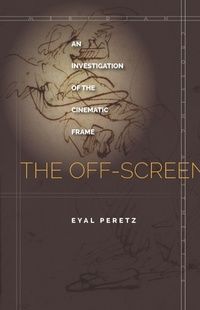
The Off-Screen
An Investigation of the Cinematic Frame
Published on 21. March 2017
Book
Hardback
272 pages
978-1-5036-0072-0 (ISBN)
Description
From the Renaissance on, a new concept of the frame becomes crucial to a range of artistic media, which in turn are organized around and fascinated by this frame. The frame decontextualizes, cutting everything that is within it from the continuity of the world and creating a realm we understand as the realm of fiction. The modern theatrical stage, framed paintings, the novel, the cinematic screen-all present us with such framed-off zones. Naturally, the frame creates a separation between inside and out. But, as this book argues, what is outside the frame, what is offstage, or off screen, remains particularly mysterious. It constitutes the primary enigma of the work of art in the modern age. It is to the historical and conceptual significance of this "off" that this book is dedicated. By focusing on what is outside the frame of a work of art, it offers a comprehensive theory of film, a concise history of American cinema from D.W. Griffith to Quentin Tarantino, and a reflection on the place and significance of film within the arts of modernity in general.
Reviews / Votes
"Peretz's landmark discussion of the off-screen goes well beyond the technical definitions of Bazin, Bonitzer, or Deleuze. In his hands, the off-screen becomes the philosophical lynchpin of a new way of addressing modern art and the poetics of the modern image."-Alessia Ricciardi, Northwestern University "Think you know what a frame is? Well, this inspired book radically unframes and reframes the notion. Frames, Eyal Peretz brilliantly shows, are a negotiation with the specters, angels, or ghosts that works of art-from Bruegel to Tarantino-carry around as their (off-)trail."- Peter Szendy, University of Paris Ouest Nanterre. "Peretz reconstructs a sweeping genealogy of the frame - as that which is both in and outside - from the painted image to the theatrical stage to the cinematic screen itself. Peretz's project is an idiosyncratic endeavor in the best sense of the word, blending art theory, film theory, and philosophy, without taking shelter in the philological and historicist micropolitics of each respective discipline..."-Sulgi Lie, Texte zur Kunst "The Off-Screen, within the context of the invisible dimension of the "off," provides its readers with an insightful and incisive background of US cinema from Griffith to Tarantino. Apart from the obvious contribution to film studies, scholars in performance and visual studies will find themselves enthralled by Peretz's investigation of the frame."-Mohammad Mehdi Kimiagari, The Drama ReviewMore details
Series
Edition
New edition
Language
English
Place of publication
Palo Alto
United States
Edition type
New edition
Product notice
Cloth
Illustrations
15 halftones
Dimensions
Height: 236 mm
Width: 159 mm
Thickness: 25 mm
Weight
570 gr
ISBN-13
978-1-5036-0072-0 (9781503600720)
Copyright in bibliographic data and cover images is held by Nielsen Book Services Limited or by the publishers or by their respective licensors: all rights reserved.
Schweitzer Classification
Other editions
Additional editions
E-Book
03/2017
Stanford University Press
€139.99
Available for download
Person
Eyal Peretz is Professor of Comparative Literature at Indiana University, Bloomington. He is the author of Becoming Visionary (Stanford, 2007).
Content
The Unframing Image
The Off-Screen: Shakespeare, Bruegel, Tarkovsky
1. On the Origin of Film and the Resurrection of the People: D.W. Griffith's Intolerance<\i>
2. The Actor of the Crowd-The Great Dictator: Chaplin, Riefenstahl, Lang
3. Howard Hawks's Idea of Genre
4. What is a Cinema of Jewish Vengeance? Tarantino's Inglourious Basterds
The Off-Screen: Shakespeare, Bruegel, Tarkovsky
1. On the Origin of Film and the Resurrection of the People: D.W. Griffith's Intolerance<\i>
2. The Actor of the Crowd-The Great Dictator: Chaplin, Riefenstahl, Lang
3. Howard Hawks's Idea of Genre
4. What is a Cinema of Jewish Vengeance? Tarantino's Inglourious Basterds