

When Thinking Stops
Philosophy and Sleep in Capitalist Modernity
Will be published approx. on 29. April 2027
Book
Paperback/Softback
208 pages
978-1-350-00276-0 (ISBN)
Description
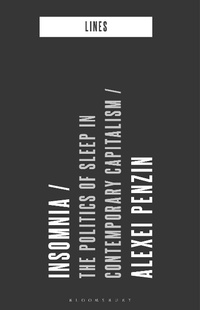
Contemporary theorists, including Walter Benjamin, Emmanuel Levinas and Jean-Luc Nancy, have identified that an essential feature of capitalism is an uninterrupted or permanently wakeful continuity of production, exchange, consumption, communication and control. A form of enforced insomnia which keeps people subservient and compliant. This makes sleep a revolutionary act.
Insomnia ranges from the history of philosophy to contemporary 'sleep science' and cutting edge theory to provide us with a powerful philosophical and aesthetic intervention - that charts not just the problems of sleep but its revolutionary potential as a new politics of sleep. This is urgent reading for anyone trying to sleep in contemporary capitalism.
Insomnia ranges from the history of philosophy to contemporary 'sleep science' and cutting edge theory to provide us with a powerful philosophical and aesthetic intervention - that charts not just the problems of sleep but its revolutionary potential as a new politics of sleep. This is urgent reading for anyone trying to sleep in contemporary capitalism.
More details
Series
Language
English
Place of publication
London
United Kingdom
Publishing group
Bloomsbury Publishing PLC
Target group
College/higher education
Product notice
Paperback (trade)
Unsewn / adhesive bound
Dimensions
Height: 216 mm
Width: 138 mm
Thickness: 25 mm
Weight
454 gr
ISBN-13
978-1-350-00276-0 (9781350002760)
Copyright in bibliographic data and cover images is held by Nielsen Book Services Limited or by the publishers or by their respective licensors: all rights reserved.
Schweitzer Classification
Persons
Alexei Penzin is Reader in Art, University of Wolverhampton, UK and Research Fellow at the Institute of Philosophy, Moscow, Russia. He is also one of the founding members of the Russian group Chto Delat ("What is to be done?"), an internationally recognized collective of artists, writers and academics (www.chtodelat.org). Penzin is on the editorial boards of Moscow Art Magazine and Stasis Journal. He is author of Capitalism and Religion (2017) and editor of Boris Artvatov's Art as Production (2017).
Content
Acknowledgements
Introduction. "I used to say I had troubles sleeping, then I realized I had more troubles with wakefulness"
Chapter 1. A Symptomatic Exclusion of Sleep in Philosophy
1.1. A Critique of Oneiro-centricism and a New Space for Research
1.2. Isolation and Potentiality: Two Primary Models
1.3. Descartes: Sleep, Madness and Sceptical Argument
1.4. "...Life could not maintain itself for an instant": Sleep and Dream in Kant
1.5. Hegel: Sleep, Subjectivity and the Absolute
1.6. Freud: "...essentially a problem of physiology."
Chapter 2. Sleep and Subjectivity
2.1. The "Ontological Meaning of Sleep" (Levinas)
2.2. The Singularity of the Sleeper in Some (Uncommon) Examples of Contemporary Thought
2.3. Sleep, Wakefulness and Vigilance
Chapter 3. Rex Exsomnis: A Political Theology of Sleep and Vigilance
3.1. "The Great Awakening"
3.2. A Vigilance Complex in Philosophy?
3.3. Non-Sleeping Sovereign (Rex Exsomnis)
3.4 "...sans (t)reve et sans merci": Sleep and Awakening in Walter Benjamin's Writings
Chapter 4. Sleep in Capitalist Modernity
4.1. The Question of Sleep in Das Kapital and the Concept of the "Natural Barrier" in the Grundrisse
4.2. Non-Sleeping Society
4.3. The Limit of the Social
4.4. Cultures of Sleep and Industries of Night
Chapter 5. (An)aesthetics of Sleep
5.1. "Sleeping Beauty": A Political Theology in Fairy Tale
5.2. Sleeping Sonata: Art of Sleep Under Communism
5.3. "Is the Worker Asleep?" From Warhol to Contemporary Art
5.4. Sleep as the Possibility of Artwork
Conclusion. Vigilance of Being Itself? An Ontological Hypothesis
Bibliography
Index
Introduction. "I used to say I had troubles sleeping, then I realized I had more troubles with wakefulness"
Chapter 1. A Symptomatic Exclusion of Sleep in Philosophy
1.1. A Critique of Oneiro-centricism and a New Space for Research
1.2. Isolation and Potentiality: Two Primary Models
1.3. Descartes: Sleep, Madness and Sceptical Argument
1.4. "...Life could not maintain itself for an instant": Sleep and Dream in Kant
1.5. Hegel: Sleep, Subjectivity and the Absolute
1.6. Freud: "...essentially a problem of physiology."
Chapter 2. Sleep and Subjectivity
2.1. The "Ontological Meaning of Sleep" (Levinas)
2.2. The Singularity of the Sleeper in Some (Uncommon) Examples of Contemporary Thought
2.3. Sleep, Wakefulness and Vigilance
Chapter 3. Rex Exsomnis: A Political Theology of Sleep and Vigilance
3.1. "The Great Awakening"
3.2. A Vigilance Complex in Philosophy?
3.3. Non-Sleeping Sovereign (Rex Exsomnis)
3.4 "...sans (t)reve et sans merci": Sleep and Awakening in Walter Benjamin's Writings
Chapter 4. Sleep in Capitalist Modernity
4.1. The Question of Sleep in Das Kapital and the Concept of the "Natural Barrier" in the Grundrisse
4.2. Non-Sleeping Society
4.3. The Limit of the Social
4.4. Cultures of Sleep and Industries of Night
Chapter 5. (An)aesthetics of Sleep
5.1. "Sleeping Beauty": A Political Theology in Fairy Tale
5.2. Sleeping Sonata: Art of Sleep Under Communism
5.3. "Is the Worker Asleep?" From Warhol to Contemporary Art
5.4. Sleep as the Possibility of Artwork
Conclusion. Vigilance of Being Itself? An Ontological Hypothesis
Bibliography
Index