

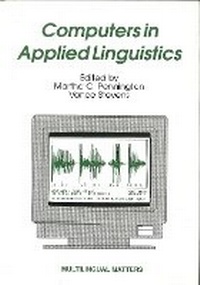
Computers in Applied Linguistics
Published on 1. January 1992
Book
Paperback/Softback
336 pages
978-1-85359-119-8 (ISBN)
Description
The book combines in one volume information on specific computer applications with discussion of theoretical and methodological issues by recognized authorities in linguistics, language teaching, and second language acquisition. It is therefore expected to be of value not only to linguists, but also to teachers, researchers and software designers working in English or in other languages.
More details
Series
Language
English
Place of publication
Bristol
United Kingdom
Publishing group
Channel View Publications Ltd
Target group
College/higher education
Professional and scholarly
Dimensions
Height: 210 mm
Width: 149 mm
Thickness: 18 mm
Weight
370 gr
ISBN-13
978-1-85359-119-8 (9781853591198)
Copyright in bibliographic data and cover images is held by Nielsen Book Services Limited or by the publishers or by their respective licensors: all rights reserved.
Schweitzer Classification
Other editions
Additional editions
Martha C. Pennington | Vance C. Stevens
Computers in Applied Linguistics
Book
01/1992
Multilingual Matters
€133.63
Article exhausted; check different version
Content
Preface
1. Introduction: Toward Appropriate Uses of Computers in Applied Linguistics
PART I: FRAMEWORKS FOR COMPUTER ASSISTED LANGUAGE LEARNING IN THE 1990s
2. Vance Stevens: Humanism and CALL: A Coming of Age
3. Philip Hubbard: A Methodological Framework for CALL Courseware Development
4. Andrew Lion: Intelligence in Computer-Aided Language Leaming
PART II: RESEARCH ON APPLICATIONS OF COMPUTERS IN SECOND LANGUAGE ACQUISITION
5. Martha C. Pennington and Mark N. Brock: Process and Product Approaches to Computer-Assisted Composition
6. Bernard Mohan: Models of the Role of the Computer in Second Language Development
7. Catherine Doughty: Computer Applications in Second Language Acquisition Research: Design, Description, and Discovery
8. Anthony Cheung and Colin Harrison: Microcomputer Adventure Games and Second Language Acquisition: A Study of Hong Kong Tertiary Students
PART III: ANALYSIS TOOLS FOR A NEW GENERATION OF LANGUAGE APPLICATIONS
9. Geoffrey Sampson: Analysed Corpora of English: A Consumer Guide
10. Manfred Pienemann and Louise Jansen: Computational Analysis of Language Acquisition Data
11. John H. Esling: Speech Technology Systems in Applied Linguistics Instruction
12. Patricia Dunkel: The Use of PC-Generated Speech Technology in the Development of an L2 Listening Comprehension Proficiency Test A Prototype Design Effort
13. Nie Witton: Answer Analysis, Feedback, and On-Line Reference Help in CALL with Particular Reference to German
1. Introduction: Toward Appropriate Uses of Computers in Applied Linguistics
PART I: FRAMEWORKS FOR COMPUTER ASSISTED LANGUAGE LEARNING IN THE 1990s
2. Vance Stevens: Humanism and CALL: A Coming of Age
3. Philip Hubbard: A Methodological Framework for CALL Courseware Development
4. Andrew Lion: Intelligence in Computer-Aided Language Leaming
PART II: RESEARCH ON APPLICATIONS OF COMPUTERS IN SECOND LANGUAGE ACQUISITION
5. Martha C. Pennington and Mark N. Brock: Process and Product Approaches to Computer-Assisted Composition
6. Bernard Mohan: Models of the Role of the Computer in Second Language Development
7. Catherine Doughty: Computer Applications in Second Language Acquisition Research: Design, Description, and Discovery
8. Anthony Cheung and Colin Harrison: Microcomputer Adventure Games and Second Language Acquisition: A Study of Hong Kong Tertiary Students
PART III: ANALYSIS TOOLS FOR A NEW GENERATION OF LANGUAGE APPLICATIONS
9. Geoffrey Sampson: Analysed Corpora of English: A Consumer Guide
10. Manfred Pienemann and Louise Jansen: Computational Analysis of Language Acquisition Data
11. John H. Esling: Speech Technology Systems in Applied Linguistics Instruction
12. Patricia Dunkel: The Use of PC-Generated Speech Technology in the Development of an L2 Listening Comprehension Proficiency Test A Prototype Design Effort
13. Nie Witton: Answer Analysis, Feedback, and On-Line Reference Help in CALL with Particular Reference to German