

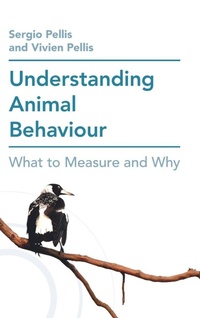
Understanding Animal Behaviour
What to Measure and Why
Published on 20. May 2021
Book
Hardback
164 pages
978-1-108-48345-2 (ISBN)
Description
All students and researchers of behaviour - from those observing freely-behaving animals in the field to those conducting more controlled laboratory studies - face the problem of deciding what exactly to measure. Without a scientific framework on which to base them, however, such decisions are often unsystematic and inconsistent. Providing a clear and defined starting point for any behavioural study, this is the first book to make available a set of principles for how to study the organisation of behaviour and, in turn, for how to use those insights to select what to measure. The authors provide enough theory to allow the reader to understand the derivation of the principles, and draw on numerous examples to demonstrate clearly how the principles can be applied. By providing a systematic framework for selecting what behaviour to measure, the book lays the foundations for a more scientific approach for the study of behaviour.
Reviews / Votes
'Describing what animals actually do in their normal daily activities was deemed essential by the early naturalists and ethologists. Today, many journals actively discourage publishing such research findings. What the Pellis team accomplishes in this book is to document, based on their and others' extensive experience and accomplishments, that careful description can itself be hypothesis driven and answer research questions that experiments with simple, but convenient, dependent measures cannot. This compact guide elegantly shows how to use modern methods to describe and quantify behaviour and embed findings in the behaviour systems in which they occur. From seemingly simple behaviour patterns such as righting, huddling, and reaching, to fighting, foraging, play, and courtship, the authors provide myriad insights and research guidance. Today, in a rapidly changing world, it is more essential than ever to study how the behaviour of animals is being altered, both in natural communities and in experimental laboratories.' Gordon M. Burghardt, University of Tennessee, USA 'The Pellis' little book is a big gift box in which you'll find a trove of crafted ideas and handy examples of how behaviour can be analysed in ways that reveal marvellous, unsuspected dimensions of behavioural organisation. Using some of the "simplest" and most common individual and social acts in animal behaviour, they offer observational and analytic tools for seeing the deep structure of behaviour and how, in some cases, their approach can take us into the brain or out to emergent levels of organisation. Practical for students and researchers, and delightful for science-oriented fans of organisms. Put it on your shelf for repeated openings and explorations.' Jeffrey R. Alberts, Indiana University, Bloomington, USA '... a fascinating new way of considering animal behavior ... This would be a most useful text for any student or researcher of animal behaviors ... Highly recommended.' D. C. Marston, Choice MagazineMore details
Language
English
Place of publication
Cambridge
United Kingdom
Target group
Professional and scholarly
Product notice
sewn/stitched
Cloth over boards
Illustrations
Worked examples or Exercises
Dimensions
Height: 235 mm
Width: 157 mm
Thickness: 14 mm
Weight
403 gr
ISBN-13
978-1-108-48345-2 (9781108483452)
Copyright in bibliographic data and cover images is held by Nielsen Book Services Limited or by the publishers or by their respective licensors: all rights reserved.
Schweitzer Classification
Other editions
Additional editions
E-Book
05/2021
Cambridge University Press
€26.99
Available for download
Book
05/2021
Cambridge University Press
€51.20
Shipment within 15-20 days
E-Book
05/2021
Cambridge University Press
€28.99
Available for download
Persons
Sergio Pellis is a Professor in the Department of Neuroscience at the University of Lethbridge, Alberta, Canada. He has been researching animal behaviour and neuroscience since 1976 and has maintained a research laboratory at the University of Lethbridge since 1990. For the past 13 years, he has been a Board of Governors Research Chair, and in 2014 was awarded the Speaker Gold Medal for Research. Vivien Pellis was an Adjunct Professor and currently remains a Research Associate in the Department of Neuroscience at the University of Lethbridge. She has been a university researcher in animal behaviour and neuroscience since 1981, investigating a diversity of behaviours and species.
Content
Preface; Acknowledgements; 1. What is the problem and what is the solution?; 2. Behaviour as a means, not an end; 3.The deep structure of behavior; 4. The brain is not alone; 5. Bringing it all together: steps in the descriptive process; 6. What of the future?; Epilogue; Appendix A. Eshkol-Wachman movement notation and descriptive analysis; Appendix B. Practice, practice, practice; References; Index.