

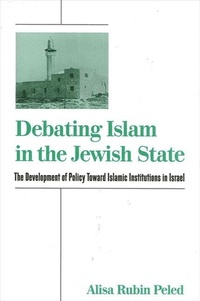
Debating Islam in the Jewish State
The Development of Policy Toward Islamic Institutions in Israel
Published on 30. August 2001
Book
Paperback/Softback
239 pages
978-0-7914-5078-9 (ISBN)
Description
Covers Israel's policy toward Islamic institutions within its borders, 1948-2000.
Using declassified documents from Israeli archives, Alisa Rubin Peled explores the development, implementation, and reform of the state's Islamic policy from 1948 to 2000. She addresses how Muslim communal institutions developed and whether Israel formulated a distinct "Islamic policy" toward shari'a courts, waqf (charitable endowments), holy places, and religious education. Her analysis reveals the contradictions and nuances of a policy driven by a wide range of motives and implemented by a diverse group of government authorities, illustrating how Israeli policies produced a co-opted religious establishment lacking popular support and paved the way for a daring challenge by a grassroots Islamist Movement since the 1980s. As part of a wider debate on early Israeli history, she challenges the idea that Israeli policy was part of a greater monolithic policy toward the Arab minority.
Using declassified documents from Israeli archives, Alisa Rubin Peled explores the development, implementation, and reform of the state's Islamic policy from 1948 to 2000. She addresses how Muslim communal institutions developed and whether Israel formulated a distinct "Islamic policy" toward shari'a courts, waqf (charitable endowments), holy places, and religious education. Her analysis reveals the contradictions and nuances of a policy driven by a wide range of motives and implemented by a diverse group of government authorities, illustrating how Israeli policies produced a co-opted religious establishment lacking popular support and paved the way for a daring challenge by a grassroots Islamist Movement since the 1980s. As part of a wider debate on early Israeli history, she challenges the idea that Israeli policy was part of a greater monolithic policy toward the Arab minority.
Reviews / Votes
"Peled discusses a very important topic-the Islamic movement in Israel-and relates it to the wider topic of Islamic movements in the Arab world. This is essential reading in the study of Arab-Jewish relations in Israel, and also contributes to the scholarship on majority-minority relations in ethnically divided societies." - Mohammed Abu-Nimer, author of Dialogue, Conflict Resolution, and Change: Arab-Jewish Encounters in IsraelMore details
Series
Language
English
Place of publication
Albany, NY
United States
Target group
College/higher education
Professional and scholarly
US School Grade: College Graduate Student and over
Product notice
Paperback (trade)
Dimensions
Height: 227 mm
Width: 153 mm
Thickness: 14 mm
Weight
345 gr
ISBN-13
978-0-7914-5078-9 (9780791450789)
Copyright in bibliographic data and cover images is held by Nielsen Book Services Limited or by the publishers or by their respective licensors: all rights reserved.
Schweitzer Classification
Other editions
Additional editions
Alisa Rubin Peled
Debating Islam in the Jewish State
The Development of Policy Toward Islamic Institutions in Israel
E-Book
02/2012
1st Edition
De Gruyter
€36.49
Available for download
Person
Alisa Rubin Peled is Lecturer in the Department of Public Policy and Administration at Ben-Gurion University of the Negev.
Content
List of Figures
Acknowledgments
Chapter 1 Introduction
The Public Policy Angle:The Struggle for Jurisdiction over Muslim Affairs
Islam in Palestine and Israel:From the Ottoman Era to 1948
The Academic Debate over Israel's Arab Minority Policy
The Debate over Israeli Policy towards Islamic Institutions
Chapter 2 The Rise and Fall of the Ministry of Minority Affairs
Behor Shitrit and the Ministry of Minority Affairs
The Ministry of Religious Affairs Stakes a Claim to Muslim Affairs
Early Attempts to Build Legal Foundations for Muslim Institutions
The Ministry of Religious Affairs Escalates the Conflict
Conflicting Reports:The Pinnacle of the Interministerial Battle
The Demise of the Ministry of Minority Affairs:
Towards a Policy of Divide and Rule
Chapter 3 A New Rivalry:The Ministry of Religious Affairs and the Advisor to the Prime Minister on Arab Affairs
Turkey or Bosnia-Hercegovina: The Search for a Model for Muslim Communal Affairs
Joshua Palmon and the Changing Role of the Advisor to the Prime Minister on Arab Affairs
The First Battle:Accounting for Waqf Finances
The Second Battle:The Conflict with Taher al-Tabari
Chapter 4 Defining the Role of Shari ?a Courts, Qadis,and Islamic Law
The Third Battle:Establishing Legal Foundations for the Shari'a Court System and Qadi Appointments
The Muslim Voice:The Campaign to Keep the Israeli Qadis out of Politics
The Israeli Method of Shari'a Reform: Towards the Improvement of the Status of Women
Chapter 5 Protection of Holy Places:The Foreign Policy Dimension
The Foreign Policy Accomplishments of Israeli Holy Places Policy
The Domestic Agenda:Towards an Official Policy
Concerning Muslim Holy Places
Policy Failure:Incidents of Neglect Regarding Muslim Holy Places
International Disputes over Access to Holy Places in Jerusalem
Protection of Holy Places:The Public Relations War
Chapter 6 Islamic Education in Israel
Lessons from the Mandate and the Transition to Israeli Control
The Struggle to Define the Goals of Arab Education in IsraelReligious Studies in the Minority School System
Minority Protest and the Reform of the Religious Studies Cirriculum
The Rise of Arab Nationalism in the Minority Schools
Chapter 7 The Decline of the Religious Establishment and the Islamist Movement Challenge
The Succession Crisis in the Muslim Establishment
Towards the Rise of an Islamist Movement in Israel
A Brief History of the Islamist Movement in Israel
The Challenge of the Official Muslim Establishment
The State Response to the Campaign for an Autonomous Religious Establishment
Chapter 8 Conclusion
Israel 's Islamic Policy:A Mosaic of Motives and Ministries, A Dominant Quest for Control
The Critical Role Played by Individuals
Policy Consequences
The New Battle for Control: Towards Autonomous Islamic Institutions?
Appendix 1 The First Four Israeli Qadis and the Establishment of the Shari'a Courts
Appendix 2 The United Nations and the Holy Places
Appendix 3 UN Votes on the Territorial Internationalization of Jerusalem
Notes
Bibliography
Index
Acknowledgments
Chapter 1 Introduction
The Public Policy Angle:The Struggle for Jurisdiction over Muslim Affairs
Islam in Palestine and Israel:From the Ottoman Era to 1948
The Academic Debate over Israel's Arab Minority Policy
The Debate over Israeli Policy towards Islamic Institutions
Chapter 2 The Rise and Fall of the Ministry of Minority Affairs
Behor Shitrit and the Ministry of Minority Affairs
The Ministry of Religious Affairs Stakes a Claim to Muslim Affairs
Early Attempts to Build Legal Foundations for Muslim Institutions
The Ministry of Religious Affairs Escalates the Conflict
Conflicting Reports:The Pinnacle of the Interministerial Battle
The Demise of the Ministry of Minority Affairs:
Towards a Policy of Divide and Rule
Chapter 3 A New Rivalry:The Ministry of Religious Affairs and the Advisor to the Prime Minister on Arab Affairs
Turkey or Bosnia-Hercegovina: The Search for a Model for Muslim Communal Affairs
Joshua Palmon and the Changing Role of the Advisor to the Prime Minister on Arab Affairs
The First Battle:Accounting for Waqf Finances
The Second Battle:The Conflict with Taher al-Tabari
Chapter 4 Defining the Role of Shari ?a Courts, Qadis,and Islamic Law
The Third Battle:Establishing Legal Foundations for the Shari'a Court System and Qadi Appointments
The Muslim Voice:The Campaign to Keep the Israeli Qadis out of Politics
The Israeli Method of Shari'a Reform: Towards the Improvement of the Status of Women
Chapter 5 Protection of Holy Places:The Foreign Policy Dimension
The Foreign Policy Accomplishments of Israeli Holy Places Policy
The Domestic Agenda:Towards an Official Policy
Concerning Muslim Holy Places
Policy Failure:Incidents of Neglect Regarding Muslim Holy Places
International Disputes over Access to Holy Places in Jerusalem
Protection of Holy Places:The Public Relations War
Chapter 6 Islamic Education in Israel
Lessons from the Mandate and the Transition to Israeli Control
The Struggle to Define the Goals of Arab Education in IsraelReligious Studies in the Minority School System
Minority Protest and the Reform of the Religious Studies Cirriculum
The Rise of Arab Nationalism in the Minority Schools
Chapter 7 The Decline of the Religious Establishment and the Islamist Movement Challenge
The Succession Crisis in the Muslim Establishment
Towards the Rise of an Islamist Movement in Israel
A Brief History of the Islamist Movement in Israel
The Challenge of the Official Muslim Establishment
The State Response to the Campaign for an Autonomous Religious Establishment
Chapter 8 Conclusion
Israel 's Islamic Policy:A Mosaic of Motives and Ministries, A Dominant Quest for Control
The Critical Role Played by Individuals
Policy Consequences
The New Battle for Control: Towards Autonomous Islamic Institutions?
Appendix 1 The First Four Israeli Qadis and the Establishment of the Shari'a Courts
Appendix 2 The United Nations and the Holy Places
Appendix 3 UN Votes on the Territorial Internationalization of Jerusalem
Notes
Bibliography
Index