

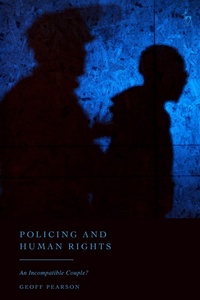
Policing and Human Rights
An Incompatible Couple?
Will be published approx. on 26. November 2026
Book
Hardback
320 pages
978-1-5099-9048-1 (ISBN)
Description
This book presents a timely evaluation of the extent to which the Human Rights Act 1998 has achieved its objectives regarding policing.
The UK Human Rights Act requires the police to act in a manner compliant with rights and freedoms enshrined in the European Convention on Human Rights. Subsequently, and quickly after its enactment, many changes took place which affected the service nationally, at force level, and on an individual officer basis. However, 25-years on, rather than becoming embedded in the day-to-day operation of the police, human rights remains an often-misunderstood 'add-on' to policing, typically subsumed by other laws, guidance, policies, and practices. While some specialist areas of policing - including public order, firearms, and missing persons - have human rights embedded to a greater extent, in routine policing (response, neighbourhood, traffic, and tactical aid), human rights are often completely forgotten in practice.
This book presents new empirical research based on observations, surveys, interviews, and media analysis. It demonstrates the limitations of the UK police service's adherence to human rights obligations, resulting from initial training of recruits, confusing or misleading guidance, inadequate supervision and accountability, and poor leadership from some chief officers and the Home Office.
It argues that, even in areas where human rights are more embedded, there is often pushback against protecting those rights, victimising marginalised communities. It explains, however, this is not purely the fault of the police service; the Act itself, subsequent legislation, and the courts, have failed to provide adequate clarity, guidance, and resource to enable the service to adapt to the human rights-based framework, delivering conflicting priorities for the police and setting them up for failure in this vital aspect of their work.
The book presents a thorough socio-legal analysis identifying the successes and shortfalls of the police regarding protecting human rights, making informed and achievable recommendations for reform.
The UK Human Rights Act requires the police to act in a manner compliant with rights and freedoms enshrined in the European Convention on Human Rights. Subsequently, and quickly after its enactment, many changes took place which affected the service nationally, at force level, and on an individual officer basis. However, 25-years on, rather than becoming embedded in the day-to-day operation of the police, human rights remains an often-misunderstood 'add-on' to policing, typically subsumed by other laws, guidance, policies, and practices. While some specialist areas of policing - including public order, firearms, and missing persons - have human rights embedded to a greater extent, in routine policing (response, neighbourhood, traffic, and tactical aid), human rights are often completely forgotten in practice.
This book presents new empirical research based on observations, surveys, interviews, and media analysis. It demonstrates the limitations of the UK police service's adherence to human rights obligations, resulting from initial training of recruits, confusing or misleading guidance, inadequate supervision and accountability, and poor leadership from some chief officers and the Home Office.
It argues that, even in areas where human rights are more embedded, there is often pushback against protecting those rights, victimising marginalised communities. It explains, however, this is not purely the fault of the police service; the Act itself, subsequent legislation, and the courts, have failed to provide adequate clarity, guidance, and resource to enable the service to adapt to the human rights-based framework, delivering conflicting priorities for the police and setting them up for failure in this vital aspect of their work.
The book presents a thorough socio-legal analysis identifying the successes and shortfalls of the police regarding protecting human rights, making informed and achievable recommendations for reform.
More details
Language
English
Place of publication
Oxford
United Kingdom
Publishing group
Bloomsbury Publishing PLC
Target group
Professional and scholarly
College/higher education
Product notice
Laminated cover
Dimensions
Height: 234 mm
Width: 156 mm
Thickness: 17 mm
Weight
453 gr
ISBN-13
978-1-5099-9048-1 (9781509990481)
Copyright in bibliographic data and cover images is held by Nielsen Book Services Limited or by the publishers or by their respective licensors: all rights reserved.
Schweitzer Classification
Person
Geoff Pearson is Professor of Law at the University of Manchester, UK.
Content
1. Introduction
2. The Human Rights Act 1998 and Policing
3. The First Decade: Progress and Attitudes
4. Routine Policing, Police Stops, and Use of Force
5. Arrest, Detention, and Disproportionality
6. Surveillance, Intelligence, and Evidence
7. Public Order and Public Safety Policing
8. Proportionality and the Courts
9. Training, Guidance, and Supervision
10. Conclusions and Outlook
2. The Human Rights Act 1998 and Policing
3. The First Decade: Progress and Attitudes
4. Routine Policing, Police Stops, and Use of Force
5. Arrest, Detention, and Disproportionality
6. Surveillance, Intelligence, and Evidence
7. Public Order and Public Safety Policing
8. Proportionality and the Courts
9. Training, Guidance, and Supervision
10. Conclusions and Outlook