

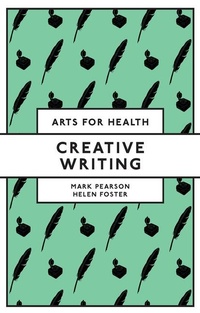
Creative Writing
Published on 30. July 2024
Book
Paperback/Softback
152 pages
978-1-83753-375-6 (ISBN)
Description
Diving into this beloved practice, Creative Writing explores how the written word can be used as a therapeutic tool in pursuit of improved mental health and wellbeing.
Exploring a variety of settings, including group writing, writing alone, and even workshopping online, pracademic duo Mark Pearson and Helen Foster design and deliver a series of contemporary case studies related to mental health, menopause, mindfulness and psychosis.
Imagining new, introspective outlets for the support of mental and physical wellbeing, Pearson and Foster draw on their clinical and archival expertise to equip both healthcare professionals and general readers to unleash their creativity and unlock the comfort and creativity that putting pen to paper can bring.
Exploring a variety of settings, including group writing, writing alone, and even workshopping online, pracademic duo Mark Pearson and Helen Foster design and deliver a series of contemporary case studies related to mental health, menopause, mindfulness and psychosis.
Imagining new, introspective outlets for the support of mental and physical wellbeing, Pearson and Foster draw on their clinical and archival expertise to equip both healthcare professionals and general readers to unleash their creativity and unlock the comfort and creativity that putting pen to paper can bring.
More details
Series
Language
English
Place of publication
Bingley
United Kingdom
Target group
Professional and scholarly
Product notice
Paperback (trade)
Unsewn / adhesive bound
Dimensions
Height: 216 mm
Width: 138 mm
Thickness: 8 mm
Weight
186 gr
ISBN-13
978-1-83753-375-6 (9781837533756)
Copyright in bibliographic data and cover images is held by Nielsen Book Services Limited or by the publishers or by their respective licensors: all rights reserved.
Schweitzer Classification
Other editions
Additional editions
Mark Pearson | Helen Foster
Creative Writing
E-Book
07/2024
1st Edition
Emerald Publishing Limited
€40.99
Available for download
Persons
Mark Pearson is Assistant Professor in mental health at the University of Nottingham, with a clinical background as a mental health nurse. He is a researcher within the area of health humanities.
Helen Foster is a writer and researcher in creative narrative practices. Her research explores the processes of writing and oral storytelling as wellbeing tools.
Helen Foster is a writer and researcher in creative narrative practices. Her research explores the processes of writing and oral storytelling as wellbeing tools.
Content
Chapter 1. Definitions and a brief history of writing for health and well-being
Chapter 2. Why is writing good for you?
Chapter 3. Connecting with creative writing for health
Chapter 3a. Writing in groups
Chapter 3b. Writing by yourself, for yourself
Chapter 3c. Writing in a healthcare setting
Chapter 3d. Writing as a writer
Chapter 4. Creative writing for health in practice: case studies
Chapter 4a. case study 1: Surviving by Storytelling: online poetry and mental health workshops; Mark Pearson
Chapter 4b. case Study 2: Writing the menopause; Helen Foster
Chapter 4c. case Study 3: Mindful writing in an adult learning context; Helen Foster
Chapter 4d. case study 4: Creative writing and psychosis; Mark Pearson
Chapter 5. An ethical approach
Chapter 6. Final thoughts
Chapter 2. Why is writing good for you?
Chapter 3. Connecting with creative writing for health
Chapter 3a. Writing in groups
Chapter 3b. Writing by yourself, for yourself
Chapter 3c. Writing in a healthcare setting
Chapter 3d. Writing as a writer
Chapter 4. Creative writing for health in practice: case studies
Chapter 4a. case study 1: Surviving by Storytelling: online poetry and mental health workshops; Mark Pearson
Chapter 4b. case Study 2: Writing the menopause; Helen Foster
Chapter 4c. case Study 3: Mindful writing in an adult learning context; Helen Foster
Chapter 4d. case study 4: Creative writing and psychosis; Mark Pearson
Chapter 5. An ethical approach
Chapter 6. Final thoughts