

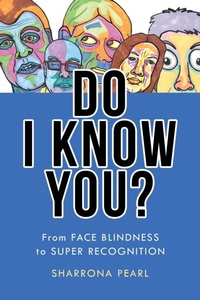
Do I Know You?
From Face Blindness to Super Recognition
Published on 28. November 2023
Book
Paperback/Softback
232 pages
978-1-4214-4753-7 (ISBN)
Description
A fascinating history of how we recognize faces-or fail to recognize them.
In Do I Know You? Sharrona Pearl explores the fascinating category of face recognition and the "the face recognition spectrum," which ranges from face blindness at one end to super recognition at the other. Super recognizers can recall faces from only the briefest exposure, while face blind people lack the capacity to recognize faces at all, including those of their closest loved ones. Informed by archival research, the latest neurological studies, and testimonials from people at both ends of the spectrum, Pearl tells a nuanced story of how we relate to each other through our faces.
The category of face recognition is relatively new despite the importance of faces in how we build relationships and understand our own humanity. Pearl shows how this most tacit of knowledge came to enter the scientific and diagnostic field despite difficulties with identifying it. She offers a grounded framework for how we evaluate others and draw conclusions about them, with significant implications for race, gender, class, and disability. Pearl explores the shifting ideas around the face-recognition spectrum, explaining the effects of these diagnoses on real people alongside implications for how facial recognition is studied and understood. Face blindness is framed as a disability, while super recognition is framed as a superpower with no meaningful disadvantages. This superhero rhetoric is tied to the use of super recognizers in criminal detection, prosecution, and other forms of state surveillance. Do I Know You? demonstrates a humanistic approach to the study of the brain, one that offers an entirely new method for examining this fundamental aspect of human interaction.
The combination of personal narratives, scientific and medical research, and high-profile advocates like Oliver Sacks helped to establish face recognition as a category and a spectrum in both diagnostic and experiential realms. Building on an interdisciplinary foundation that includes the history of medicine, science, and technology, disability studies, media and communication, artificial intelligence ethics, and the health humanities, Pearl challenges the binary nature of spectrum thinking in general and provides a fascinating case study in the treatment of this new scientific category.
In Do I Know You? Sharrona Pearl explores the fascinating category of face recognition and the "the face recognition spectrum," which ranges from face blindness at one end to super recognition at the other. Super recognizers can recall faces from only the briefest exposure, while face blind people lack the capacity to recognize faces at all, including those of their closest loved ones. Informed by archival research, the latest neurological studies, and testimonials from people at both ends of the spectrum, Pearl tells a nuanced story of how we relate to each other through our faces.
The category of face recognition is relatively new despite the importance of faces in how we build relationships and understand our own humanity. Pearl shows how this most tacit of knowledge came to enter the scientific and diagnostic field despite difficulties with identifying it. She offers a grounded framework for how we evaluate others and draw conclusions about them, with significant implications for race, gender, class, and disability. Pearl explores the shifting ideas around the face-recognition spectrum, explaining the effects of these diagnoses on real people alongside implications for how facial recognition is studied and understood. Face blindness is framed as a disability, while super recognition is framed as a superpower with no meaningful disadvantages. This superhero rhetoric is tied to the use of super recognizers in criminal detection, prosecution, and other forms of state surveillance. Do I Know You? demonstrates a humanistic approach to the study of the brain, one that offers an entirely new method for examining this fundamental aspect of human interaction.
The combination of personal narratives, scientific and medical research, and high-profile advocates like Oliver Sacks helped to establish face recognition as a category and a spectrum in both diagnostic and experiential realms. Building on an interdisciplinary foundation that includes the history of medicine, science, and technology, disability studies, media and communication, artificial intelligence ethics, and the health humanities, Pearl challenges the binary nature of spectrum thinking in general and provides a fascinating case study in the treatment of this new scientific category.
Reviews / Votes
The book serves as a clinical yet compelling breakdown...Do I Know You? may be most compelling to the face blind and super recognizers (or their loved ones), Pearl adeptly broadens the lens with interesting tidbits, demonstrating what our collective obsession with knowing faces means for us as a society, for good and for ill, especially in our digital era.-Washington Post
More details
Language
English
Place of publication
Baltimore, MD
United States
Target group
Professional and scholarly
Product notice
Paperback (trade)
Illustrations
7 s/w Abbildungen
7 Illustrations, black and white
Dimensions
Height: 229 mm
Width: 152 mm
Thickness: 15 mm
Weight
387 gr
ISBN-13
978-1-4214-4753-7 (9781421447537)
DOI
10.56021/9781421447537
Copyright in bibliographic data and cover images is held by Nielsen Book Services Limited or by the publishers or by their respective licensors: all rights reserved.
Schweitzer Classification
Other editions
Additional editions
E-Book
11/2023
Johns Hopkins University Press
€35.49
Available for download
Person
Sharrona Pearl (PHILADELPHIA, PA) is an associate professor of medical ethics and history at Drexel University. She is the author of Face/On: Face Transplants and the Ethics of the Other and About Faces: Physiognomy in Nineteenth-Century Britain.
Content
Acknowledgments
Introduction. Inventing a Spectrum
Chapter 1. Thinking in Cases: A Somewhat Failed Search for Origins
Chapter 2. The Blindness of Great Men; or, How Prosopagnosia Was Invented
Chapter 3. More Men, More Invention: The Other Side of the Spectrum (and Two Sides of the Same Story)
Chapter 4. A Super Useless Super Skill: Meet the Supers
Chapter 5. Face Surveillance at the Border: Checkpoint Charlie
Chapter 6. Face Recognition Software and Machine Translation: Why Computers Aren't People
Chapter 7. Is There Dyslexia without Reading?
Conclusion. Beyond the Face
Coda. The Detective Story
Notes
Index
Introduction. Inventing a Spectrum
Chapter 1. Thinking in Cases: A Somewhat Failed Search for Origins
Chapter 2. The Blindness of Great Men; or, How Prosopagnosia Was Invented
Chapter 3. More Men, More Invention: The Other Side of the Spectrum (and Two Sides of the Same Story)
Chapter 4. A Super Useless Super Skill: Meet the Supers
Chapter 5. Face Surveillance at the Border: Checkpoint Charlie
Chapter 6. Face Recognition Software and Machine Translation: Why Computers Aren't People
Chapter 7. Is There Dyslexia without Reading?
Conclusion. Beyond the Face
Coda. The Detective Story
Notes
Index