

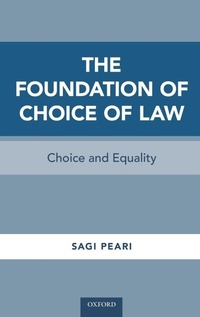
The Foundation of Choice of Law
Choice and Equality
Published on 31. May 2018
Book
Hardback
342 pages
978-0-19-062230-5 (ISBN)
Description
This book focuses on the subject of choice of law as a whole and provides an analysis of its various rules, principles, doctrines and concepts. It offers a conceptual account of choice of law, called "choice equality foundation" (CEF), which aims to flesh out the normative basis of the subject. The author reveals that, despite the multiplicity of titles and labels within the myriad choice of law rules and practices of the U.S., Canadian, European, Australian, and other systems, many of them effectively confirm and crystallize CEFas vision of the subject. This alignment signifies the necessarily intimate relationship between theory and practice by which the normative underpinnings of CEF are deeply embedded and reflected in actual practical reality.
Among other things, this book provides a justification of the nature and limits of such popular principles as party autonomy, most significant relationship, and closest connection. It also discusses such topics as the actual operation of public policy doctrine in domestic courts, and the relation between the notion of international human rights and international commercial dealings, and makes some suggestions about the ability of traditional rules to cope with the advancing challenges of the digital age and the Internet.
Among other things, this book provides a justification of the nature and limits of such popular principles as party autonomy, most significant relationship, and closest connection. It also discusses such topics as the actual operation of public policy doctrine in domestic courts, and the relation between the notion of international human rights and international commercial dealings, and makes some suggestions about the ability of traditional rules to cope with the advancing challenges of the digital age and the Internet.
Reviews / Votes
Written with clarity and panache, based on a firm historical footing but with an eye for the importance of choice of law in the modern age ... Peari has produced a rigorous study of where we are and how we got here, which gives birth to a pragmatic new way of thinking about choice of law in a deeply interconnected, pluralistic, but still troubled world. * Charles T Kotuby Jr, International and Comparative Law Quarterly * Sagi Peari's excellent text, The Foundation of Choice of Law: Choice and Equality ... seeks to establish a theoretically sound, internally consistent, and principled model of choice of law that transcends national boundaries. ... well thought out, engaging, and rigorous. * Benjamin Hayward, Deakin Law Review * Peari's account is a tour dhorizon of PIL, spanning the past 200 years of scholarship. He provides comparative insights, including from the most important systems in economic terms: the US, EU, and PRC. * Johannes Landbrecht, ASA Bulletin * Private international law, long a domain whose doctrinal complexity was not matched by its theoretical sophistication, is increasingly becoming interesting again. The latest proof lies in this book by Sagi Peari. Professor Peari presents no less than a comprehensive new theory of private international law based on a neo-Kantian philosophy of choice and equality. His argument is rigorous, his theory is highly original, and his ideas are controversial-and exciting. They will be widely debated. * Ralf Michaels, Arthur Larson Professor of Law, Duke Law * Any private international lawyer who wants a theory which is classical and modern, comprehensive and accessible, to explain how the rules for choice of law work (or, sometimes, should work but dont currently work) need look no further than this user-friendly account. How refreshing it is to find a theory derived, in considerable part, from what courts and lawyers spend their days actually doing. * Adrian Briggs QC, Professor of Private International Law, University of Oxford * This is an enriching book, full of fresh and compelling insights that should force even the most knowledgeable reader to re-examine certain core assumptions about the philosophical foundations of private international law. It is a welcome contribution to the development of general choice-of-law theory and methodology. * Symeon C. Symeonides, Dean Emeritus & Alex L. Parks Distinguished Chair in Law, Willamette University * Sagi Peari's book achieves a lot. Engaging, inter alia, with Kant and Savigny on a journey through the stroppy waters of globalization, this study is a work of exceptional clarity and insight. No doubt that the book will make a significant contribution to the discussion about private international laws place in a global context. * Peer Zumbansen, Professor of Transnational Law, and Director of The Dickson Poon Transnational Law Institute, Kings College London *More details
Language
English
Place of publication
New York
United States
Target group
Professional and scholarly
Dimensions
Height: 240 mm
Width: 161 mm
Thickness: 23 mm
Weight
678 gr
ISBN-13
978-0-19-062230-5 (9780190622305)
Copyright in bibliographic data and cover images is held by Nielsen Book Services Limited or by the publishers or by their respective licensors: all rights reserved.
Schweitzer Classification
Other editions
Additional editions
E-Book
03/2018
1st Edition
OUP eBook
€55.49
Available for download
E-Book
03/2018
1st Edition
OUP eBook
€43.49
Available for download
Person
Sagi Peari is a Faculty member of Law School at the University of Western Australia. He researches and teaches within private law, commercial law, international law and their intersections. He has published in leading US, Canadian, European and Australian legal journals. Sagi holds a SJD degree from the University of Toronto, where he held the prestigious Joseph-Armand Bombardier and Connaught Doctoral Fellowships. In addition, he was a recipient of a Hauser Global Scholar Fellowship at New York University, a Connection Grant from the Social Sciences and Humanities Research Council of Canada, and has been recognised for his academic contribution by the American Society of International Law.
Content
Acknowledgments
Introduction
I. The Formal Structure of Choice of law Rules: Three Choice of Law Methodologies
A. The Inherently Formal Structure of Classical and Interest Analysis Choice of Law Methodologies
B. Challenging the Formal Structure of Choice of law Rules: Better Law Methodology
1. Better Law: Two Versions and Two Challenges
2. Better Law as a Primary Rule: Robert Leflar & Friedrich Juenger
3. Targeting the Better Law Approach as a Primary Rule
4. Better Law as a Subsidiary Rule
C. Situating CEF within the Formal Structure of Choice of Law Rules and the Better Law Story
II. Choice Pillar I: Understanding Savigny's Theory of Choice of Law as
Voluntary Submission
A. Step 1: Three Basic Insights on the Nature of the Subject
1. Basic Insight (1): The Basic Unit of Inquiry Has to be Related to the Concept of "Legal
Relations"
2. Basic Insight (2): Choice of Law Rules Must Be Linked to States' Territories
3. Basic Insight (3): The Choice of Law System Has to Be Universal
B. Step 2: Theory Revealed - Organizing Principle of "Voluntary Submission"
1. The Relation to Roman Law and the Scholarship of Organizing Principles
2. The Operational Mechanism of the Principle
C. Step III: Two Deviations from the "Voluntary Submission" Principle
1. Deviation I: Savigny's Exceptional Category of "Anomalous Laws"
2. Deviation II: The Frequent Affixation on Juridical Presumptions
III. Choice Pillar II: Returning Savigny's Theory to its Origins
A. The Kantian Origins of Savigny's Organizing Principle of "Voluntary Submission"
1. Kantian System of Right
2. Savigny's System of Rights
B. CEF's Choice Pillar: the Principle of Juridical Relational Choice
1. The Requirement of Juridical Relational Choice
2. The Presence of a Foreign Element in the Factual Matrix of the Case
C. The Operational Mechanics of the Choice Pillar: Party Autonomy and Constructive
Inference
1. Party Autonomy Principle
2. The Doctrine of Constructive Inference
IV. The Equality Pillar
A. The Link to Better Law as a Subsidiary Rule
B. The Limits to Kantian (and CEF's) Positivism: (1) Barbarism; (2) Innate Equality;
and (3) State Equality
1. The Barbarism Exception
2. Innate Equality Exception
3. States' Equality Principle
C. The Two Challenges of Better Law and CEF's Positivism
1. The Subjectivity and Legitimacy Challenges
2. CEF's Positivism
D. Evil Laws as a Reflection of the Equality Pillar
1. The Notion of Evil Laws in Legal Theory
2. Mutual Benefits: What Can Evil Laws and the Equality Pillar Teach Each Other?
E. Public Policy as Equality Pillar in Courts
1. Terminology
2. Loucks v. Standard Oil
3. Oppenheimer v. Cattermole
4. Kuwait Airways v. Iraqi Airways
V. Further Development and Implications
A. Tort Law
1. American Babcock v. Jackson and English Chaplin v. Boys
2. "Conduct Regulating" versus "Loss Distribution" Distinction
3. The Distinction in the New York Court of Appeal
B. Lex Fori as a "Very Dangerous" Solution?
1. Conceptually Different Questions
2. Savigny's Objection to "Choice of Law Shopping"
3. When CEF Cannot Escape lex fori's Application: (1) the classification question; and (2) the lacuna left by the Application of the Equality Pillar
C. Mandatory Rules
1. Mandatory Rules, their Presence in Contemporary Choice of Law Practice, and Scope of CEF's Argument
2. The Genesis of Mandatory Rules within Savigny's Category of "Anomalous" Laws and its
Incompatibility with CEF
3. States' Interests, Lex Fori and the Reasons for Mandatory Rules
4. Mandatory Rules and the Puzzles of Party Autonomy
D. Substance- Procedure Distinction
1. Three Matters
2. Some Thoughts on the Substance-Procedure Distinction
3. Matter I: Challenging the Traditional Right-Remedy Distinction
4. Matter II: Challenging the lex- fori regit processum Doctrine- the State-Based Foundation of Procedural Rules
5. Matter III: Widening the Scope of Public Policy Doctrine
VI. The Relation to Theory & Practice
A. The Relation to Other Choice of Law Accounts
1. Interest Analysis and Better Law
2. Classical Choice of Law Methodology and its Vested Rights Version
3. Legal Realism Criticism and Rules' Manipulation
B. The Relation to Neo-Kantian Theory of Private Law - Corrective Justice
1. Choice & Equality within the Structures of Corrective Justice and CEF
2. CEF's Vision of Choice & Equality
3. The Role of Corrective Justice Within the Operational Mechanism of CEF
C. The Relation to the Notion of Human Rights
D. American Second Restatement
1. General Overview
2. Some Tentative Thoughts on Reciprocal Contribution
E. The Challenge of the Digital Age
1. The Challenge of the Internet
2. Accommodation of Traditional Doctrines
3. CEF's Analysis of Internet Choice of Law Cases
Conclusion
Appendix A: Savigny's Model of Choice-of-Law Rules
Appendix B: CEF's Model of Choice-of-Law Rules
Appendix C: CEF vs. Savigny
Appendix D: CEF vs. Classical, Interest Analysis and Better Law Choice of Law Methodologies
Index
Introduction
I. The Formal Structure of Choice of law Rules: Three Choice of Law Methodologies
A. The Inherently Formal Structure of Classical and Interest Analysis Choice of Law Methodologies
B. Challenging the Formal Structure of Choice of law Rules: Better Law Methodology
1. Better Law: Two Versions and Two Challenges
2. Better Law as a Primary Rule: Robert Leflar & Friedrich Juenger
3. Targeting the Better Law Approach as a Primary Rule
4. Better Law as a Subsidiary Rule
C. Situating CEF within the Formal Structure of Choice of Law Rules and the Better Law Story
II. Choice Pillar I: Understanding Savigny's Theory of Choice of Law as
Voluntary Submission
A. Step 1: Three Basic Insights on the Nature of the Subject
1. Basic Insight (1): The Basic Unit of Inquiry Has to be Related to the Concept of "Legal
Relations"
2. Basic Insight (2): Choice of Law Rules Must Be Linked to States' Territories
3. Basic Insight (3): The Choice of Law System Has to Be Universal
B. Step 2: Theory Revealed - Organizing Principle of "Voluntary Submission"
1. The Relation to Roman Law and the Scholarship of Organizing Principles
2. The Operational Mechanism of the Principle
C. Step III: Two Deviations from the "Voluntary Submission" Principle
1. Deviation I: Savigny's Exceptional Category of "Anomalous Laws"
2. Deviation II: The Frequent Affixation on Juridical Presumptions
III. Choice Pillar II: Returning Savigny's Theory to its Origins
A. The Kantian Origins of Savigny's Organizing Principle of "Voluntary Submission"
1. Kantian System of Right
2. Savigny's System of Rights
B. CEF's Choice Pillar: the Principle of Juridical Relational Choice
1. The Requirement of Juridical Relational Choice
2. The Presence of a Foreign Element in the Factual Matrix of the Case
C. The Operational Mechanics of the Choice Pillar: Party Autonomy and Constructive
Inference
1. Party Autonomy Principle
2. The Doctrine of Constructive Inference
IV. The Equality Pillar
A. The Link to Better Law as a Subsidiary Rule
B. The Limits to Kantian (and CEF's) Positivism: (1) Barbarism; (2) Innate Equality;
and (3) State Equality
1. The Barbarism Exception
2. Innate Equality Exception
3. States' Equality Principle
C. The Two Challenges of Better Law and CEF's Positivism
1. The Subjectivity and Legitimacy Challenges
2. CEF's Positivism
D. Evil Laws as a Reflection of the Equality Pillar
1. The Notion of Evil Laws in Legal Theory
2. Mutual Benefits: What Can Evil Laws and the Equality Pillar Teach Each Other?
E. Public Policy as Equality Pillar in Courts
1. Terminology
2. Loucks v. Standard Oil
3. Oppenheimer v. Cattermole
4. Kuwait Airways v. Iraqi Airways
V. Further Development and Implications
A. Tort Law
1. American Babcock v. Jackson and English Chaplin v. Boys
2. "Conduct Regulating" versus "Loss Distribution" Distinction
3. The Distinction in the New York Court of Appeal
B. Lex Fori as a "Very Dangerous" Solution?
1. Conceptually Different Questions
2. Savigny's Objection to "Choice of Law Shopping"
3. When CEF Cannot Escape lex fori's Application: (1) the classification question; and (2) the lacuna left by the Application of the Equality Pillar
C. Mandatory Rules
1. Mandatory Rules, their Presence in Contemporary Choice of Law Practice, and Scope of CEF's Argument
2. The Genesis of Mandatory Rules within Savigny's Category of "Anomalous" Laws and its
Incompatibility with CEF
3. States' Interests, Lex Fori and the Reasons for Mandatory Rules
4. Mandatory Rules and the Puzzles of Party Autonomy
D. Substance- Procedure Distinction
1. Three Matters
2. Some Thoughts on the Substance-Procedure Distinction
3. Matter I: Challenging the Traditional Right-Remedy Distinction
4. Matter II: Challenging the lex- fori regit processum Doctrine- the State-Based Foundation of Procedural Rules
5. Matter III: Widening the Scope of Public Policy Doctrine
VI. The Relation to Theory & Practice
A. The Relation to Other Choice of Law Accounts
1. Interest Analysis and Better Law
2. Classical Choice of Law Methodology and its Vested Rights Version
3. Legal Realism Criticism and Rules' Manipulation
B. The Relation to Neo-Kantian Theory of Private Law - Corrective Justice
1. Choice & Equality within the Structures of Corrective Justice and CEF
2. CEF's Vision of Choice & Equality
3. The Role of Corrective Justice Within the Operational Mechanism of CEF
C. The Relation to the Notion of Human Rights
D. American Second Restatement
1. General Overview
2. Some Tentative Thoughts on Reciprocal Contribution
E. The Challenge of the Digital Age
1. The Challenge of the Internet
2. Accommodation of Traditional Doctrines
3. CEF's Analysis of Internet Choice of Law Cases
Conclusion
Appendix A: Savigny's Model of Choice-of-Law Rules
Appendix B: CEF's Model of Choice-of-Law Rules
Appendix C: CEF vs. Savigny
Appendix D: CEF vs. Classical, Interest Analysis and Better Law Choice of Law Methodologies
Index