


Identity Matters
Ethnic and Sectarian Conflict
1st Edition
Published on 1. May 2007
Book
Hardback
258 pages
978-1-84545-308-4 (ISBN)
Description
In response to the attacks of September 11, 2001 and war in Afghanistan, the Fulbright New Century Scholars program brought together social scientists from around the world to study sectarian, ethnic, and cultural conflict within and across national borders. As one result of their year of intense discussion, this book examines the roots of collective violence - and the measures taken to avoid it - in Burma (Myanmar), China, Germany, Pakistan, Senegal, Singapore, Thailand, Tibet, Ukraine, Southeast Asia, and Western Europe.
Case studies and theoretical essays introduce the basic principles necessary to identify and explain the symbols and practices each unique human group holds sacred or inalienable. The authors apply the methods of political science, social psychology, anthropology, journalism, and educational research. They build on the insights of Gordon Allport, Charles Taylor, and Max Weber to describe and analyze the patterns of behavior that social groups worldwide use to maintain their identities.
Written to inform the general reader and communicate across disciplinary boundaries, this important and timely volume demonstrates ways of understanding, predicting and coping with ethnic and sectarian violence.
Contributors: Badeng Nima, David Brown, Kwanchewan Buadaeng, Patrick B. Inman, Karina V. Korostelina, James L. Peacock, Thomas F. Pettigrew, Wee Teng Soh, Hamadou Tidiane Sy, Patricia M. Thornton, Mohammad Waseem.
Case studies and theoretical essays introduce the basic principles necessary to identify and explain the symbols and practices each unique human group holds sacred or inalienable. The authors apply the methods of political science, social psychology, anthropology, journalism, and educational research. They build on the insights of Gordon Allport, Charles Taylor, and Max Weber to describe and analyze the patterns of behavior that social groups worldwide use to maintain their identities.
Written to inform the general reader and communicate across disciplinary boundaries, this important and timely volume demonstrates ways of understanding, predicting and coping with ethnic and sectarian violence.
Contributors: Badeng Nima, David Brown, Kwanchewan Buadaeng, Patrick B. Inman, Karina V. Korostelina, James L. Peacock, Thomas F. Pettigrew, Wee Teng Soh, Hamadou Tidiane Sy, Patricia M. Thornton, Mohammad Waseem.
More details
Language
English
Place of publication
Oxford
United Kingdom
Target group
College/higher education
Product notice
Library binding
Illustrations
12 Illustrations
Dimensions
Height: 235 mm
Width: 157 mm
Thickness: 19 mm
Weight
529 gr
ISBN-13
978-1-84545-308-4 (9781845453084)
DOI
10.3167/9781845453084
Copyright in bibliographic data and cover images is held by Nielsen Book Services Limited or by the publishers or by their respective licensors: all rights reserved.
Schweitzer Classification
Other editions
Additional editions
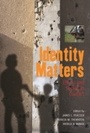
James L. Peacock | Patricia M. Thornton | Patrick B. Inman
Identity Matters
Ethnic and Sectarian Conflict
E-Book
05/2007
1st Edition
Berghahn Books
from
€41.79
Available for download
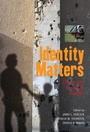
James L. Peacock | Patricia M. Thornton | Patrick B. Inman
Identity Matters
Ethnic and Sectarian Conflict
E-Book
05/2007
1st Edition
Berghahn Books
€24.49
Available for download
Persons
James L. Peacock is Kenan Professor of Anthropology and Professor of Comparative Literature at the University of North Carolina at Chapel Hill, a member of the American Academy of Arts and Sciences, and the 2002 recipient of the American Anthropological Association's Boas Award. His publications include: Grounded Globalism (University of Georgia Press, 2007), Pilgrims of Paradox (Smithsonian Institution Press, 1989), The Anthropological Lens (Cambridge University Press, 1986, 2001), and Rites of Modernization (University of Chicago Press, 1968, 1987).
Content
List of Illustrations
Acknowledgments
Notes on Contributors
Introduction: Identity Matters
Patricia M. Thornton
Chapter 1. Ethnic Conflict and Civic Nationalism: A Model
David Brown
Chapter 2. Social Identity Matters: Predicting Prejudice and Violence in Western Europe
Thomas F. Pettigrew
Chapter 3. Readiness to Fight in Crimea: How It Interrelates with National and Ethnic Identities
Karina V. Korostelina
Chapter 4. Ethnic Identities of the Karen Peoples in Burma and Thailand
Kwanchewan Buadaeng
Chapter 5. European Attitudes toward Immigrants
Thomas F. Pettigrew
Chapter 6. Tibetan Identity in Today's China
Badeng Nima
Chapter 7. Cross-Cutting Identities in Singapore: Crabgrass on the Padang
James L. Peacock and Wee Teng Soh
Chapter 8. The Casamance Separatist Conflict: From Identity to the Trap of "Identitism"
Hamadou Tidiane Sy
Chapter 9. Manufacturing Sectarian Divides: The Chinese State, Identities, and Collective Violence
Patricia M. Thornton
Chapter 10. Islam and the West: A Perspective from Pakistan
Mohammad Waseem
Conclusion: Ethnic and Sectarian as Ideal Types
Patrick B. Inman and James L. Peacock
Index
Acknowledgments
Notes on Contributors
Introduction: Identity Matters
Patricia M. Thornton
Chapter 1. Ethnic Conflict and Civic Nationalism: A Model
David Brown
Chapter 2. Social Identity Matters: Predicting Prejudice and Violence in Western Europe
Thomas F. Pettigrew
Chapter 3. Readiness to Fight in Crimea: How It Interrelates with National and Ethnic Identities
Karina V. Korostelina
Chapter 4. Ethnic Identities of the Karen Peoples in Burma and Thailand
Kwanchewan Buadaeng
Chapter 5. European Attitudes toward Immigrants
Thomas F. Pettigrew
Chapter 6. Tibetan Identity in Today's China
Badeng Nima
Chapter 7. Cross-Cutting Identities in Singapore: Crabgrass on the Padang
James L. Peacock and Wee Teng Soh
Chapter 8. The Casamance Separatist Conflict: From Identity to the Trap of "Identitism"
Hamadou Tidiane Sy
Chapter 9. Manufacturing Sectarian Divides: The Chinese State, Identities, and Collective Violence
Patricia M. Thornton
Chapter 10. Islam and the West: A Perspective from Pakistan
Mohammad Waseem
Conclusion: Ethnic and Sectarian as Ideal Types
Patrick B. Inman and James L. Peacock
Index