

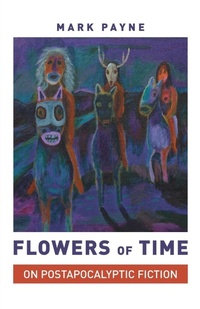
Flowers of Time
On Postapocalyptic Fiction
Published on 27. October 2020
Book
Paperback/Softback
206 pages
978-0-691-20594-6 (ISBN)
Description
An exploration of postapocalyptic fiction, from antiquity to today, and its connections to political theory and other literary genres
The literary lineage of postapocalyptic fiction-stories set after civilization's destruction-is a long one, spanning the biblical tale of Noah and Hesiod's Works and Days to the works of Mary Shelley, Octavia Butler, Cormac McCarthy, and many others. Traveling from antiquity to the present, Flowers of Time reveals how postapocalyptic fiction differs from other genres-pastoral poetry, science fiction, and the maroon narrative-that also explore human capabilities beyond the constraints of civilization. Mark Payne places postapocalyptic fiction into conversation with such theorists as Aristotle, Jean-Jacques Rousseau, Claude Levi-Strauss, and Carl Schmitt, illustrating how the genre functions as political theory in fictional form.
Payne shows that rather than argue for a particular way of life, postapocalyptic literature reveals what it would be like to inhabit that life. He considers the genre's appeal in our own historical moment, contending that this fiction is the pastoral of our time. Whereas the pastoralist and the maroon could escape to real-world hills and fashion their own versions of freedom, on a fully owned and occupied Earth, only an apocalyptic event can create a space where such freedoms are feasible once again.
Flowers of Time looks at how fictional narratives set after the world's devastation represent new conditions and possibilities for life and humanity.
The literary lineage of postapocalyptic fiction-stories set after civilization's destruction-is a long one, spanning the biblical tale of Noah and Hesiod's Works and Days to the works of Mary Shelley, Octavia Butler, Cormac McCarthy, and many others. Traveling from antiquity to the present, Flowers of Time reveals how postapocalyptic fiction differs from other genres-pastoral poetry, science fiction, and the maroon narrative-that also explore human capabilities beyond the constraints of civilization. Mark Payne places postapocalyptic fiction into conversation with such theorists as Aristotle, Jean-Jacques Rousseau, Claude Levi-Strauss, and Carl Schmitt, illustrating how the genre functions as political theory in fictional form.
Payne shows that rather than argue for a particular way of life, postapocalyptic literature reveals what it would be like to inhabit that life. He considers the genre's appeal in our own historical moment, contending that this fiction is the pastoral of our time. Whereas the pastoralist and the maroon could escape to real-world hills and fashion their own versions of freedom, on a fully owned and occupied Earth, only an apocalyptic event can create a space where such freedoms are feasible once again.
Flowers of Time looks at how fictional narratives set after the world's devastation represent new conditions and possibilities for life and humanity.
More details
Language
English
Place of publication
New Jersey
United States
Product notice
Paperback (trade)
Dimensions
Height: 213 mm
Width: 140 mm
Thickness: 15 mm
Weight
249 gr
ISBN-13
978-0-691-20594-6 (9780691205946)
Copyright in bibliographic data and cover images is held by Nielsen Book Services Limited or by the publishers or by their respective licensors: all rights reserved.
Schweitzer Classification
Other editions
Additional editions
E-Book
10/2020
1st Edition
Princeton University Press
€30.49
Available for download