

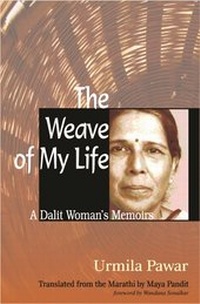
The Weave of My Life
A Dalit Woman's Memoirs
Published on 15. July 2009
Book
Hardback
320 pages
978-0-231-14900-6 (ISBN)
Description
"My mother used to weave aaydans, the Marathi generic term for all things made from bamboo. I find that her act of weaving and my act of writing are organically linked. The weave is similar. It is the weave of pain, suffering, and agony that links us."
Activist and award-winning writer Urmila Pawar recounts three generations of Dalit women who struggled to overcome the burden of their caste. Dalits, or untouchables, make up India's poorest class. Forbidden from performing anything but the most undesirable and unsanitary duties, for years Dalits were believed to be racially inferior and polluted by nature and were therefore forced to live in isolated communities.
Pawar grew up on the rugged Konkan coast, near Mumbai, where the Mahar Dalits were housed in the center of the village so the upper castes could summon them at any time. As Pawar writes, "the community grew up with a sense of perpetual insecurity, fearing that they could be attacked from all four sides in times of conflict. That is why there has always been a tendency in our people to shrink within ourselves like a tortoise and proceed at a snail's pace." Pawar eventually left Konkan for Mumbai, where she fought for Dalit rights and became a major figure in the Dalit literary movement. Though she writes in Marathi, she has found fame in all of India.
In this frank and intimate memoir, Pawar not only shares her tireless effort to surmount hideous personal tragedy but also conveys the excitement of an awakening consciousness during a time of profound political and social change.
Activist and award-winning writer Urmila Pawar recounts three generations of Dalit women who struggled to overcome the burden of their caste. Dalits, or untouchables, make up India's poorest class. Forbidden from performing anything but the most undesirable and unsanitary duties, for years Dalits were believed to be racially inferior and polluted by nature and were therefore forced to live in isolated communities.
Pawar grew up on the rugged Konkan coast, near Mumbai, where the Mahar Dalits were housed in the center of the village so the upper castes could summon them at any time. As Pawar writes, "the community grew up with a sense of perpetual insecurity, fearing that they could be attacked from all four sides in times of conflict. That is why there has always been a tendency in our people to shrink within ourselves like a tortoise and proceed at a snail's pace." Pawar eventually left Konkan for Mumbai, where she fought for Dalit rights and became a major figure in the Dalit literary movement. Though she writes in Marathi, she has found fame in all of India.
In this frank and intimate memoir, Pawar not only shares her tireless effort to surmount hideous personal tragedy but also conveys the excitement of an awakening consciousness during a time of profound political and social change.
More details
Other editions
Additional editions

Book
09/2015
Columbia University Press
€27.80
Shipment within 10-20 days
E-Book
07/2009
1st Edition
De Gruyter
€35.95
Available for download
Persons
Urmila Pawar (b. 1945) received an MA from the University of Bombay and for many years worked in the department of labor welfare for the government of Maharashtra. She is the author of two acclaimed short story collections, Sahava Bot and Chauthi Bhint, and, with Meenakshi Moon, coauthored a book on the role of women in the Dalit movement. She is also a former actor of radical Marathi theater and a playwright.
Maya Pandit is pro-vice chancellor of the English and Foreign Language University, Hyderabad. She is an experienced translator of women's writings from Marathi and an activist in the women's movement and alternative theater.Wandana Sonalkar teaches economics at Babasaheb Ambedkar Marathwada University, Aurangabad, Maharashtra, and is director of their Women's Studies Centre. She has also translated and written a comprehensive introduction to Urmila Pawar and Meenakshi Moon's Amhihi Itihaas Ghadavila on the participation of women in the Ambedkar movement.
Maya Pandit is pro-vice chancellor of the English and Foreign Language University, Hyderabad. She is an experienced translator of women's writings from Marathi and an activist in the women's movement and alternative theater.Wandana Sonalkar teaches economics at Babasaheb Ambedkar Marathwada University, Aurangabad, Maharashtra, and is director of their Women's Studies Centre. She has also translated and written a comprehensive introduction to Urmila Pawar and Meenakshi Moon's Amhihi Itihaas Ghadavila on the participation of women in the Ambedkar movement.
Content
PrefaceAcknowledgmentsIntroduction, by Wandana SonalkarA Note on Kinship TermsOneTwoThreeFourFiveSixSevenEightNineTenElevenTwelveNotesGlossaryA Note on Readers' Reactions to AaydanIllustrations