

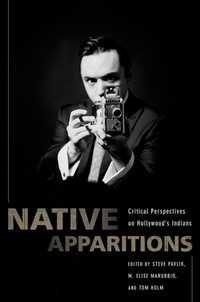
Native Apparitions
Hollywood's Indians Through an American Indian Studies Lens
3rd Edition
Will be published approx. on 30. November 2017
Book
Paperback/Softback
248 pages
978-0-8165-3547-7 (ISBN)
Description
In Cherokee, the term for motion picture is "a-da-yv-la-ti" or "a-da-yu-la-ti," meaning "something that appears." In essence, motion pictures are machine-produced apparitions. While the Cherokee language recognizes that movies are not reality, Western audiences may on some level assume that film portrayals offer sincere depictions of imagined possibilities, creating a logic where what is projected must in part be true, stereotype or not.
Native Apparitions offers a critical intervention and response to Hollywood's representations of Native peoples in film, from historical works by director John Ford to more contemporary works, such as Apocalypto and Avatar. But more than a critique of stereotypes, this book is a timely call for scholarly activism engaged in Indigenous media sovereignty. The collection clusters around three approaches: retrospective analysis, individual film analysis, and Native- and industry-centered testimonials and interviews, which highlight indigenous knowledge and cultural context, thus offering a complex and multilayered dialogic and polyphonic response to Hollywood's representations.
Using an American Indian studies framework, Native Apparitions deftly illustrates the connection between Hollywood's representations of Native peoples and broader sociopolitical and historical contexts connected to colonialism, racism, and the Western worldview. Most importantly, it shows the impact of racializing stereotypes on Native peoples, and the resilience of Native peoples in resisting, transcending, and reframing Hollywood's Indian tropes.
Native Apparitions offers a critical intervention and response to Hollywood's representations of Native peoples in film, from historical works by director John Ford to more contemporary works, such as Apocalypto and Avatar. But more than a critique of stereotypes, this book is a timely call for scholarly activism engaged in Indigenous media sovereignty. The collection clusters around three approaches: retrospective analysis, individual film analysis, and Native- and industry-centered testimonials and interviews, which highlight indigenous knowledge and cultural context, thus offering a complex and multilayered dialogic and polyphonic response to Hollywood's representations.
Using an American Indian studies framework, Native Apparitions deftly illustrates the connection between Hollywood's representations of Native peoples and broader sociopolitical and historical contexts connected to colonialism, racism, and the Western worldview. Most importantly, it shows the impact of racializing stereotypes on Native peoples, and the resilience of Native peoples in resisting, transcending, and reframing Hollywood's Indian tropes.
More details
Edition
3rd edition
Language
English
Place of publication
Tucson
United States
Target group
Professional and scholarly
Product notice
Paperback (trade)
Unsewn / adhesive bound
Dimensions
Height: 227 mm
Width: 151 mm
Thickness: 15 mm
Weight
338 gr
ISBN-13
978-0-8165-3547-7 (9780816535477)
Copyright in bibliographic data and cover images is held by Nielsen Book Services Limited or by the publishers or by their respective licensors: all rights reserved.
Schweitzer Classification
Persons
Steve Pavlik was an instructor at Northwest Indian College in Bellingham, Washington. He was the author of many books, including Navajo and the Animal People: Native American Traditional Ecological Knowledge and Ethnozoology. M. Elise Marubbio is an associate professor of American Indian Studies and the director of the Augsburg Native American Film Series at Augsburg College. She is the author of Killing the Indian Maiden: Images of Native American Women in Film and co-editor of Native Americans on Film: Conversations, Teaching, and Theory. Tom Holm, an enrolled Cherokee and a Creek descendant, is professor emeritus of American Indian studies at the University of Arizona. His publications include Anadarko, The Osage Rose, Code Talkers and Warriors: Native Americans and World War II, The Great Confusion in Indian Affairs: Native Americans and Whites in the Progressive Era, and Strong Hearts, Wounded Souls: Native American Veterans of the Vietnam War.