

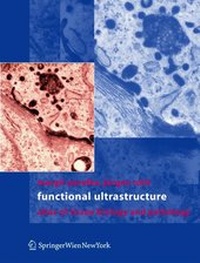
Functional Ultrastructure
Atlas of Tissue Biology and Pathology
Published on 21. December 2004
Book
Hardback
XVI, 326 pages
978-3-211-83564-7 (ISBN)
Description
The period between 1950 and 1980 were the golden It also provides unique insights into how pathological years of transmission electron microscopy and pro- processes affect cell organization. duced a plethora of new information on the structure of This information is vital to current work in which cells that was coupled to and followed by biochemical the emphasis is on integrating approaches from p- and functional studies. TEM was king and each micro- teomics, molecular biology, molecular imaging and graph of a new object produced new information that physiology, and pathology to understand cell functions led to new insights on cell and tissue organization and and derangements in disease. In this current era, there is their functions. The quality of data represented by the a growing tendency to substitute modern light mic- images of cells and tissues had been perfected to a very scopic techniques for electron microscopy because it is high level by the great microscopists of the era including less technically demanding and is more readily available Palade, Porter, Fawcett, Sjostrand, Rhodin and many to researchers. This atlas reminds us that the infor- others. At present, the images that we see in leading tion obtained by electron microscopy is invaluable and journals for the most part do not reach the same techni- has no substitute.
Reviews / Votes
"... I recommend this atlas to all students of biology and pathology but especially those people buying for a university / TAFE library where students or researchers will be using this text." Australian Journal of Medical Science 2/2006, vol. 27, No. 1More details
Language
English
Place of publication
Vienna
Austria
Publishing group
Springer Wien
Target group
College/higher education
Professional and scholarly
Medical doctors, cell biologists, histologists, pathologists, biologists, students of medicine, students of biology
Illustrations
157 s/w Abbildungen
157 black & white illustrations
Dimensions
Height: 27.7 cm
Width: 21 cm
Weight
1111 gr
ISBN-13
978-3-211-83564-7 (9783211835647)
DOI
10.1007/b137527
Schweitzer Classification
Other editions
New editions
Book
06/2015
3rd Edition
Springer
€353.09
Shipment within 10-15 days
Book
12/2009
2nd Edition
Springer
€223.63
Article exhausted; check for reprint
Additional editions
E-Book
12/2005
1st Edition
Springer
€139.99
Available for download
Content
The Nucleus.- Architecture of the Cell Nucleus.- Cytochemical Detection of Ribonucleoproteins.- Nuclear Lamina.- Detection of Sites of DNA Replication and of Interphase Chromosome Domains.- Nucleolus.- Changes of the Nucleolar Architecture.- Detection of Sites of RNA Synthesis.- Nuclear Pore Complexes.- Nuclear Pore Complexes: Structural Changes as Monitored by Time-Lapse Atomic Force Microscopy.- Mitosis and Cell Division.- Apoptosis.- Viral Inclusions.- Structural Organisation of a Mammalian Cell.- The Cytoplasm: The Secretory System.- Secretory Pathway of Pancreatic Acinar Cells.- Ribosomes, Rough Endoplasmic Reticulum.- Nuclear Envelope and Rough Endoplasmic Reticulum.- Rough Endoplasmic Reticulum: Site of Protein Translocation and Initiation of Protein N-Glycosylation.- Oligosaccharide Trimming, Reglucosylation, and Protein Quality Control in the Rough Endoplasmic Reticulum.- Rough Endoplasmic Reticulum: Storage Site of Aggregates of Misfolded Glycoproteins.- Russell Bodies and Aggresomes Represent Different Types of Protein Inclusion Bodies.- Smooth Endoplasmic Reticulum.- Proliferation of the Smooth Endoplasmic Reticulum.- Pre-Golgi Intermediates.- Pre-Golgi Intermediates: Oligosaccharide Trimming and Protein Quality Control.- Golgi Apparatus: A Main Crossroads Along Secretory Pathways.- Protein Secretion Visualised by Immunoelectron Microscopy.- Protein N-Glycosylation: Oligosaccharide Trimming in the Golgi Apparatus and Pre-Golgi Intermediates.- Golgi Apparatus: Site of Maturation of Asparagine-Linked Oligosaccharides.- Cell-Type-Related Variations in the Topography of Golgi Apparatus Glycosylation Reactions.- Cell-Type-Related Differences in Oligosaccharide Structure.- Topography of Biosynthesis of Serine/Threonine-Linked Oligosaccharides.- Golgi Apparatus and TGN - Secretion and Endocytosis.- Golgi Apparatus, TGN and trans-Golgi-ER.- Golgi Apparatus, TGN and trans-Golgi-ER: Tilt Series.- Brefeldin A-Induced Disassembly of the Golgi Apparatus.- Brefeldin A-Treatment: Tubulation of Golgi Apparatus and Endosomes.- Brefeldin A-Treatment: Effect on Retrograde Transport of Internalised WGA.- Brefeldin A-Treatment: Transitional ER-Elements and Pre-Golgi Intermediates.- Heat Shock Response of the Golgi Apparatus.- Changes of the Golgi Apparatus Upon ATP-Depletion and ATP-Replenishment.- Secretory Granules.- Secretory Granule Types.- The Cytoplasm: The Endocytic System.- Receptor-Mediated Endocytosis Via Clathrin-Coated Vesicles and Virus Internalisation.- Endosomes and Endocytic Pathways.- Endocytic Trans-Golgi Network and Retrograde Traffic into the Golgi Apparatus.- Tubular Pericentriolar Endosomes.- Langerhans Cells and Birbeck Granules: Antigen Presenting Dendritic Cells of the Epidermis.- Caveolae.- Fluid-Phase Endocytosis and Phagocytosis.- The Cytoplasm: Lysosomes and Lysosomal Disorders.- Lysosomes.- Lysosomes: Localisation of Acid Phosphatase, Lamp and Polylactosamin.- I-Cell Disease.- Gaucher's Disease.- Fabry's Disease.- GM2 Gangliosidoses.- Farber's Disease.- Wolman's Disease.- Glycogenosis Type II.- Cystinosis.- The Cytoplasm: Autophagocytosis.- Autophagosomes: Organelles for Limited Self-Digestion.- The Cytoplasm: Mitochondria and Structural Abnormalities.- Mitochondria: Crista and Tubulus-Types.- Abnormalities of Mitochondria.- The Cytoplasm: Peroxisomes and Peroxisomal Diseases.- Peroxisomes: Multitalented Organelles.- Peroxisome Biogenesis.- Peroxisomes: Adaptive Changes.- Peroxisomal Diseases.- The Cytoplasm: Cytosolic Particles.- Glycogen.- Glycogenosis Type I.- Erythropoietic Protoporphyria.- The Cytoplasm: Cytoskeleton.- Cytocentre, Centrosome, and Microtubules.- Effects of Microtubule Disruption.- Actin Filaments.- Intermediate Filaments.- Mallory Bodies.- The Plasma Membrane and Cell Surface Specialisations.- The Plasma Membrane.- Cells in Culture.- Brush Cell.- Glycocalyx (Cell Coat).- Glycocalyx: Cell Type Specificity and Domains.- Glycocalyx Changes in Tumours.- Cell-Cell and Cell-Matrix Contacts.- Junctional Complex.- Tight Junctions and Gap Junctions.- Spot Desmosomes.- Cellular Interdigitations.- Basal Labyrinth.- Basement Membrane.- Glomerular Basement Membrane.- Alport's Syndrome (Hereditary Nephritis).- Descemet's Membrane.- Skin Basement Membrane and Keratinocyte Hemidesmosomes: An Epithel-Connective Tissue Junctional Complex.- Epidermolysis Bullosa Simplex.- Secretory Epithelia.- Pancreatic Acinus.- Acinar Centre: Acinar and Centroacinar Cells.- Pancreatic Intercalated Duct.- Submandibular Gland.- Parietal Cells of Stomach: Secretion of Acid.- Intercalated Cells of Kidney: Important Regulators of Acid-Base Balance.- Endocrine Secretion: Insulin-Producing Beta Cells of Islets of Langerhans.- Impaired Insulin Processing in Human Insulinoma.- Cells of the Disseminated Endocrine System.- Liver Epithelium.- Liver Epithelium: Bile Canaliculi.- Liver Epithelium: Pathway of Secretory Lipoprotein Particles.- Choroid Plexus Ependyma.- Resorptive Epithelia.- Small Intestine: Absorptive Cells.- Small Intestine: Pathway of Lipids.- Renal Proximal Tubule: A Reabsorption Plant.- Parathyroid Hormone Response of Renal Proximal Tubules.- Sensory Epithelia.- Photoreceptor Cells of the Retina: Signalling of Light.- Photoreceptor Cells of the Retina: Light-Induced Apoptosis.- Stratified Epithelia.- Corneal Epithelium.- Epidermis.- Differentiation of Keratinocytes and Formation of the Epidermal Fluid Barrier.- Epithelia of the Respiratory Tract.- The Tracheo-Bronchial Epithelium.- Ciliary Pathology: Immotile Cilia Syndrome and Kartagener Syndrome.- Alveoli: Gas Exchange and Host Defense.- Urothelium.- Umbrella Cell - Surface Specialisations.- Umbrella Cell - Fusiform Vesicles.- Endothelia and Glomerulus.- Continuous Capillary, Weibel-Palade Bodies.- Fenestrated Capillary.- Endothelio-Pericyte and Endothelio-Smooth Muscle Cell Interactions.- Glomerulus: A Specialised Device for Filtering.- Pathology of the Glomerular Filter: Minimal Change Glomerulopathy and Congenital Nephrotic Syndromes.- Pathology of the Glomerulus: Membranous Glomerulonephritis.- Pathology of the Glomerulus: Membranoproliferative Glomerulonephritis.- Pathology of the Glomerulus: Chronic Allograft Glomerulopathy.- Connective Tissue.- Loose Connective Tissue.- Fibroblast, Fibrocyte, Macrophage.- Collagen and Elastic Fibres.- Eosinophilic Granulocyte, Plasma Cell, Macrophage, Mast Cell.- Dense Connective Tissue: Collagen Bundles in the Cornea.- Bowman's Layer.- Amyloidosis of Kidney.- Amyloid Fibrils: Growth as Seen by Time Lapse, Atomic Force Microscopy.- Cartilage.- Articular Cartilage.- Bone.- Osteoblasts and Osteocytes.- Osteoclast.- Skeletal Muscle.- Myofibrils and Sarcomere.- Sarcoplasmic Reticulum, Triad, Satellite Cell.- Neuromuscular Junction.- Muscular Dystrophies.- Cardiac Muscle.- Myofibrils, Intercalated Disk.- Smooth Muscle.- Smooth Muscle Cells, Synapse Á Distance.- CADASIL.- Nerve Tissue.- Central Nervous System: Neuron, Glial Cells.- Blood-Brain Barrier, Synapses.- Unmyelinated Nerve Fibre.- Peripheral Nerve: Connective Tissue Components.- Myelinated Nerve Fibre, Myelin.- Node of Ranvier.- Axonal Degeneration.- Neuroaxonal Dystrophy.- Neuropathies Associated with Dysproteinaemias.- Metachromatic Leukodystrophy.- Neuronal Ceroid Lipofuscinosis.- Blood.- Red Blood Cells and cells of the Erythroid Lineage.- Neutrophilic Granulocyte.- Eosinophilic Granulocyte.- Monocyte.- Lymphocyte.- Megakaryocyte and Thrombocyte.- Thrombocytes.