

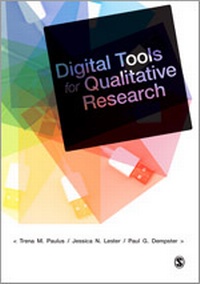
Digital Tools for Qualitative Research
1st Edition
Published on 16. December 2013
Book
Paperback/Softback
216 pages
978-1-4462-5607-7 (ISBN)
Description
Digital Tools for Qualitative Research shows how the research process in its entirety can be supported by technology tools in ways that can save time and add robustness and depth to qualitative work. It addresses the use of a variety of tools (many of which may already be familiar to you) to support every phase of the research process, providing practical case studies taken from real world research.
The text shows you how to select and use technology tools to:
engage in reflexivity
collaborate with other researchers and stakeholders
manage your project
do your literature review
generate and manage your data
transcribe and analyse textual, audio and visual data
and represent and share your findings.
The book also considers important ethical issues surrounding the use of various technologies in each chapter. On the companion website, you'll find lots of additional resources including video tutorials and activities.
Whether you're a novice or expert social researcher, this book will inspire you to think creatively about how to approach your research project and get the most out of the huge range of tools available to you.
The text shows you how to select and use technology tools to:
engage in reflexivity
collaborate with other researchers and stakeholders
manage your project
do your literature review
generate and manage your data
transcribe and analyse textual, audio and visual data
and represent and share your findings.
The book also considers important ethical issues surrounding the use of various technologies in each chapter. On the companion website, you'll find lots of additional resources including video tutorials and activities.
Whether you're a novice or expert social researcher, this book will inspire you to think creatively about how to approach your research project and get the most out of the huge range of tools available to you.
Reviews / Votes
This is an authoritative, thoughtful and consistently useful treatment of digital resources for qualitative researchers. It is grounded in the authors' wealth of practical experience and unlike other texts in this field, it guides the reader right through the whole range of ways in which digital tools can support the contemporary researcher across the qualitative research process in its entirety.-- Professor Nigel Fielding This book is both thought-provoking and challenging as it constantly invites you to reflect on your actions by providing exercises, reflective questions, and an accompanying website with information, references, examples and links. I found a lot of recognition in the text - I consider myself to be an early adopter of digital tools - and yet, lots of new and inspiring examples of the use of digital tools were available to me in Digital tools. As technology is rapidly changing our research possibilities, opportunities and procedures, this book is both interesting and worthwile to students in all phases of their education as well as junior and senior researchers. -- Jeanine Evers Digital Tools for Qualitative Research" is the first book on the digital technologies of qualitative research to go beyond the limits of the earlier era of stand-alone qualitative data analysis software packages. This book acknowledges those earlier tools as it goes on to explore the potential of the internet and other digital tools, filling a critical gap in the universe of qualitative research methodology texts. Strengths of this volume include its focus on all components of the research process and ways digital tools can be brought to bear to improve the robustness of qualitative research. Just as in many other fields, where contained software packages had to make way for the wide open spaces of the Internet, here, too, the authors demonstrate the opportunities and challenges that come with the next generation of digital tools-a place where there is possibility, fragmentation, and remixing. What I found particularly helpful was the ongoing consideration of ethical issues across the volume and the probing end-of-chapter questions. The authors have opened up new space for qualitative researchers. I will definitely use this text to work through my own challenges regarding conducting qualitative research in a digital world and will recommend it to students who are developing their own methodological paths. -- Judith Davidson This is a comprehensive introduction to digital tools relevant for both novice and more experienced qualitative researchers and a valuable contribution to the field.
It is refreshing to see discussion of the role of digital tools across the entirety of the qualitative research process; from tools to engage in and foster reflexive practice and collaboration, tools to review literature, generate, transcribe and analyse data, through to the writing about and representation of findings. The book is well laid out and clearly written, with repeated sections across chapters helping the reader navigate the content.
The use of affordances theory to contextualise tools is particularly helpful. This book is much more than a summary of available tools; designed to foster reflexive engagement in the implications of using digital tools as well as raising awareness of their scope.
The explicit encouragement of the reader to consider the affordances and constraints of specific digital tools and their role in the research process is particularly valuable. This book will be a welcome addition to the researchers' tool chest and the teacher's resources. -- Christina Silver A pleasure to read, encouraging a reflexive and ethical approach to research without sounding restrictive or judgmental... What is enduring about this text is that it deals with the theory and execution of projects that utilise digital tools, encouraging good research management using these tools without too much emphasis on the technical nature of the specific tools themselves. In this respect, whatever new digital tools emerge, this book will remain a useful and relevant text. -- Victoria Pagan, Newcastle University
More details
Language
English
Place of publication
London
United Kingdom
Target group
College/higher education
Professional and scholarly
Dimensions
Height: 242 mm
Width: 170 mm
Weight
377 gr
ISBN-13
978-1-4462-5607-7 (9781446256077)
Copyright in bibliographic data and cover images is held by Nielsen Book Services Limited or by the publishers or by their respective licensors: all rights reserved.
Schweitzer Classification
Other editions
New editions
Trena M. Paulus | Jessica Nina Lester
Doing Qualitative Research in a Digital World
Book
05/2021
1st Edition
SAGE Publications Inc
€124.79
Shipment within 15-20 days
Persons
Trena M. Paulus, Ph.D. is a professor in the Research Division of Family Medicine, Quillen College of Medicine, East Tennessee State University. She is affiliate faculty with the Applied Social Research Laboratory at ETSU where she works in the areas of research support and innovation for the university. She is a co-author of Digital Tools for Qualitative Research (SAGE) and Looking for Insight Transformation and Learning in Online Talk (Routledge). Dr. Paulus has published over 70 peer-reviewed journal articles and numerous book chapters focused on the intersection of technology and qualitative research, online learning and teaching, and language-based research methodologies. She has recently has co-edited special issues on these topics in Qualitative Inquiry, The Qualitative Report and the Journal of Pragmatics, which won the Neal R. Norrick special issue award. She is a certified professional trainer for ATLAS.ti.
Jessica Lester is a Professor of Inquiry Methodology in the School of Education at Indiana University, Bloomington. Having been trained in cultural studies and qualitative research methodology, she takes an interdisciplinary approach to her scholarship, including both the methodological and substantive foci of her research program.
In her methodological work, Lester focuses on the study of language-based methods, digital tools in qualitative research, and disability in qualitative inquiry. Her substantive research has focused on examining interactional practices in clinical and educational contexts that involve children and youth.
Lester has received numerous awards for her scholarship, among them the 2014 AERA Division D Early Career Award in Measurement and Research Methodology, the 2018 APA Distinguished Early Career Contributions in Qualitative Inquiry Award, and the 2022 American Educational Studies Association Critics' Choice Book Award. At Indiana University, Lester teaches qualitative methods courses and was recently recognized by the 2022 Gorman Distinguished Teaching Award.
Paul Dempster is an applied health researcher who specialises in qualitative research. He is particularly interested in CAQDAS methods and has taught internationally on their use. He is a consultant methodologist for Transana at the University of Wisconsin and works for the NHS in Newcastle.
Jessica Lester is a Professor of Inquiry Methodology in the School of Education at Indiana University, Bloomington. Having been trained in cultural studies and qualitative research methodology, she takes an interdisciplinary approach to her scholarship, including both the methodological and substantive foci of her research program.
In her methodological work, Lester focuses on the study of language-based methods, digital tools in qualitative research, and disability in qualitative inquiry. Her substantive research has focused on examining interactional practices in clinical and educational contexts that involve children and youth.
Lester has received numerous awards for her scholarship, among them the 2014 AERA Division D Early Career Award in Measurement and Research Methodology, the 2018 APA Distinguished Early Career Contributions in Qualitative Inquiry Award, and the 2022 American Educational Studies Association Critics' Choice Book Award. At Indiana University, Lester teaches qualitative methods courses and was recently recognized by the 2022 Gorman Distinguished Teaching Award.
Paul Dempster is an applied health researcher who specialises in qualitative research. He is particularly interested in CAQDAS methods and has taught internationally on their use. He is a consultant methodologist for Transana at the University of Wisconsin and works for the NHS in Newcastle.
Content
Companion Website
Why Digital Tools?
Engaging in Reflexive Practice and Making Ethical Choices
Collaborating and Managing Projects
Reviewing the Literature
Generating Data
Transcribing Audio and Video Data
Analyzing Textual Data
Analyzing Image, Audio and Video Data
Writing and Representing the Findings
Looking to the Future
Why Digital Tools?
Engaging in Reflexive Practice and Making Ethical Choices
Collaborating and Managing Projects
Reviewing the Literature
Generating Data
Transcribing Audio and Video Data
Analyzing Textual Data
Analyzing Image, Audio and Video Data
Writing and Representing the Findings
Looking to the Future