

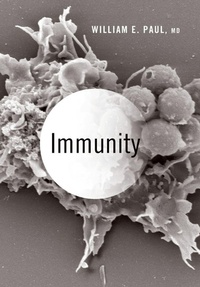
Immunity
Will be published approx. on 10. January 2016
Book
Hardback
280 pages
978-1-4214-1801-8 (ISBN)
Description
This significant book conveys Dr William E Paul's enduring enthusiasm for the field of immunology, the incredible accomplishments of the past half-century, and the future's untapped promises. The immune system has incredible power to protect us from the ravages of infection by killing disease-causing microbes or eliminating them from the body. Boosted by vaccines, it can protect us individually and as a "herd" from diseases such as measles. As Dr Paul explains, however, the power of the immune system is a double-edged sword: an overactive immune system can wreak havoc, destroying normal tissue and causing diseases such as type I diabetes, rheumatoid arthritis, and multiple sclerosis. The consequences of an impaired immune system, on the other hand, are all too evident in the clinical agonies of AIDS and other immunodeficiency diseases. Packed with illustrations, stories from Dr Paul's distinguished career, and compelling narratives of scientific discovery, Immunity presents the three laws of the human immune system-universality, tolerance, and appropriateness-and explains how the system protects and harms us.
From the tale of how smallpox was overcome to the lessons of the Ebola epidemic to the utility of vaccines and the hope that the immune system can be used to treat or prevent cancer, Dr Paul argues that we must position ourselves to take advantage of cutting-edge technologies and promising new tools in immunological research, including big data and the microbiome.
From the tale of how smallpox was overcome to the lessons of the Ebola epidemic to the utility of vaccines and the hope that the immune system can be used to treat or prevent cancer, Dr Paul argues that we must position ourselves to take advantage of cutting-edge technologies and promising new tools in immunological research, including big data and the microbiome.
Reviews / Votes
An excellent overview of what science knows about immunology today. -- Harriet Hall Science-Based Medicine Written by a prominent researcher and scholar who not only followed the history of immunology but also participated in its creation, Immunity could be considered as an excellent summary of the classical, pre-systemic, immunological era. Metascience It is well written, informative and gives detailed descriptions even down to defining platelets- sometimes we make the assumption that individuals know these details but the author has pre-empted this and provided ample explanations, which in essence will widen his audience... I would recommend this book to students, healthcare assistants, clinicians, and nurse specialists working within all areas. In essence this book could be read by individuals who have an keen interest within immunity but is written in such a way that it is accessible to those who have little or no knowledge within this area as the book is so informative. Nursing TimesMore details
Language
English
Place of publication
Baltimore, MD
United States
Product notice
sewn/stitched
Cloth over boards
With dust jacket
Illustrations
14 s/w Photographien bzw. Rasterbilder, 10 s/w Zeichnungen
10 Line drawings, black and white; 14 Halftones, black and white
Dimensions
Height: 236 mm
Width: 156 mm
Thickness: 25 mm
Weight
522 gr
ISBN-13
978-1-4214-1801-8 (9781421418018)
DOI
10.1353/book.42103
Copyright in bibliographic data and cover images is held by Nielsen Book Services Limited or by the publishers or by their respective licensors: all rights reserved.
Schweitzer Classification
Other editions
Person
William E. Paul, MD, is the chief of the Laboratory of Immunology at the National Institute of Allergy and Infectious Diseases of the National Institutes of Health. He received his medical degree from the State University of New York Downstate Medical Center. He is a past president of the American Association of Immunologists and the American Society for Clinical Investigation, a member of the National Academy of Sciences and its Institute of Medicine, and a Fellow of the American Academy of Arts and Sciences.
Content
Preface
Part One
1. Defense and Danger
2. Tracing an Immune Response
3. The Laws of Immunology
4. Growing Up and Learning Immunology
Part Two
5. Vaccines and Serum Therapy
6. How Is Specificity Achieved?
7. Immunology's "Eureka"
8. How Does Each Lymphocyte Develop a Distinct Receptor?
9. B Cells and T Cells Recognize Different Types of Antigens
10. My Foray into the Specificity Problem
11. Genes and Immune Responses
12. The Laboratory of Immunology and the T-Cell Receptor
Part Three
13. What Is Tolerance?
14. How Does Tolerance Develop?
15. Regulatory T Cells and the Prevention of Autoimmunity
Part Four
16. Different Structures, Different Functions
17. Specific Types of Infections, Specific Types of T-Cell Responses
18. Our Discovery of IL-4 and the Cells That Make It
19. CD8 T Cells
20. Dendritic Cells
Part Five
21. An "Ancient" Immune Response Controls" Modern" Immunity
22. The Microbiome and Innate Immunity
23. Evolution of the Immune System and Innate Lymphoid Cells
Part Six
24. The HIV Epidemic and the Office of AIDS Research
25. How the Immune System Causes Rheumatoid Arthritis and Lupus
26. Allergy and Asthma
27. Interleukin-4 and Allergy
28. Can the Immune System Control Cancer?
29. New Parts for Old
30. Julien
Conclusion
Epilogue
Acknowledgments
Notes
Index
Part One
1. Defense and Danger
2. Tracing an Immune Response
3. The Laws of Immunology
4. Growing Up and Learning Immunology
Part Two
5. Vaccines and Serum Therapy
6. How Is Specificity Achieved?
7. Immunology's "Eureka"
8. How Does Each Lymphocyte Develop a Distinct Receptor?
9. B Cells and T Cells Recognize Different Types of Antigens
10. My Foray into the Specificity Problem
11. Genes and Immune Responses
12. The Laboratory of Immunology and the T-Cell Receptor
Part Three
13. What Is Tolerance?
14. How Does Tolerance Develop?
15. Regulatory T Cells and the Prevention of Autoimmunity
Part Four
16. Different Structures, Different Functions
17. Specific Types of Infections, Specific Types of T-Cell Responses
18. Our Discovery of IL-4 and the Cells That Make It
19. CD8 T Cells
20. Dendritic Cells
Part Five
21. An "Ancient" Immune Response Controls" Modern" Immunity
22. The Microbiome and Innate Immunity
23. Evolution of the Immune System and Innate Lymphoid Cells
Part Six
24. The HIV Epidemic and the Office of AIDS Research
25. How the Immune System Causes Rheumatoid Arthritis and Lupus
26. Allergy and Asthma
27. Interleukin-4 and Allergy
28. Can the Immune System Control Cancer?
29. New Parts for Old
30. Julien
Conclusion
Epilogue
Acknowledgments
Notes
Index