

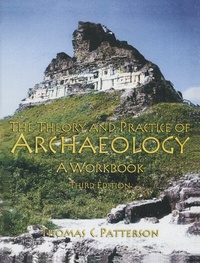
Theory and Practice of Archaeology
A Workbook
3rd Edition
Published on 24. May 2004
Book
Paperback/Softback
190 pages
978-0-13-189805-9 (ISBN)
Description
For courses in Introduction to Archaeology Theory and Methods.Intended for the Introductory Archaeology course with the goal of teaching students how to think like archaeologists, this workbook includes activities that challenge students to interpret and explain field findings and help them to see the link between theory and practice.
More details
Other editions
Additional editions
Book
09/2018
3rd Edition
Routledge
€215.77
Shipment within 10-20 days

E-Book
08/2015
3rd Edition
Routledge
€78.99
Available for download

E-Book
08/2015
3rd Edition
Routledge
€78.99
Available for download
Previous edition

Book
03/1994
2nd Edition
Routledge
Unfortunately, price unknown
No shipping information available
Person
Thomas C. Patterson is Distinguished Professor of Anthropology at the University of California, Riverside. His current research focuses on the historical development of anthropology and archaeology in the political-economic, social and cultural contexts shaped by nation-states, especially the United States, Peru, and Mexico; critical analyses of contemporary trends in social and cultural theory; comparative political economy; class and state formation; the intersection of class, race, and gender; theories of change and development, especially the political-economic, social and cultural changes associated with imperialism and the processes of globalization; and critical investigations of how the realities of past societies are constituted and appropriated into the fabric of everyday life today.
Content
Introduction.
PROBLEMS AND DISCUSSION
1. Stratigraphy: Establishing a Sequence from Excavated Archaeological Evidence.
2. Seriation: Ordering Archaeological Evidence by Stylistic Differences.
3.Constructing a Regional Chronology.
4. Modes of Production, Divisions of Labor, and Social Reproduction.
5. Time and Place as Operating Conditions in Production.
6. The Construction and Transformation of Regional Landscapes.
7. Social Divisions of Labor, Class Structures, and State Formation.
8. State Formation: Conquest Abroad, Repression at Home.
9. Frontier Societies: State Formation and Uneven Development.
10. State Formation and the Reorganization of Social Production and Reproduction.
11. The Social Construction of Gender, Ethnicity, and Race.
12. Class Struggle and Resistance.
PROBLEMS AND DISCUSSION
1. Stratigraphy: Establishing a Sequence from Excavated Archaeological Evidence.
2. Seriation: Ordering Archaeological Evidence by Stylistic Differences.
3.Constructing a Regional Chronology.
4. Modes of Production, Divisions of Labor, and Social Reproduction.
5. Time and Place as Operating Conditions in Production.
6. The Construction and Transformation of Regional Landscapes.
7. Social Divisions of Labor, Class Structures, and State Formation.
8. State Formation: Conquest Abroad, Repression at Home.
9. Frontier Societies: State Formation and Uneven Development.
10. State Formation and the Reorganization of Social Production and Reproduction.
11. The Social Construction of Gender, Ethnicity, and Race.
12. Class Struggle and Resistance.