

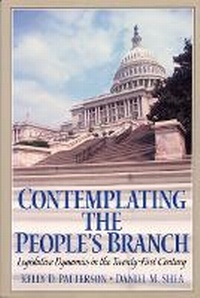
Contemplating the People's Branch
Legislative Dynamics in the Twenty First Century
Published on 18. July 2000
Book
Paperback/Softback
360 pages
978-0-13-040160-1 (ISBN)
Description
A supplemental reader for undergraduate courses on Congress and the Presidency.
This very accessible book tackles some of the most difficult issues students face when studying Congress and state legislatures. It examines theoretical arguments on the nature of representation, the election process, and leadership battles, with a sharp focus on state legislative process and a critical examination of the election process. The book presents topics without overwhelming students with high-end statistical analysis. Articles taken from journals, press, and trade books provide access to scholarship and commentary that will allow students to make informed judgements about the performance of the U.S. Congress and the various state legislatures.
This very accessible book tackles some of the most difficult issues students face when studying Congress and state legislatures. It examines theoretical arguments on the nature of representation, the election process, and leadership battles, with a sharp focus on state legislative process and a critical examination of the election process. The book presents topics without overwhelming students with high-end statistical analysis. Articles taken from journals, press, and trade books provide access to scholarship and commentary that will allow students to make informed judgements about the performance of the U.S. Congress and the various state legislatures.
More details
Language
English
Place of publication
United States
Publishing group
Pearson Education (US)
Target group
Professional and scholarly
Dimensions
Height: 229 mm
Width: 152 mm
ISBN-13
978-0-13-040160-1 (9780130401601)
Copyright in bibliographic data and cover images is held by Nielsen Book Services Limited or by the publishers or by their respective licensors: all rights reserved.
Schweitzer Classification
Content
I. MADISON MEETS THE WEB: CONSTITUTIONAL IDEALS IN A MODERN SOCIETY.
1. The Call for Common Sense and Direct Representation, Thomas Paine.
2. Representing the People, Edmund Burke.
3. Congress During the Convention and Ratification, Michael J. Malbin.
4. Groups Representation, and Race Conscious Districting: A Case of the Emperor's Clothes, Lani Guinier.
II. CONGRESSIONAL ELECTIONS: IS GETTING THERE HALF THE FUN?
5. The Role of Elections in the Preservation of Liberty: Excerpts from The Federalist Papers, James Madison.
6. The Strategic Context of Congressional Elections, Paul S. Herrnson.
7. The Day after Reform: Sobering Campaign Finance Lessons from the American States, Michael J. Malbin and Thomas L. Gais.
8. All Scandal Politics is Local: Ethical Lapses, the Media, and Congressional Elections, Daniel M. Shea.
9. Campaigns Are Like War, Linda Killian.
III. WILL THE HOUSE COME TO ORDER! MANAGING THE LEGISLATIVE PROCESS.
10. Taking Charge of the House, C. Lawrence Evans and Walter J. Oleszek.
11. Transformational Leader or Faithful Agent? Principal-Agent Theory and House Majority Party Leadership, Barbara Sinclair.
12. Legislative Leadership: Apprenticeship in the School of Chaos, Tom Loftus.
13. House Broken, Richard Lowry.
14. Little Theatre: Committees in Congress, Tim Groseclose and David C. King.
15. The Driving Force of Bud Shuster, Jeff Plungis.
IV. PURISTS AND PRAGMATISTS: THE COMPLEX WORLD OF LEGISLATIVE POLICY MAKING.
16. Separate but Equal Branches: Congress and the Presidency, Charles O. Jones.
17. Participation in Congress: Introduction, Richard L. Hall.
18. Congressional Leadership of Public Opinion, Lawrence R. Jacobs, Robert Y. Shapiro, and Steven S. Smith.
19. The Washington Higher Education Community: Moving beyond Lobbying 101, Constance E. Cook.
V. FUTURE SHOCK: THE FATE OF LEGISLATIVE BODIES IN AMERICA.
20. The Changing Textbook Congress, Kenneth A. Shepsle.
21. Congress Bashing: External Pressures for Reform and the Future of the Institution, Norman J. Ornstein and Amy L. Schenkenberg.
22. Into the Twenty-First Century: Will Women Break the Political Glass Ceiling?, Jean Reith Schroedel and Nicola Mazumdar.
23. The Home Style Homepage: Legislator Use of the World Wide Web for Constituency Contact, E. Scott Adler, Chariti E. Gent, and Cary B. Overmeyer.
24. How Will Congress Navigate the New Media Maelstrom?, Carroll J. Doherty.
1. The Call for Common Sense and Direct Representation, Thomas Paine.
2. Representing the People, Edmund Burke.
3. Congress During the Convention and Ratification, Michael J. Malbin.
4. Groups Representation, and Race Conscious Districting: A Case of the Emperor's Clothes, Lani Guinier.
II. CONGRESSIONAL ELECTIONS: IS GETTING THERE HALF THE FUN?
5. The Role of Elections in the Preservation of Liberty: Excerpts from The Federalist Papers, James Madison.
6. The Strategic Context of Congressional Elections, Paul S. Herrnson.
7. The Day after Reform: Sobering Campaign Finance Lessons from the American States, Michael J. Malbin and Thomas L. Gais.
8. All Scandal Politics is Local: Ethical Lapses, the Media, and Congressional Elections, Daniel M. Shea.
9. Campaigns Are Like War, Linda Killian.
III. WILL THE HOUSE COME TO ORDER! MANAGING THE LEGISLATIVE PROCESS.
10. Taking Charge of the House, C. Lawrence Evans and Walter J. Oleszek.
11. Transformational Leader or Faithful Agent? Principal-Agent Theory and House Majority Party Leadership, Barbara Sinclair.
12. Legislative Leadership: Apprenticeship in the School of Chaos, Tom Loftus.
13. House Broken, Richard Lowry.
14. Little Theatre: Committees in Congress, Tim Groseclose and David C. King.
15. The Driving Force of Bud Shuster, Jeff Plungis.
IV. PURISTS AND PRAGMATISTS: THE COMPLEX WORLD OF LEGISLATIVE POLICY MAKING.
16. Separate but Equal Branches: Congress and the Presidency, Charles O. Jones.
17. Participation in Congress: Introduction, Richard L. Hall.
18. Congressional Leadership of Public Opinion, Lawrence R. Jacobs, Robert Y. Shapiro, and Steven S. Smith.
19. The Washington Higher Education Community: Moving beyond Lobbying 101, Constance E. Cook.
V. FUTURE SHOCK: THE FATE OF LEGISLATIVE BODIES IN AMERICA.
20. The Changing Textbook Congress, Kenneth A. Shepsle.
21. Congress Bashing: External Pressures for Reform and the Future of the Institution, Norman J. Ornstein and Amy L. Schenkenberg.
22. Into the Twenty-First Century: Will Women Break the Political Glass Ceiling?, Jean Reith Schroedel and Nicola Mazumdar.
23. The Home Style Homepage: Legislator Use of the World Wide Web for Constituency Contact, E. Scott Adler, Chariti E. Gent, and Cary B. Overmeyer.
24. How Will Congress Navigate the New Media Maelstrom?, Carroll J. Doherty.