

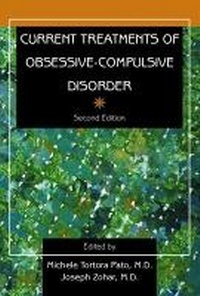
Current Treatments of Obsessive-Compulsive Disorder
2nd Edition
Published on 30. May 2001
Book
Hardback
272 pages
978-0-88048-779-5 (ISBN)
Description
During the 10 years since publication of the first edition of this comprehensive volume, progress in neuroscience has had direct and immediate clinical implications in both the pharmacological and psychological arenas in the treatment of one of psychiatry's greatest challenges: obsessive-compulsive disorder (OCD).
This second edition reflects this progress. Chapters include the latest data on the use of all current OCD treatments in special populations, such as the strictly religious, the elderly, children, adolescents, and those who are pregnant, and all are illustrated with new and updated detailed case histories that highlight specific treatments and diagnostic issues. This edition includes ; Three new pharmacotherapy chapters that discuss the use of sertraline, paroxetine, and citalopram and updates of the original edition's chapters on clomipramine, fluoxetine, and fluvoxamine; An expanded chapter on children and adolescents that emphasizes the benefits of early detection, and describes the latest findings in immunological research with particular regard to pediatric autoimmune neurologic disorders associated with streptococcal infection (PANDAS) ; An expanded behavioral therapy chapter that encompasses not only detailed treatment plans for both individuals and groups (including multifamily groups) but also up-to-date empirical data to support their use; The latest data on compounds for treating OCD (twice the number of compounds are now available than when the first edition was published), including details of the dramatic increase in our knowledge of pharmacokinetics, receptor profiles, interactions, and comparative efficacy during the past decade; The clinical implications of today's broadened definition of OCD, which includes disorders such as body dysmorphic disorder, trichotillomania, pathological gambling, and Tourette's syndrome, and the complicated diagnostic and management issues - with a call for innovative treatment approaches - raised by the intimate relationship between OCD and schizophrenia (15% of patients with schizophrenia also have OCD); A multidisciplinary approach to treatment-resistant OCD, which occurs in approximately 30% of all cases, suggesting ways to combine our current knowledge and focus it on the treatment of a specific individual
With their extensive clinical and research experience in treating OCD, the distinguished contributors to this volume provide clinicians with the latest, most reliable data so that they may better match treatment approaches with each patient's unique needs. Of enduring practical value, this updated ""how to"" manual will be welcomed by all clinicians treating patients with OCD, as well as students and other interested clinicians, as an effective tool in the ongoing challenge to understand and treat this frustrating disorder.
This second edition reflects this progress. Chapters include the latest data on the use of all current OCD treatments in special populations, such as the strictly religious, the elderly, children, adolescents, and those who are pregnant, and all are illustrated with new and updated detailed case histories that highlight specific treatments and diagnostic issues. This edition includes ; Three new pharmacotherapy chapters that discuss the use of sertraline, paroxetine, and citalopram and updates of the original edition's chapters on clomipramine, fluoxetine, and fluvoxamine; An expanded chapter on children and adolescents that emphasizes the benefits of early detection, and describes the latest findings in immunological research with particular regard to pediatric autoimmune neurologic disorders associated with streptococcal infection (PANDAS) ; An expanded behavioral therapy chapter that encompasses not only detailed treatment plans for both individuals and groups (including multifamily groups) but also up-to-date empirical data to support their use; The latest data on compounds for treating OCD (twice the number of compounds are now available than when the first edition was published), including details of the dramatic increase in our knowledge of pharmacokinetics, receptor profiles, interactions, and comparative efficacy during the past decade; The clinical implications of today's broadened definition of OCD, which includes disorders such as body dysmorphic disorder, trichotillomania, pathological gambling, and Tourette's syndrome, and the complicated diagnostic and management issues - with a call for innovative treatment approaches - raised by the intimate relationship between OCD and schizophrenia (15% of patients with schizophrenia also have OCD); A multidisciplinary approach to treatment-resistant OCD, which occurs in approximately 30% of all cases, suggesting ways to combine our current knowledge and focus it on the treatment of a specific individual
With their extensive clinical and research experience in treating OCD, the distinguished contributors to this volume provide clinicians with the latest, most reliable data so that they may better match treatment approaches with each patient's unique needs. Of enduring practical value, this updated ""how to"" manual will be welcomed by all clinicians treating patients with OCD, as well as students and other interested clinicians, as an effective tool in the ongoing challenge to understand and treat this frustrating disorder.
Reviews / Votes
Overall, this is an extremely thoughtful, generally well-written, and clinically helpful updating of a useful guide for the perplexed.More details
Edition
Second Edition
Language
English
Place of publication
VA
United States
Target group
College/higher education
Professional and scholarly
US School Grade: College Graduate Student and over
Edition type
New edition
Product notice
With printed dust jacket
Dimensions
Height: 235 mm
Width: 165 mm
Thickness: 23 mm
Weight
612 gr
ISBN-13
978-0-88048-779-5 (9780880487795)
Copyright in bibliographic data and cover images is held by Nielsen Book Services Limited or by the publishers or by their respective licensors: all rights reserved.
Schweitzer Classification
Other editions
Additional editions
Michele Tortora Pato | Joseph Zohar
Current Treatments of Obsessive-Compulsive Disorder, Second Edition
E-Book
11/2008
1st Edition
American Psychiatric Publishing
€98.09
Available for download
Previous edition

Michele Tortora Pato | Joseph Zohar
Current Treatments of Obsessive-compulsive Disorder
Book
04/1991
American Psychiatric Press Inc.
€29.91
Article exhausted; check for reprint
Persons
Michele Tortora Pato, M.D., is Associate Professor in the Department of Psychiatry and Director of Obsessive-Compulsive Disorder Research and Treatment Program at State University of New York at Buffalo located in Buffalo, NY.
Joseph Zohar, M.D., is Director for the Department of Psychiatry at Sheba Medical Center inTel Hashomer, Israel. Dr. Zohar is also an Associate Professor at the Sackler School of Medicine for Tel Aviv University in Tel Aviv, Israel.
Joseph Zohar, M.D., is Director for the Department of Psychiatry at Sheba Medical Center inTel Hashomer, Israel. Dr. Zohar is also an Associate Professor at the Sackler School of Medicine for Tel Aviv University in Tel Aviv, Israel.
Content
ContributorsPreface to the Second EditionChapter 1. General Considerations in Diagnosis and TreatmentChapter 2. ClomipramineChapter 3. FluoxetineChapter 4. FluvoxamineChapter 5. SertralineChapter 6. ParoxetineChapter 7. CitalopramChapter 8. Diagnosis and Treatment in Children and AdolescentsChapter 9. Individual, Group, and Multifamily Cognitive-Behavioral TreatmentsChapter 10. Treatment of Strictly Religious PatientsChapter 11. Serotonergic Drugs and the Treatment of Disorders Related to Obsessive-Compulsive DisorderChapter 12. Management of Treatment-Resistant Obsessive-Compulsive DisorderIndex