

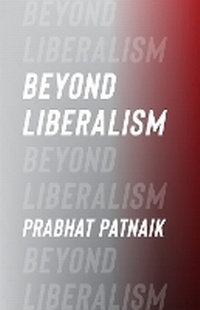
Beyond Liberalism
Published on 10. September 2024
Book
Hardback
312 pages
978-0-231-21631-9 (ISBN)
Description
Liberalism holds that individual freedom can be realized under capitalism. "Classical liberalism" tends to focus on excessive state interference as the primary threat to freedom. More recent theorists, however, recognize that capitalism, left to itself, would be characterized by mass social ills and argue that state intervention is necessary to guarantee individual freedom.
This book is a Marxist critique of liberalism. Prabhat Patnaik demonstrates that liberalism and Marxism provide vastly differing accounts of individual freedom and the forces that restrict it. In the Marxist view, people, contrary to appearances, lack real agency under capitalism. Competition coerces individuals to act according to the impersonal logic of capitalism, making them mere instruments of the system. In this way, capitalism creates universal alienation, and true individual freedom is possible only through overcoming it.
Patnaik argues that socialism can secure individual agency in both economic and political spheres, though actually existing socialism has failed in this respect. He also considers what a socialist society should look like: not a planned economy but a highly decentralized system in which citizens are directly involved in taking decisions affecting their lives and enjoy fundamental economic rights as well as political ones. Readable yet rigorous, Beyond Liberalism brings together political philosophy and political economy to offer a renewed vision of socialism.
This book is a Marxist critique of liberalism. Prabhat Patnaik demonstrates that liberalism and Marxism provide vastly differing accounts of individual freedom and the forces that restrict it. In the Marxist view, people, contrary to appearances, lack real agency under capitalism. Competition coerces individuals to act according to the impersonal logic of capitalism, making them mere instruments of the system. In this way, capitalism creates universal alienation, and true individual freedom is possible only through overcoming it.
Patnaik argues that socialism can secure individual agency in both economic and political spheres, though actually existing socialism has failed in this respect. He also considers what a socialist society should look like: not a planned economy but a highly decentralized system in which citizens are directly involved in taking decisions affecting their lives and enjoy fundamental economic rights as well as political ones. Readable yet rigorous, Beyond Liberalism brings together political philosophy and political economy to offer a renewed vision of socialism.
Reviews / Votes
Patnaik's proposal provides a refreshing approach to post-Soviet Marxism, which often does not engage in the practical problems that face Marxist revolutions. Beyond Liberalism is a hopeful discourse in the 21st century. Patnaik provides a thought-provoking and necessary change in Marxist discourse. * Choice * [Beyond Liberalism] provides an excellent starting point for discussing the shape of an alternative society that would be a normative advance in world history. For this reason and many, many others, Patnaik's book warrants the strongest recommendation. * Cambridge Review of International Affairs * Beyond Liberalism by Prabhat Patnaik is essential reading for anyone who wants to understand the underlying assumptions that seem to guide our world, be it in the realms of policy, economy or politics. * The Wire, India * Prabhat Patnaik's book, integrating perspectives from economics, philosophy, and politics, is a brilliant critique of the complicity of liberal doctrine with capitalism through its entire history: from its earliest formations in the seventeenth century through the extended period of European colonialism, the Keynesian caesura after the Second World War, down to the neoliberal period of globalized finance of our own time. -- Akeel Bilgrami, author of <i>Capital, Culture, and the Commons</i> Prabhat Patnaik skillfully combines empirical evidence and philosophical reasoning to make an engaging and insightful interdisciplinary critique of liberal doctrine, questioning its account of capitalism at its avowedly strongest point: its claim to embody and promote individual freedom. -- David Leopold, author of <i>The Young Karl Marx: German Philosophy, Modern Politics, and Human Flourishing</i> This book offers a deep analysis of the idea of individual freedom under capitalism. Patnaik first pursues this question through examining the works of major authors, including Locke, Smith, Keynes, and Marx. Within this framework, he then considers issues around colonialism, imperialism, socialism, and social democracy with insight and force. -- Robert Pollin, coauthor of <i>Climate Crisis and the Global Green New Deal</i>More details
Series
Language
English
Place of publication
New York
United States
Target group
College/higher education
Product notice
Trade binding
Dimensions
Height: 216 mm
Width: 140 mm
ISBN-13
978-0-231-21631-9 (9780231216319)
Copyright in bibliographic data and cover images is held by Nielsen Book Services Limited or by the publishers or by their respective licensors: all rights reserved.
Schweitzer Classification
Other editions
Additional editions
Prabhat Patnaik
Beyond Liberalism
E-Book
09/2024
1st Edition
Columbia University Press
€34.49
Available for download
Person
Prabhat Patnaik has taught economics at the University of Cambridge and Jawaharlal Nehru University, where he is currently professor emeritus. His books include Accumulation and Stability Under Capitalism (1997), The Value of Money (2009), A Theory of Imperialism, with Utsa Patnaik (2017), and Capital and Imperialism, with Utsa Patnaik (2021).
Content
Preface
Introduction
1. Some Misconceptions in Economics
2. John Locke on Hired Labor
3. Adam Smith and the Division of Labor
4. Historical Evidence on Land Productivity
5. Neoclassical Economics and "Rationality"
6. Keynes and the Socialization of Investment
7. Capitalism: Its Specificity and Origins
8. Competition Under Capitalism
9. Imperialism or Economic Cooperation?
10. Capitalism in Its Spontaneity and Appearance
11. Freedom in the Era of Globalization
12. The Struggle for Individual Freedom
13. Socialism and Individual Freedom
Notes
Bibliography
Index
Introduction
1. Some Misconceptions in Economics
2. John Locke on Hired Labor
3. Adam Smith and the Division of Labor
4. Historical Evidence on Land Productivity
5. Neoclassical Economics and "Rationality"
6. Keynes and the Socialization of Investment
7. Capitalism: Its Specificity and Origins
8. Competition Under Capitalism
9. Imperialism or Economic Cooperation?
10. Capitalism in Its Spontaneity and Appearance
11. Freedom in the Era of Globalization
12. The Struggle for Individual Freedom
13. Socialism and Individual Freedom
Notes
Bibliography
Index