

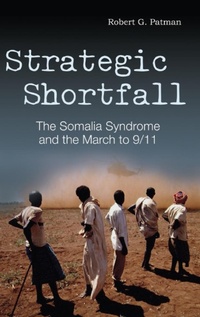
Strategic Shortfall
The Somalia Syndrome and the March to 9/11
Published on 1. February 2010
Book
Hardback
185 pages
978-0-275-99362-7 (ISBN)
Description
This seminal work argues that the disastrous raid in Mogadishu in 1993, and America's resulting aversion to intervening in failed states, led to the Rwanda and Bosnia genocides and to the 9/11 attacks.
Contrary to conventional wisdom, this book argues, it was not the 9/11 attacks that transformed the international security environment. Instead, it was "Somali Syndrome," an aversion to intervening in failed states that began in the wake of the1993 U.S./UN action in Somalia. The botched raid precipitated America's strategic retreat from its post-Cold War experiment at partnership with the UN in nation-building and peace enforcement and engendered U.S. paralysis in the face of genocide in Rwanda, Bosnia, and Darfur. The ensuing international security vacuum emboldened al-Qaeda to emerge and attack America and inaugurated our present era of intrastate conflict, mass killings, forced relocations, and international terrorism.
As this even-handed treatment shows, the Somali crisis can be connected to seven key features of the emerging post-Cold War world security order. These include the fact that failed states are now the main source of world instability and that new wars are driven by racial, ethnic, and religious identity issues.
15 illustrations
Contrary to conventional wisdom, this book argues, it was not the 9/11 attacks that transformed the international security environment. Instead, it was "Somali Syndrome," an aversion to intervening in failed states that began in the wake of the1993 U.S./UN action in Somalia. The botched raid precipitated America's strategic retreat from its post-Cold War experiment at partnership with the UN in nation-building and peace enforcement and engendered U.S. paralysis in the face of genocide in Rwanda, Bosnia, and Darfur. The ensuing international security vacuum emboldened al-Qaeda to emerge and attack America and inaugurated our present era of intrastate conflict, mass killings, forced relocations, and international terrorism.
As this even-handed treatment shows, the Somali crisis can be connected to seven key features of the emerging post-Cold War world security order. These include the fact that failed states are now the main source of world instability and that new wars are driven by racial, ethnic, and religious identity issues.
15 illustrations
Reviews / Votes
"Recommended. General readers and lower-division undergraduate students." - ChoiceMore details
Series
Language
English
Place of publication
United States
Publishing group
Bloomsbury Publishing Plc
Target group
College/higher education
Dimensions
Height: 240 mm
Width: 161 mm
Thickness: 16 mm
Weight
479 gr
ISBN-13
978-0-275-99362-7 (9780275993627)
Copyright in bibliographic data and cover images is held by Nielsen Book Services Limited or by the publishers or by their respective licensors: all rights reserved.
Schweitzer Classification
Other editions
Additional editions
E-Book
02/2010
1st Edition
Praeger Publishers Inc
€55.99
Available for download
E-Book
02/2010
1st Edition
Praeger Publishers Inc
€55.99
Available for download
Person
Robert G. Patman is professor of politics and director of international studies at the University of Otago, New Zealand. He is coeditor of the Praeger Security International series Ethics of American Foreign Policy.
Content
Foreword by Martin N. Stanton
Preface
Acknowledgments
Abbreviations
1. The New Global Context and the Disintegration of the Somali State
2. About Face: President Bush's Decision to Intervene in Somalia
3. A Shattered Hope: The U.S.-UN Intervention in Somalia
4. What If? The Alternative History of Australian Involvement in Somalia
5. The Somalia Syndrome and the Rise of al Qaeda
6. Too Little Too Late: Clinton's Growing Fears about al Qaeda and the Long Shadow of the Somalia Syndrome
7. What Threat? Bush's Retreat to the Mogadishu Line and the Countdown to the 9/11 Attacks
8. Conclusion: America's Strategic Shortfall
Notes
Index
Preface
Acknowledgments
Abbreviations
1. The New Global Context and the Disintegration of the Somali State
2. About Face: President Bush's Decision to Intervene in Somalia
3. A Shattered Hope: The U.S.-UN Intervention in Somalia
4. What If? The Alternative History of Australian Involvement in Somalia
5. The Somalia Syndrome and the Rise of al Qaeda
6. Too Little Too Late: Clinton's Growing Fears about al Qaeda and the Long Shadow of the Somalia Syndrome
7. What Threat? Bush's Retreat to the Mogadishu Line and the Countdown to the 9/11 Attacks
8. Conclusion: America's Strategic Shortfall
Notes
Index