


Religious Devotion and the Poetics of Reform
Love and Liberation in Malayalam Poetry
1st Edition
Published on 26. February 2019
Book
Hardback
178 pages
978-1-138-47799-5 (ISBN)
Description
The poetry emanating from the bhakti tradition of devotional love in India has been both a religious expression and a form of resistance to hierarchies of caste, gender, and colonialism. Some scholars have read this art form through the lens of resistance and reform, but others have responded that imposing an interpretive framework on these poems fails to appreciate their authentic expressions of devotion. This book argues that these declarations of love and piety can simultaneously represent efforts towards emancipation at the spiritual, political, and social level.
This book, through a close study of Na?ini (1911), a Malayalam lyric poem, as well as other poems, authored by Mahakavi Kumaran Asan (1873-1924), a low-caste Kerala poet, demonstrates how Asan employed a theme of love among humans during the modern period in Kerala that was grounded in the native South Indian bhakti understanding of love of the deity. Asan believed that personal religious freedom comes from devotion to the deity, and that love for humans must emanate from love of the deity.
In showing how devotional religious expression also served as a resistance movement, this study provides new perspective on an understudied area of the colonial period. Bringing to light an under-explored medium, in both religious and artistic terms, this book will be of great interest to scholars of religious studies, Hindu studies, and religion and literature, as well as academics with an interest in Indian culture.
This book, through a close study of Na?ini (1911), a Malayalam lyric poem, as well as other poems, authored by Mahakavi Kumaran Asan (1873-1924), a low-caste Kerala poet, demonstrates how Asan employed a theme of love among humans during the modern period in Kerala that was grounded in the native South Indian bhakti understanding of love of the deity. Asan believed that personal religious freedom comes from devotion to the deity, and that love for humans must emanate from love of the deity.
In showing how devotional religious expression also served as a resistance movement, this study provides new perspective on an understudied area of the colonial period. Bringing to light an under-explored medium, in both religious and artistic terms, this book will be of great interest to scholars of religious studies, Hindu studies, and religion and literature, as well as academics with an interest in Indian culture.
More details
Language
English
Place of publication
London
United Kingdom
Publishing group
Taylor & Francis Ltd
Target group
College/higher education
Postgraduate and Undergraduate
Dimensions
Height: 240 mm
Width: 161 mm
Thickness: 15 mm
Weight
452 gr
ISBN-13
978-1-138-47799-5 (9781138477995)
Copyright in bibliographic data and cover images is held by Nielsen Book Services Limited or by the publishers or by their respective licensors: all rights reserved.
Schweitzer Classification
Other editions
Additional editions
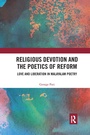
Book
12/2020
1st Edition
Routledge
€53.22
Shipment within 15-20 days
E-Book
02/2019
Routledge
€60.49
Available for download
E-Book
02/2019
1st Edition
Routledge
€60.49
Available for download
Person
George Pati holds the Surjit S. Patheja Chair in World Religions and Ethics and is Associate Professor of Theology and International Studies at Valparaiso University, USA. His research interests include religious literature in the Malayalam language, South Asian devotional traditions, and the mediation of Hindu devotion through texts, rituals, and performances of Kerala, South India.
Content
1 Introduction: Themes, Theories, and Trajectories 2 Place: Caste, Colonialism, and Reforms in Kerala (1870-1924) 3 Person: Mahakavi Kumaran Asan (1873-1924) 4 Poetics of Devotion: Bhakti as Devotion 5 Poetics of Reform: Bhakti as a Movement 6 Conclusion; Appendix 1: Transliterations of Malaya?am Poems Appendix 2: Translation of Na?ini or Oru Sneham (1911)