

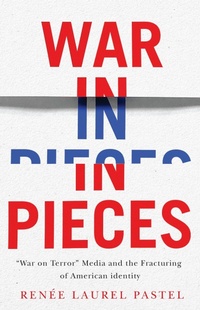
War in Pieces
Description
War in Pieces considers media representations of the first phase of the "War on Terror," set between 2001 and 2013. The book argues that the central figures around which narratives of the conflicts cohered—the war journalist, the active-duty service member, the veteran, and the military family—served to mask the loss of the myth of a unified American national identity and embodied the negotiation of cultural anxieties. Offering a theory of narrative figuration that draws into conversation repetitions and differences across media forms (fiction and nonfiction films, television shows, and online videos), this book breaks down how these figures contributed to a continued sense of unified national identity even as different audiences came away with divergent understandings. This book frames these questions in terms of how US media packaged the "War on Terror" for future cultural memory even as the conflicts continued.
More details
Person
Renée Laurel Pastel is an assistant professor of screen studies in the Communication Department at Boston College.
Content
Introduction. War in Pieces: Representing the First Phase of the "War on Terror" (2001-2013)
1 The Narrative Figure: A Sense of Unity for Fragmented Audiences
2 The War Journalist: Journalistic Objectivity and the Embedded View
3 The Active-Duty Service Member: Telescopic Views from Too Close and Too Far
4 The Veteran: Moral Injury and the Home Front as Battlefield
5 The Military Family: The Off-Screen Figure, On-Screen
Conclusion. War Without End, Nation Divided.
Acknowledgments
Notes
Bibliography
Index