

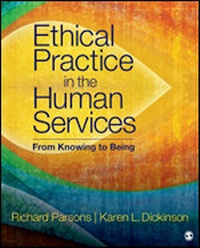
Ethical Practice in the Human Services
From Knowing to Being
1st Edition
Published on 6. February 2017
Book
Paperback/Softback
416 pages
978-1-5063-3291-8 (ISBN)
Description
Ethical Practice in the Human Services moves beyond addressing ethical issues and principles to helping readers actually practice ethical behavior through awareness of their personal morals, values, and choices. With coverage of ethical standards from six different associations, the text addresses ethical issues and principles in social work, counseling, psychology, and marriage and family therapy. Robust pedagogy includes case illustrations and guided exercises to give readers a deeper understanding of the underlying moral principles and values that serve as a foundation for the various ethical codes.
Reviews / Votes
An invaluable resource for all professors who train human service majors at the undergraduate level. This text provides information about multiple forms of professional help starting with ethics codes and moving forward. -- Professor Ginger Welch This text will provide a resource for instructors and students to consider professional ethics and personal/professional identity development as inextricably intertwined. -- Professor Steven FarmerMore details
Edition
First Edition
Language
English
Place of publication
Thousand Oaks
United States
Target group
College/higher education
Dimensions
Height: 232 mm
Width: 187 mm
Weight
753 gr
ISBN-13
978-1-5063-3291-8 (9781506332918)
Copyright in bibliographic data and cover images is held by Nielsen Book Services Limited or by the publishers or by their respective licensors: all rights reserved.
Schweitzer Classification
Other editions
New editions
Book
approx. 01/2027
2nd Edition
SAGE Publications Inc
€183.50
Not yet published
Persons
Richard D. Parsons, Ph.D., is a Professor Emeritus in Counselor Education at West Chester University. He has over 45 years of experience in university teaching and clinical practice.
Dr. Parsons has authored over 100 books, chapters, and professional articles. His most recent books include AI (Artificial Intelligence): Facilitating the Delivery of Mental Health Services (Cognella); Art Therapy: A Creative and Effective Approach to the Treatment of PTSD (Cognella); Positive Psychology: Science and Application of Psycho-Emotional Health and Well-being (Cognella), Brief Psychotherapy: Time-Limited and Effective Treatment (Cognella), and Facilitating Growth Through Lifespan Development (Cognella). Dr. Parsons also serves as the creator and editor of two book series: Counseling and Professional Identity, a 24-book series targeting counselor educators (Sage Publishing), and The Student Success Series, a ten-book series (Cognella Academic Publishing).
Karen L. Dickinson, Ph.D., is a Professor in the Department of Counselor Education at West Chester University of Pennsylvania and Chairperson of the Department. Dr. Dickinson has over 15 years of experience teaching at the university level in counseling preparation programs and has spent over three decades in the K-12 educational system, supporting students as a school counselor, as well as a general education and special education teacher.
Dr. Dickinson is the co-author for the following books: Counselor Wellness: Caring for Self to Care for Others (Cognella Academic Publications); School Counselor as Consultant: Expanding Impact from Intervention to Prevention (Cognella Academic Press); A Student's Guide to Handling Stress for Cognella, Inc. and Ethical Practice: Beyond Knowing Ethics to Being Ethical for Sage Publications, and a contributing author for Working with Students with Disabilities, a text for school counselors, and ancillary author for Field Experience: Transitioning from Student to Professional, both for Sage. She has presented nationally and internationally on the topic of bullying and students with disabilities. Other presentations and research focus on the school counselor as advocate and leader and training the 21st-century school counselor to support diverse student populations.
Dr. Parsons has authored over 100 books, chapters, and professional articles. His most recent books include AI (Artificial Intelligence): Facilitating the Delivery of Mental Health Services (Cognella); Art Therapy: A Creative and Effective Approach to the Treatment of PTSD (Cognella); Positive Psychology: Science and Application of Psycho-Emotional Health and Well-being (Cognella), Brief Psychotherapy: Time-Limited and Effective Treatment (Cognella), and Facilitating Growth Through Lifespan Development (Cognella). Dr. Parsons also serves as the creator and editor of two book series: Counseling and Professional Identity, a 24-book series targeting counselor educators (Sage Publishing), and The Student Success Series, a ten-book series (Cognella Academic Publishing).
Karen L. Dickinson, Ph.D., is a Professor in the Department of Counselor Education at West Chester University of Pennsylvania and Chairperson of the Department. Dr. Dickinson has over 15 years of experience teaching at the university level in counseling preparation programs and has spent over three decades in the K-12 educational system, supporting students as a school counselor, as well as a general education and special education teacher.
Dr. Dickinson is the co-author for the following books: Counselor Wellness: Caring for Self to Care for Others (Cognella Academic Publications); School Counselor as Consultant: Expanding Impact from Intervention to Prevention (Cognella Academic Press); A Student's Guide to Handling Stress for Cognella, Inc. and Ethical Practice: Beyond Knowing Ethics to Being Ethical for Sage Publications, and a contributing author for Working with Students with Disabilities, a text for school counselors, and ancillary author for Field Experience: Transitioning from Student to Professional, both for Sage. She has presented nationally and internationally on the topic of bullying and students with disabilities. Other presentations and research focus on the school counselor as advocate and leader and training the 21st-century school counselor to support diverse student populations.
Content
Part One: Helping: The Role and Influence of the Helper
Chapter 1: Ethics - Core to Professional Helping
The Helping Process: A Blending of Art and Science
The Helping Process: The Meeting of Client and Helper
The Role of the Client in the Process of Change
The Role of the Helper in the Process of Change
Chapter 2: Helper Variables: What the Helper Brings to the Helping Relationship
Helper Values
Helper Competence: Beyond Knowledge and Skill
The Ethics of Therapeutic Choice
Professionalization, Professional Ethics, and Personal Response
Chapter 3: Ethical Standards: Guidelines for Helping Others
Formal Ethical Standards: The Evolution of a Profession
Across the Professions: A Review of Ethical Standards of Practice
Common Concerns and Shared Values Across the Professions
Beyond Knowing - A Call to BEING Ethical
Chapter 4: Ethical Practice in an Increasingly Diverse World
Prejudice - Pervasive In and Throughout the Helping Profession
Responding to the Challenge
Part Two: Ethics and Standards of Practice: The Professions'
Chapter 5: Ethics and the Law
The Helping Process as a Legal Contract
The Legal Foundation of Ethical Practice
When Ethics and Legalities Collide
Chapter 6: Conflict: The Reality of 'Being' Ethical within the Real World
Serving the Individual within a System
Ethical Culture of Social Systems
Who Is the Client?
Chapter 7: Ethical Decision Making
Codes of Ethics - Guides not Prescriptions
Ethical Decision Making: A Range of Models
Common Elements: An Integrated Approach to Ethical Decision Making
Part Three: Applying Ethical Standards
Chapter 8: Informed Consent
The Rationale for Informed Consent
Informed Consent across the Profession
Special Challenges to Informing for Consent
Chapter 9: Confidentiality
Confidentiality: What and When Warranted?
Legal Decisions: Confidentiality and Privileged Communications
Chapter 10: Boundaries and the Use of Power
Setting and Maintaining Professional Boundaries
Professional Objectivity: Essential to Professional Boundaries
Legal Decisions
Chapter 11: Efficacy of Treatment
Practicing Within the Realm of Competence
Professional Development: Knowing the State of the Profession
The Standard of Care: Appropriate Treatment
Employing an Action Research Approach to Practice
The Use of Referral
Recent Legal Decisions
Chapter 12: Evaluation and Accountability
Monitoring and Evaluating Intervention Effects
Recent Legal Decisions
Chapter 13: Ethical Challenges Working with Groups, Couples and Families
Competency to Practice
Identifying the "Client"
Informed Consent
Confidentiality
Boundaries
Responsibility: Client Welfare
Chapter 14: Competence and the Ethics of Self-Care
Competency: More than Knowledge and Skill
Burnout
Compassion Fatigue
The Ethical Challenge
Ethical Response
Chapter 1: Ethics - Core to Professional Helping
The Helping Process: A Blending of Art and Science
The Helping Process: The Meeting of Client and Helper
The Role of the Client in the Process of Change
The Role of the Helper in the Process of Change
Chapter 2: Helper Variables: What the Helper Brings to the Helping Relationship
Helper Values
Helper Competence: Beyond Knowledge and Skill
The Ethics of Therapeutic Choice
Professionalization, Professional Ethics, and Personal Response
Chapter 3: Ethical Standards: Guidelines for Helping Others
Formal Ethical Standards: The Evolution of a Profession
Across the Professions: A Review of Ethical Standards of Practice
Common Concerns and Shared Values Across the Professions
Beyond Knowing - A Call to BEING Ethical
Chapter 4: Ethical Practice in an Increasingly Diverse World
Prejudice - Pervasive In and Throughout the Helping Profession
Responding to the Challenge
Part Two: Ethics and Standards of Practice: The Professions'
Chapter 5: Ethics and the Law
The Helping Process as a Legal Contract
The Legal Foundation of Ethical Practice
When Ethics and Legalities Collide
Chapter 6: Conflict: The Reality of 'Being' Ethical within the Real World
Serving the Individual within a System
Ethical Culture of Social Systems
Who Is the Client?
Chapter 7: Ethical Decision Making
Codes of Ethics - Guides not Prescriptions
Ethical Decision Making: A Range of Models
Common Elements: An Integrated Approach to Ethical Decision Making
Part Three: Applying Ethical Standards
Chapter 8: Informed Consent
The Rationale for Informed Consent
Informed Consent across the Profession
Special Challenges to Informing for Consent
Chapter 9: Confidentiality
Confidentiality: What and When Warranted?
Legal Decisions: Confidentiality and Privileged Communications
Chapter 10: Boundaries and the Use of Power
Setting and Maintaining Professional Boundaries
Professional Objectivity: Essential to Professional Boundaries
Legal Decisions
Chapter 11: Efficacy of Treatment
Practicing Within the Realm of Competence
Professional Development: Knowing the State of the Profession
The Standard of Care: Appropriate Treatment
Employing an Action Research Approach to Practice
The Use of Referral
Recent Legal Decisions
Chapter 12: Evaluation and Accountability
Monitoring and Evaluating Intervention Effects
Recent Legal Decisions
Chapter 13: Ethical Challenges Working with Groups, Couples and Families
Competency to Practice
Identifying the "Client"
Informed Consent
Confidentiality
Boundaries
Responsibility: Client Welfare
Chapter 14: Competence and the Ethics of Self-Care
Competency: More than Knowledge and Skill
Burnout
Compassion Fatigue
The Ethical Challenge
Ethical Response