


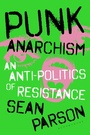
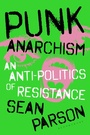
Punk Anarchism
An Anti-Politics of Resistance
Will be published approx. on 5. February 2026
Book
Paperback/Softback
240 pages
978-1-350-53733-0 (ISBN)
Description
Punk Anarchism is a radical critique of contemporary politics, offering an alternative framework rooted in anarchism, punk rock, dadaism, situationism and political nihilism.
Arguing that traditional approaches to political change are ineffective in the face of the climate crisis and the failures of liberal institutions, the book advocates for rejecting the possibility of meaningful political change within the existing political system.
Drawing on historical cultural movements like the Russian and Japanese nihilists of the 19th and early 20th centuries, Sean Parson calls for a politics of pure negation, centered on the destruction of the current social order, rather than its reform - advocating for a revolutionary politics that embraces resentment against the wealthy and rejects hierarchical power dynamics. Punk Anarchism asks: what if resistance were motivated by a sense of playfulness and enjoyment, rather than hope for a better future? Ultimately, Parson proposes an anti-theory of negation as a way to imagine political agency beyond traditional frameworks.
Arguing that traditional approaches to political change are ineffective in the face of the climate crisis and the failures of liberal institutions, the book advocates for rejecting the possibility of meaningful political change within the existing political system.
Drawing on historical cultural movements like the Russian and Japanese nihilists of the 19th and early 20th centuries, Sean Parson calls for a politics of pure negation, centered on the destruction of the current social order, rather than its reform - advocating for a revolutionary politics that embraces resentment against the wealthy and rejects hierarchical power dynamics. Punk Anarchism asks: what if resistance were motivated by a sense of playfulness and enjoyment, rather than hope for a better future? Ultimately, Parson proposes an anti-theory of negation as a way to imagine political agency beyond traditional frameworks.
Reviews / Votes
Punk Anarchism is a meditation on negation, a reminder that capitalism cannot cure the catastrophe it creates and that reason grounds its destructive force. Refusing to accept the world 'as it is', Parson exposes its idiocy and uses impermanence to urge resistance. The enduring lesson is that the passion for destruction is a creative passion, too! * Ruth Kinna, Professor of Political Philosophy, Loughborough University, UK * Parson delivers a ferocious and uncompromising assault on the death cult of industrial capitalism, weaving together punk aesthetics, nihilist philosophy, and ecological catastrophe into a compelling argument for anti-world politics. This book doesn't offer false hope or reformist solutions-instead, it embraces the liberatory potential of negation and destruction, calling for nothing less than the complete dismantling of the representational order that is driving us toward civilizational collapse. * Peter Burdon, Professor in the Faculty of Arts, Business, Law and Economics, University of Adelaide, Australia * Covering the gamut from Russian and Japanese nihilism to Cthulhu and the Sex Pistols, Sean Parson reminds us that in tearing down the world, we still have the planet. Yet, so long as the death cult of capitalism continues to reign it can only ever be met with refusal and punk anarchism. Seeking to explode the difference between art and resistance, Parson offers us a book for our time: angry, nihilistic and beautiful. * James Martel, Professor of Political Science, San Francisco State University, USA * As our systems of political representation crumble, as the society of the spectacle reveals the void at its heart, and as resurgent fascisms feed off a moribund liberalism, Parson's book resonates like a series of controlled detonations intended to blast a path through the ruins. These pages explore everything from Max Stirner to killer whales, Walter Benjamin to Snowpiercer. To be truly revolutionary, Parson contends, art must be practiced as anti-art, theory as anti-theory, and politics as salvage. This is cultural critique in the style of legendary British anarcho-punk collective Crass - provocative, uncompromising, and crackling with urgency. * Aidan Tynan, Reader in English Literature, Cardiff University, UK *More details
Language
English
Place of publication
London
United Kingdom
Publishing group
Bloomsbury Publishing PLC
Target group
Professional and scholarly
Illustrations
4 b&w images
Dimensions
Height: 232 mm
Width: 155 mm
Thickness: 20 mm
Weight
305 gr
ISBN-13
978-1-350-53733-0 (9781350537330)
Copyright in bibliographic data and cover images is held by Nielsen Book Services Limited or by the publishers or by their respective licensors: all rights reserved.
Schweitzer Classification
Other editions
Additional editions
E-Book
01/2026
1st Edition
Bloomsbury Academic
€20.99
Available for download
E-Book
01/2026
1st Edition
Bloomsbury Academic
€20.99
Available for download
Person
Sean Parson is Professor in the Department of Politics and International Affairs at Northern Arizona University, USA. They are the author of Cooking Up a Revolution: Resistance to Gentrification (2019) and the co-editor of four edited books includingRepresentations of Political Resistance and Emancipation in Science Fiction (2020).
Content
An Anti-Introduction: A Leap Into the Void
I. Anti-Theory: Dada, Situationism, Stirner, and Punk
II. An Outline of Things to Come: An Anti-introduction
Chapter One: The Crisis of Representation and the Collapse of the Liberal Order
I. The Mediated Reality, the Hyperreal, and the Crisis of Representation
II. The Collapse of the Post-war Spectacle
III. The Current Crisis of Representation
IV. Concluding Thoughts: Past, Present, Future and the End of History
Chapter Two: Industrialism is a Death Camp
I. Industrial Objects and the Materiality of Symbolic Anxiety
II. A Genealogical Analysis of the Gas Mask: From Plague Doctors to Anti-state Protestors
III. Industrialism as Suicidal Blackmail
Chapter Three: The Climate isn't Real
I. The Simulacra and Disaster Management: The Environment and Climate
II. The Politics of Models: Administrative Rationalism and the state regulation of Illusions:
III. Accepting the Nonidentity of Nature: Solaris, Cthuhlu, and the Masterless Object
IV. Anti-World Politics: Revolutionary Demonology and the Destruction of Enlightenment Order
Chapter Four: A Rising Tide Sinks All Art Galleries
I. Art, the Economy, the State:
II. Negation as an Artistic Medium: Activism as Performance Art
III. Mausoleums of our Extinct Culture
IV. Art as Resistance and Resistance as Art
Chapter Five: No Future, No Hope
I. What the End of the World Means...
II. Temporal Nihilism
III. "The Revolutionary is a Doomed Man": Towards Political Nihilism in the 21st Century
Chapter Six: Without Gallows Humor There is Only the Gallows
I. "Dancing on the Corpses Ashes": Russian Political Nihilism and Clearing the Rubble of Social Collapse
II. "The Goal of my Activities is the Destruction of all Living Things": The Revolutionary Nihilism of Kaneko Fumiko
III. "We All Die in a Yellow Submarine": Resentment and the Tragi-comedy of Dead Billionaires
IV. Conclusion: Cabin in the Woods and the Politics of Armed Joy
Chapter Seven: Towards A Nihilistic Politics of Attack
I. "The Revolutionary Handbrake": Walter Benjamin on Revolution and the Future
II. A Strategy of Attack: Against Accelerationism and Withdrawal
III. "The misplaced optimism of the doomed": Snowpiercer (2013) as Destituent Power and An Insurrectionary Handbreak
Conclusion: A Requiem for Our World
I. Anti-Theory: Dada, Situationism, Stirner, and Punk
II. An Outline of Things to Come: An Anti-introduction
Chapter One: The Crisis of Representation and the Collapse of the Liberal Order
I. The Mediated Reality, the Hyperreal, and the Crisis of Representation
II. The Collapse of the Post-war Spectacle
III. The Current Crisis of Representation
IV. Concluding Thoughts: Past, Present, Future and the End of History
Chapter Two: Industrialism is a Death Camp
I. Industrial Objects and the Materiality of Symbolic Anxiety
II. A Genealogical Analysis of the Gas Mask: From Plague Doctors to Anti-state Protestors
III. Industrialism as Suicidal Blackmail
Chapter Three: The Climate isn't Real
I. The Simulacra and Disaster Management: The Environment and Climate
II. The Politics of Models: Administrative Rationalism and the state regulation of Illusions:
III. Accepting the Nonidentity of Nature: Solaris, Cthuhlu, and the Masterless Object
IV. Anti-World Politics: Revolutionary Demonology and the Destruction of Enlightenment Order
Chapter Four: A Rising Tide Sinks All Art Galleries
I. Art, the Economy, the State:
II. Negation as an Artistic Medium: Activism as Performance Art
III. Mausoleums of our Extinct Culture
IV. Art as Resistance and Resistance as Art
Chapter Five: No Future, No Hope
I. What the End of the World Means...
II. Temporal Nihilism
III. "The Revolutionary is a Doomed Man": Towards Political Nihilism in the 21st Century
Chapter Six: Without Gallows Humor There is Only the Gallows
I. "Dancing on the Corpses Ashes": Russian Political Nihilism and Clearing the Rubble of Social Collapse
II. "The Goal of my Activities is the Destruction of all Living Things": The Revolutionary Nihilism of Kaneko Fumiko
III. "We All Die in a Yellow Submarine": Resentment and the Tragi-comedy of Dead Billionaires
IV. Conclusion: Cabin in the Woods and the Politics of Armed Joy
Chapter Seven: Towards A Nihilistic Politics of Attack
I. "The Revolutionary Handbrake": Walter Benjamin on Revolution and the Future
II. A Strategy of Attack: Against Accelerationism and Withdrawal
III. "The misplaced optimism of the doomed": Snowpiercer (2013) as Destituent Power and An Insurrectionary Handbreak
Conclusion: A Requiem for Our World