

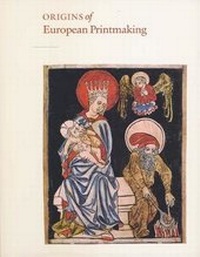
Origins of European Printmaking
Fifteenth-Century Woodcuts and Their Public
Published on 15. September 2005
Book
Hardback
376 pages
978-0-300-11339-6 (ISBN)
Description
The first comprehensive history of late medieval printmaking, which transformed image production and led to profound changes in Western culture
This highly anticipated and beautifully illustrated book examines the evolution of early printmaking in late medieval Europe. Through their means of production and the evidence of their utility, prints are explored in a broad social and economic context. Key topics include the complex problem of reconstructing the beginnings of the European woodcut; the practice of copying and dissemination of models endemic to the medium; and the varied functions of the print from the spiritual to the secular.
A team of expert authors examines the many ways in which fifteenth-century woodcuts and metalcuts reflect the nature of piety and visual experience. Replicated images helped to structure private religious practice, transmit beliefs, disseminate knowledge about material facts, and graph abstract ideas. Mass-produced pictures made it feasible for people of all stations to possess them, thereby initiating a change in the role of images that eventually helped alter the definition of art itself.
The Origins of European Printmaking is an essential book for art historians, students, and collectors, as well as the general reader with an interest in medieval history and culture.
Published in association with the National Gallery of Art, Washington
Exhibition Schedule:
Germanisches Nationalmuseum, Nuremberg (December 14, 2005 - March 19, 2006)
National Gallery of Art, Washington (September 4 - November 27, 2005)
This highly anticipated and beautifully illustrated book examines the evolution of early printmaking in late medieval Europe. Through their means of production and the evidence of their utility, prints are explored in a broad social and economic context. Key topics include the complex problem of reconstructing the beginnings of the European woodcut; the practice of copying and dissemination of models endemic to the medium; and the varied functions of the print from the spiritual to the secular.
A team of expert authors examines the many ways in which fifteenth-century woodcuts and metalcuts reflect the nature of piety and visual experience. Replicated images helped to structure private religious practice, transmit beliefs, disseminate knowledge about material facts, and graph abstract ideas. Mass-produced pictures made it feasible for people of all stations to possess them, thereby initiating a change in the role of images that eventually helped alter the definition of art itself.
The Origins of European Printmaking is an essential book for art historians, students, and collectors, as well as the general reader with an interest in medieval history and culture.
Published in association with the National Gallery of Art, Washington
Exhibition Schedule:
Germanisches Nationalmuseum, Nuremberg (December 14, 2005 - March 19, 2006)
National Gallery of Art, Washington (September 4 - November 27, 2005)
Reviews / Votes
"Scholarly, far-reaching and always informative. A must for the serious artbook collector."-Art Times * Art Times *More details
Language
English
Place of publication
United States
Target group
Professional and scholarly
Product notice
Cloth over boards
Illustrations
53 b-w + 177 color illus.
Dimensions
Height: 305 mm
Width: 241 mm
Weight
2313 gr
ISBN-13
978-0-300-11339-6 (9780300113396)
Copyright in bibliographic data and cover images is held by Nielsen Book Services Limited or by the publishers or by their respective licensors: all rights reserved.
Schweitzer Classification
Persons
Peter Parshall is curator and head of the department of Old Master prints at the National Gallery of Art, Washington. Rainer Schoch is vice director and head of the graphic arts collection at the Germanisches Nationalmuseum, Nuremberg