

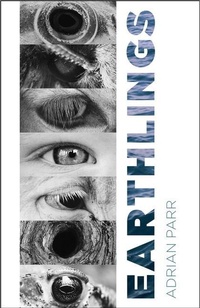
Earthlings
Imaginative Encounters with the Natural World
Published on 5. July 2022
Book
Paperback/Softback
240 pages
978-0-231-20549-8 (ISBN)
Description
Silver Medal, 2023 Nautilus Book Awards in the category of Ecology and Environment
Amid environmental catastrophe, it is vital to recall what unites all forms of life. We share characteristics and genetic material extending back billions of years. More than that, we all-from humans to plants to bacteria-share a planet. We are all Earthlings.
Adrian Parr calls on us to understand ourselves as existing with and among the many forms of Earthling life. She argues that human survival requires us to recognize our interdependent relationships with the other species and systems that make up life on Earth. In a series of meditations, Earthlings portrays the wonder and beauty of life with deep feeling, vivid detail, and an activist spirit. Parr invites readers to travel among the trees of the Amazonian rainforest; take flight with birds and butterflies migrating through the skies; and plunge into the oceans with whales and polar bears-as well as to encounter bodies infected with deadly viruses and maimed by the violence of global capitalism.
Combining poetic observation with philosophical contemplation and scientific evidence, Parr offers a moving vision of a world in upheaval and a potent manifesto for survival. Earthlings is both a joyful celebration of the magnificence of the biosphere and an urgent call for action to save it.
Amid environmental catastrophe, it is vital to recall what unites all forms of life. We share characteristics and genetic material extending back billions of years. More than that, we all-from humans to plants to bacteria-share a planet. We are all Earthlings.
Adrian Parr calls on us to understand ourselves as existing with and among the many forms of Earthling life. She argues that human survival requires us to recognize our interdependent relationships with the other species and systems that make up life on Earth. In a series of meditations, Earthlings portrays the wonder and beauty of life with deep feeling, vivid detail, and an activist spirit. Parr invites readers to travel among the trees of the Amazonian rainforest; take flight with birds and butterflies migrating through the skies; and plunge into the oceans with whales and polar bears-as well as to encounter bodies infected with deadly viruses and maimed by the violence of global capitalism.
Combining poetic observation with philosophical contemplation and scientific evidence, Parr offers a moving vision of a world in upheaval and a potent manifesto for survival. Earthlings is both a joyful celebration of the magnificence of the biosphere and an urgent call for action to save it.
Reviews / Votes
A powerful new lens through which to examine our glorious and battered planet. -- Bill McKibben, author of <i>The Flag, the Cross, and the Station Wagon: A Graying American Looks Back at His Suburban Boyhood and Wonders What the Hell Happened</i> In a narrative style that combines analytical rigour with lyrical empathy and proximity to her subject-matter, Adrian Parr designs a stunning pattern of interaction across entities, elements, ethnicities, generations and species without amalgamating them or flattening their differences. Poetic and speculative, engaged and concerned, but also polemical and investigative, this book is an ode to the affirmative force of relations and processes of becoming, and to the transformative force of the imagination. She emphasizes the joyful aspects of the interdependence of all living things and shows how they are steered by a constant energy exchange with one another. Parr's eco-ontology takes the shape of a trans-environmentalist journey, that challenges anthropocentrism, while appealing to what is best in humans, namely our shared concern for the future of our-and several trillion other-planetary species. -- Rosi Braidotti, Distinguished University Professor, Utrecht University, the Netherlands This highly original contribution on the impending climate catastrophe in the age of the Anthropocene is nothing short of a new bio-ecological philosophy for life. It confronts head-on the need for a new ethics for cohabitation with other life forms on this planet. In doing so, it asks profound questions on the basis of what it means to be human in the twenty-first century. -- Brad Evans, author of <i>Ecce Humanitas: Beholding the Pain of Humanity</i> Insisting that environmental degradation is a crime against the planet and against our own humanity, Parr concludes that late global capitalism has ravaged the earth and that as earthlings we must creatively and collectively produce-give birth-to a new earth: she thus urges new ways of dwelling on earth outside of capitalist expansion, exploitation, despoiling, and death. -- Jana Evans Braziel, author of <i>"Riding with Death": Vodou Art and Urban Ecology in the Streets of Port-au-Prince</i>More details
Language
English
Place of publication
New York
United States
Target group
Professional and scholarly
Product notice
Paperback (trade)
Illustrations
19 b&w illustrations
Dimensions
Height: 198 mm
Width: 131 mm
Thickness: 15 mm
Weight
262 gr
ISBN-13
978-0-231-20549-8 (9780231205498)
Copyright in bibliographic data and cover images is held by Nielsen Book Services Limited or by the publishers or by their respective licensors: all rights reserved.
Schweitzer Classification
Other editions
Additional editions
E-Book
06/2022
1st Edition
Columbia University Press
€23.49
Available for download
Person
Adrian Parr is the dean of the College of Design at the University of Oregon and a senior fellow of the Design Futures Council. She has served for nearly a decade as a UNESCO water chair. Her previous Columbia University Press books are The Wrath of Capital: Neoliberalism and Climate Change Politics (2012) and Birth of a New Earth: The Radical Politics of Environmentalism (2017).
Content
Acknowledgments
Commencement
1. Land
2. Parasite
3. Migrations
4. Air
5. Ocean
6. Ice
7. Animalia
8. Eco-ontology
9. Re-commencement
Notes
Bibliography
Index
Commencement
1. Land
2. Parasite
3. Migrations
4. Air
5. Ocean
6. Ice
7. Animalia
8. Eco-ontology
9. Re-commencement
Notes
Bibliography
Index