

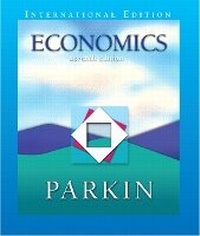
Economics with MyLab Economics Student Access Kit
International Edition
7th Edition
Published on 3. June 2004
Book
Mixed media product
992 pages
978-0-321-25359-0 (ISBN)
Description
In August 2006, we are launching a new, streamlined version of MyEconLab to better fit the needs of both students and professors. Order the ISBN above if your course begins before 8/1/06, or click hereif your course begins after 8/1/06.
Like a lens that brings the indistinct into focus, Parkin's Economics introduces students to the art of seeing the invisible, teaching them to interpret the story told by the economic indicators, uncover meaning hidden in the headlines, and gain a clear vision through economic analysis.
An inspired teacher and crystal-clear writer, Michael Parkin has long been dedicated to helping students discover and apply the timeless principles of economics.
Parkin invites students to:
* See and understand the issues of our time in the brightest light, with the most compelling examples and clearest explanation.
* Visualize economic principles in action using a widely acclaimed approach to graphical analysis.
* Gain perspective on current economic events and today's principal economic thinkers through a series of carefully crafted features.
Like a lens that brings the indistinct into focus, Parkin's Economics introduces students to the art of seeing the invisible, teaching them to interpret the story told by the economic indicators, uncover meaning hidden in the headlines, and gain a clear vision through economic analysis.
An inspired teacher and crystal-clear writer, Michael Parkin has long been dedicated to helping students discover and apply the timeless principles of economics.
Parkin invites students to:
* See and understand the issues of our time in the brightest light, with the most compelling examples and clearest explanation.
* Visualize economic principles in action using a widely acclaimed approach to graphical analysis.
* Gain perspective on current economic events and today's principal economic thinkers through a series of carefully crafted features.
More details
Edition
7th edition
Language
English
Place of publication
United States
Publishing group
Pearson Education (US)
Target group
Professional and scholarly
Dimensions
Height: 254 mm
Width: 219 mm
Thickness: 30 mm
Weight
1776 gr
ISBN-13
978-0-321-25359-0 (9780321253590)
Copyright in bibliographic data and cover images is held by Nielsen Book Services Limited or by the publishers or by their respective licensors: all rights reserved.
Schweitzer Classification
Other editions

Content
I. INTRODUCTION.
1. What Is Economics?
2. The Economic Problem.
II. HOW MARKETS WORK.
3. Demand and Supply.
4. Elasticity.
5. Efficiency and Equity.
6. Markets in Action.
III. HOUSEHOLDS' CHOICES.
7. Utility and Demand.
8. Possibilities, Preferences, and Choices.
IV. FIRMS AND MARKETS.
9. Organizing Production.
10. Output and Costs.
11. Perfect Competition.
12. Monopoly.
13. Monopolistic Competition and Oligopoly.
V. MARKET FAILURE AND GOVERNMENT.
14. Regulation and Antitrust Law.
15. Externalities.
16. Public Goods and Common Resources.
VI. FACTOR MARKETS, INEQUALITY, AND UNCERTAINTY.
17. Demand and Supply in Factor Markets.
18. Economic Inequality.
19. Uncertainty and Information.
VII. Macroeconomic Overview.
20. A First Look at Macroeconomics.
21. Measuring GDP and Economic Growth.
22. Monitoring Cycles, Jobs, and the Price Level.
23. Aggregate Supply and Aggregate Demand.
VIII. AGGREGATE SUPPLY AND ECONOMIC GROWTH.
24. The Economy at Full Employment: The Classical Model.
25. Economic Growth.
IX. AGGREGATE DEMAND, MONEY, AND INFLATION.
26. Money, Banks, and the Federal Reserve.
27. Money, Interest, Real GDP, and the Price Level.
28. Inflation.
X. ECONOMIC FLUCTUATIONS AND STABILIZATION POLICY.
29. Expenditure Multipliers: The Keynesian Model.
30. The Business Cycle.
31. Fiscal Policy.
32. Monetary Policy.
XI. THE GLOBAL ECONOMY.
33. Trading with the World.
34. International Finance.
1. What Is Economics?
2. The Economic Problem.
II. HOW MARKETS WORK.
3. Demand and Supply.
4. Elasticity.
5. Efficiency and Equity.
6. Markets in Action.
III. HOUSEHOLDS' CHOICES.
7. Utility and Demand.
8. Possibilities, Preferences, and Choices.
IV. FIRMS AND MARKETS.
9. Organizing Production.
10. Output and Costs.
11. Perfect Competition.
12. Monopoly.
13. Monopolistic Competition and Oligopoly.
V. MARKET FAILURE AND GOVERNMENT.
14. Regulation and Antitrust Law.
15. Externalities.
16. Public Goods and Common Resources.
VI. FACTOR MARKETS, INEQUALITY, AND UNCERTAINTY.
17. Demand and Supply in Factor Markets.
18. Economic Inequality.
19. Uncertainty and Information.
VII. Macroeconomic Overview.
20. A First Look at Macroeconomics.
21. Measuring GDP and Economic Growth.
22. Monitoring Cycles, Jobs, and the Price Level.
23. Aggregate Supply and Aggregate Demand.
VIII. AGGREGATE SUPPLY AND ECONOMIC GROWTH.
24. The Economy at Full Employment: The Classical Model.
25. Economic Growth.
IX. AGGREGATE DEMAND, MONEY, AND INFLATION.
26. Money, Banks, and the Federal Reserve.
27. Money, Interest, Real GDP, and the Price Level.
28. Inflation.
X. ECONOMIC FLUCTUATIONS AND STABILIZATION POLICY.
29. Expenditure Multipliers: The Keynesian Model.
30. The Business Cycle.
31. Fiscal Policy.
32. Monetary Policy.
XI. THE GLOBAL ECONOMY.
33. Trading with the World.
34. International Finance.