

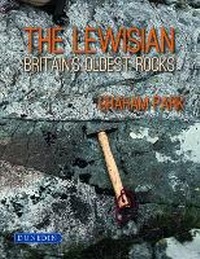
The Lewisian 2021
Britain's oldest rocks
Published on 30. September 2021
Book
Hardback
272 pages
978-1-78046-098-7 (ISBN)
Description
The first 2,500 million years of the geological history of Britain are stored in the gneisses of the Lewisian Complex of North West Scotland. This book explores the long journey of discovery in which this history has been gradually deciphered since the end of the 19th Century when these rocks were first investigated in detail. The usual tools of stratigraphic investigation were of no value in dealing with such a complex assemblage of highly deformed and metamorphosed rocks; there was no fossil evidence and few signs of recognisable sedimentary strata.
This book charts the increasing sophistication of the geochronological and geochemical techniques used to decipher the complex. The first important breakthrough was the recognition that a set of intrusive metamorphosed dykes could be used, perhaps, to separate episodes of deformation and metamorphism that occurred before the dykes were intruded, from those that occurred subsequently.
Geochronological dating methods evolved from the first relatively crude potassium-argon and uranium-lead dates in the 1950s to the present amazingly accurate lead isotope dates. Geochemical techniques have also advanced to the point when mafic igneous assemblages can be identified as having oceanic volcanic arc signatures or were the products of intra-continental magmatism. Thus, from a stratigraphy composed of three events, Scourian, dyke intrusion and Laxfordian, has grown a complex history covering many separate events of igneous, metamorphic and tectonic activity spanning 2,500 million years of Precambrian time.
Much of the extensive literature on the Lewisian is highly specialised and not easily accessible to the general reader; this book is an attempt to distil the most important results of this research into a more user-friendly form. It will appeal to many geologists including students, geological visitors to the North West of Scotland and academics seeking a readable account of remarkable and significant advances in earth science.
This book charts the increasing sophistication of the geochronological and geochemical techniques used to decipher the complex. The first important breakthrough was the recognition that a set of intrusive metamorphosed dykes could be used, perhaps, to separate episodes of deformation and metamorphism that occurred before the dykes were intruded, from those that occurred subsequently.
Geochronological dating methods evolved from the first relatively crude potassium-argon and uranium-lead dates in the 1950s to the present amazingly accurate lead isotope dates. Geochemical techniques have also advanced to the point when mafic igneous assemblages can be identified as having oceanic volcanic arc signatures or were the products of intra-continental magmatism. Thus, from a stratigraphy composed of three events, Scourian, dyke intrusion and Laxfordian, has grown a complex history covering many separate events of igneous, metamorphic and tectonic activity spanning 2,500 million years of Precambrian time.
Much of the extensive literature on the Lewisian is highly specialised and not easily accessible to the general reader; this book is an attempt to distil the most important results of this research into a more user-friendly form. It will appeal to many geologists including students, geological visitors to the North West of Scotland and academics seeking a readable account of remarkable and significant advances in earth science.
Reviews / Votes
'... this is an outstanding major new contribution to the geology of the Lewisian that will stand the test of time and will be of use to anyone interested in the Lewisian, or Precambrian geology in general, and in the development of ideas in structural and metamorphic geology and geochronology. Graham Park is to be congratulated on producing a work of the highest academic standard that will remain a key reference and is a tribute to his life's work. I recommend it wholeheartedly, it has been a pleasure to read it, and I will doubtless re-read it several times over.'The Edinburgh Geologist
More details
Language
English
Place of publication
Edonburgh
United Kingdom
Publishing group
Liverpool University Press
Target group
College/higher education
Illustrations
colour illustrations throughout
Dimensions
Height: 260 mm
Width: 200 mm
ISBN-13
978-1-78046-098-7 (9781780460987)
Copyright in bibliographic data and cover images is held by Nielsen Book Services Limited or by the publishers or by their respective licensors: all rights reserved.
Schweitzer Classification
Other editions
Additional editions
E-Book
05/2022
Dunedin Academic Press
€49.99
Available for download
Person
Graham Park is Emeritus Professor of Tectonic Geology at the University of Keele. He is the author of the best-selling Introducing Geology, a guide to the world of rocks, of Breakthroughs in Geology and of the award-winning Mountains: The origins of the Earth's mountain systems also published by Dunedin Academic Press.
Content
Early ideas: McCulloch, Jehu & Craig
The 1907 Geological Survey Memoir
Sutton & Watson 1951: the 'Scourian' and the 'Laxfordian'
Investigation of the Loch Maree Group and discovery of the 'Inverian'
Loch Torridon revisited
Assault on the Outer Hebrides
The Scourie-Laxford area revisited
The 1971 Lewisian Conference
Application of the shear zone concept
Comparisons abroad
The origins of the 'Fundamental Complex'
The Scourian and the Badcallian
The Scourie dykes: one swarm or two (or more?)
Improvements in geochronology
The terrane controversy
Remaining problems
The 1907 Geological Survey Memoir
Sutton & Watson 1951: the 'Scourian' and the 'Laxfordian'
Investigation of the Loch Maree Group and discovery of the 'Inverian'
Loch Torridon revisited
Assault on the Outer Hebrides
The Scourie-Laxford area revisited
The 1971 Lewisian Conference
Application of the shear zone concept
Comparisons abroad
The origins of the 'Fundamental Complex'
The Scourian and the Badcallian
The Scourie dykes: one swarm or two (or more?)
Improvements in geochronology
The terrane controversy
Remaining problems