

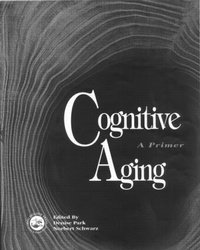
Cognitive Aging
A Primer
1st Edition
Published on 1. November 1999
Book
Paperback/Softback
306 pages
978-0-86377-692-2 (ISBN)
Description
As our society ages, the topic of cognitive aging is becoming increasingly important. This volume provides an accessible overview of how the cognitive system changes as a function of normal aging.
Building on the successful first edition, this volume provide an even more comprehensive coverage of the major issues affecting memory, attention, language, speech and other aspects of cognitive functioning. The essential chapters from the first edition have been thoroughly revised and updated and new chapters have been introduced which draw in neuroscience studies and more applied topics. In addition, contributors were encouraged to ensure their chapters are accessible to students studying the topic for the first time. This therefore makes the volume appealing as a textbook on senior undergraduate and graduate courses.
Building on the successful first edition, this volume provide an even more comprehensive coverage of the major issues affecting memory, attention, language, speech and other aspects of cognitive functioning. The essential chapters from the first edition have been thoroughly revised and updated and new chapters have been introduced which draw in neuroscience studies and more applied topics. In addition, contributors were encouraged to ensure their chapters are accessible to students studying the topic for the first time. This therefore makes the volume appealing as a textbook on senior undergraduate and graduate courses.
More details
Language
English
Place of publication
Hove
United Kingdom
Publishing group
Taylor & Francis Ltd
Target group
College/higher education
Professional and scholarly
Dimensions
Height: 246 mm
Width: 174 mm
Weight
580 gr
ISBN-13
978-0-86377-692-2 (9780863776922)
Copyright in bibliographic data and cover images is held by Nielsen Book Services Limited or by the publishers or by their respective licensors: all rights reserved.
Schweitzer Classification
Other editions
New editions
Book
04/2022
2nd Edition
Psychology Press Ltd
€44.76
The article will not be published
Additional editions
Book
09/2016
1st Edition
Psychology Press Ltd
€215.41
Shipment within 10-20 days
E-Book
12/2012
1st Edition
Psychology Press Ltd
€78.99
Available for download
E-Book
12/2012
1st Edition
Psychology Press Ltd
€78.99
Available for download
Persons
Denise Park, Nobert Schwarz
Content
Chapter 1. Basic Behavioral & Brain Mechanisms: New Challenges for a Cognitive Psychology of Aging. DenisePark, University of Illinois. Chapter 2. Attention and Aging. Wendy Rogers, Georgia Institute of Technology.Chapter 3. The Cognitive Neuroscience of Aging PatriciaReuter-Lorenz, University of Michigan. Chapter 4.Executive Function.Timothy Salthouse, University ofVirginia. Chapter 5. Age-Related Changes in Human Memory.Fergus Craik, The University of Toronto. Chapter6. Autobiographical Memory and Aging. David Rubin, DukeUniversity. Chapter 7. Prospective Memory. GilEinstein, Furman University & Mark McDaniel, WashingtonUniversity. Chapter 8. Memory Training. Art Kramer,University of Illinois. Chapter 9. Longitudinal Studies of Memory. Roger Dixon, University of Alberta. Higher Order Cognitive Function. Chapter 10. Processing of Speech: Perception and Comprehension. Art Wingfield,Brandeis University. Chapter 11. Message Production and Comprehension. Susan Kemper, University of Kansas.Chapter 12 Aging, Circadian Arousal Patterns and Cognition. Carolyn Yoon, University of Michigan. Chapter13. Social Cognition and Aging. FreddaBlanchard-Fields, Georgia Institute of Technology.Chapter 14. Aging and Wisdom. Paul Baltes, Max PlanckInstitute - Berlin. Chapter 15. Aging, Culture, and Cognition. Angela Gutchess, University of Michigan.Chapter 16. Cognitive Aging and Everyday Life. DenisePark, University of Illinois. Chapter 17. Cognition, Aging, and Self-reports. Norbert Schwarz, University ofMichigan.. Chapter 18. Judgment and Decision-Making across the Adult Life Span. Alan Sanfey, University ofArizona & Reid Hastie, University of Chicago