

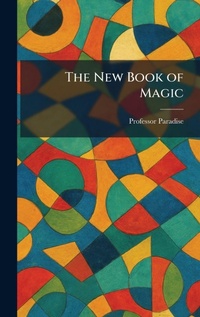
The New Book of Magic
Description
"The New Book of Magic" is a captivating guide to the world of illusion, sleight of hand, and stagecraft, designed to turn any enthusiast into a master of mystery. Written during a vibrant era of stage performance, this classic manual offers a comprehensive look at the art of conjuring, providing readers with the tools and techniques needed to perform a wide array of mesmerizing feats.
Within its pages, readers will find detailed instructions for a variety of tricks, ranging from simple parlor amusements to more complex illusions involving everyday objects like cards, coins, and handkerchiefs. The work emphasizes not just the mechanics of the tricks themselves, but also the importance of presentation, timing, and misdirection-the essential components of a successful performance. Whether focusing on close-up magic or larger-scale displays, the text provides clear guidance for both the novice and the more experienced practitioner.
As a significant piece of performance history, "The New Book of Magic" serves as an enduring resource for anyone interested in the legacy of magic. Its timeless lessons on the craft of entertainment continue to inspire and educate magicians today, preserving the secrets of a bygone era of theatrical wonder.
This work has been selected by scholars as being culturally important, and is part of the knowledge base of civilization as we know it. This work was reproduced from the original artifact, and remains as true to the original work as possible. Therefore, you may see the original copyright references, library stamps (as most of these works have been housed in our most important libraries around the world), and other notations in the work.
This work is in the public domain in the United States of America, and possibly other nations. Within the United States, you may freely copy and distribute this work, as no entity (individual or corporate) has a copyright on the body of the work.
As a reproduction of a historical artifact, this work may contain missing or blurred pages, poor pictures, errant marks, etc. Scholars believe, and we concur, that this work is important enough to be preserved, reproduced, and made generally available to the public. We appreciate your support of the preservation process, and thank you for being an important part of keeping this knowledge alive and relevant.